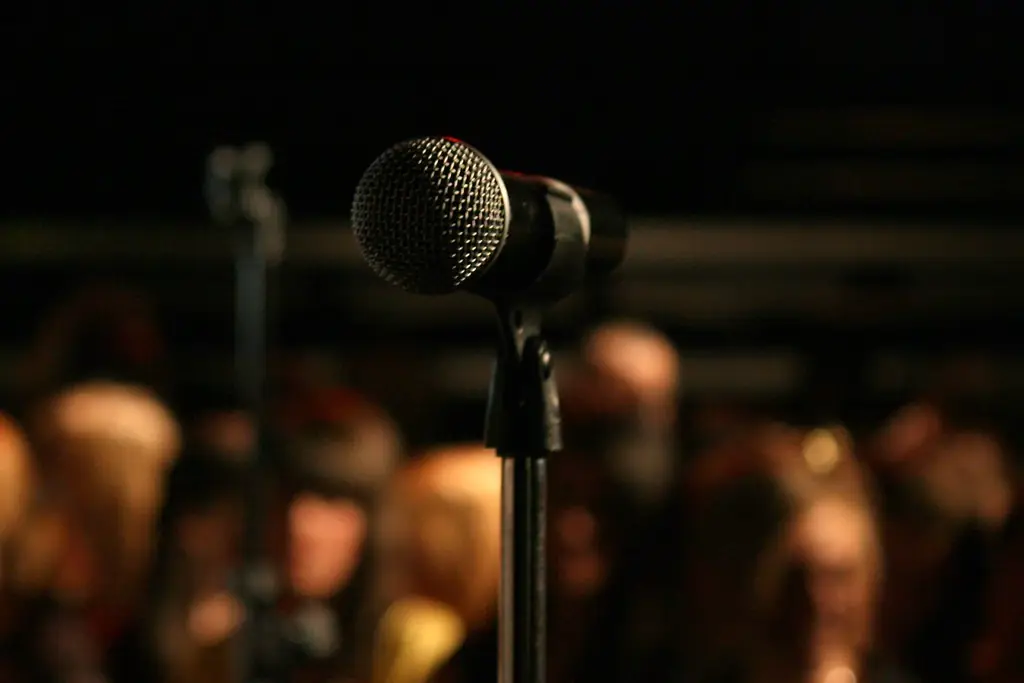
The Palais Nikaïa sits at the northern edge of Nice, where the city begins to thin out toward the Var plain and the Alps start to make themselves felt on the horizon. It is not a glamorous address — boulevard du Mercantour is infrastructure, not promenade — but the hall itself holds around seven thousand people, and on the right night, with the right artist, that industrial scale disappears entirely. The 23rd of June 2026 looks like one of those nights.
Zucchero — born Adelmo Fornaciari in the Emilian countryside near Reggio Emilia — has spent more than four decades building a body of work that sits at the crossroads of Italian melody, American blues, and gospel-inflected soul. He has sold over 60 million records worldwide, a figure that places him among the small group of Italian artists who have broken comprehensively through the language barrier. His songs travel: 'Senza Una Donna', 'Il Volo', 'Baila Morena' are not curiosities for Italian-music enthusiasts but pieces that have found their way into the general memory of European popular culture.
A Voice That Crosses Borders
What distinguishes Zucchero from the broader tradition of Italian cantautori is texture. Where that tradition tends toward the lyrical and the precise, he pulls in the opposite direction — toward roughness, toward the worn grain of a voice that sounds as though it has been lived in hard. The blues influence is not decorative; it is structural. His collaborations over the years have included artists from Miles Davis to Bono, from Eric Clapton to Luciano Pavarotti, a range that suggests someone genuinely at home across idioms rather than collecting names.
The World Tour 2026 brings this catalogue — four decades of it — to a stage format that his productions have always taken seriously. A Zucchero concert is not a recital; it is a full theatrical event, built around sound and light on a scale that fills arenas without losing the sense that the music itself is the point.
'Senza Una Donna' was recorded in 1985, reached international audiences through a duet with Paul Young in 1991, and remains one of the most-recognised Italian songs in the world.
Nice in Late June
The timing is worth noting independently of the concert. The 23rd of June falls in the week before the summer solstice crowds fully consolidate on the Côte d'Azur. Nice in late June is warm — reliably above 25°C by day — but not yet the compressed, tourist-dense city it becomes through July and August. The old town, the Cours Saleya, the seafront Promenade des Anglais: all are accessible without the friction of peak season.
Nice itself has a particular relationship with Italian culture that goes beyond geography, though geography is the starting point — the Italian border is less than forty kilometres east along the coast. The city was part of the Kingdom of Sardinia until 1860, and that history leaves traces in the architecture of the old town, in the dialect still spoken by some older residents, in the particular character of the local cuisine. An Italian artist of Zucchero's stature playing here is not an arbitrary booking; there is a cultural logic to it.
The Palais Nikaïa, for its part, is the largest indoor venue in the Alpes-Maritimes department, and it has hosted significant international tours across its history. The acoustics favour amplified rock and pop production — which is precisely what a Zucchero show requires.
For those travelling to Nice around the concert, the logistics are straightforward. The venue is served by the city's tramway network, which connects directly to the city centre and to Nice-Côte d'Azur airport. An evening at Palais Nikaïa fits naturally into a longer stay on the Riviera — a few days that might include the Matisse Museum, the market at Cours Saleya in the morning, dinner in the old town, and then, on the 23rd, the drive or tram ride north to boulevard du Mercantour for something rather different: a Reggio Emilia voice, a world-sized catalogue, and seven thousand people in a room together.