There is a particular quality to morning air in the hills above Grasse — cool enough to hold scent, warm enough to release it. By ten o'clock on a June Saturday, the light has already found the stone pergolas and the surface of the canal basin, and the first visitors are gathering at the gates of the Jardins du Musée International de la Parfumerie in Mouans-Sartoux. They have come, this small group, to see what most people walk past: the difference between a rose grown for cutting and one grown for absolute, the way a tuberose stem holds its leaves, the precise shade of green that belongs to rose geranium.
A Garden Built on Memory
The site has an unusual institutional history. What is now a two-hectare conservatory garden began as a separate project — the Conservatoire des Plantes à Parfum — created specifically to preserve the living memory of fragrance-plant cultivation in the Grasse region. In 2010 it merged with the Musée International de la Parfumerie de Grasse, and the combined institution has since carried a dual mandate: conservation and transmission. That mandate was given formal international recognition in 2018, when UNESCO inscribed the perfumery know-how of Grasse on its list of Intangible Cultural Heritage of Humanity — a distinction that covers not only the industrial and artisanal craft of making perfume, but the agricultural knowledge that feeds it.
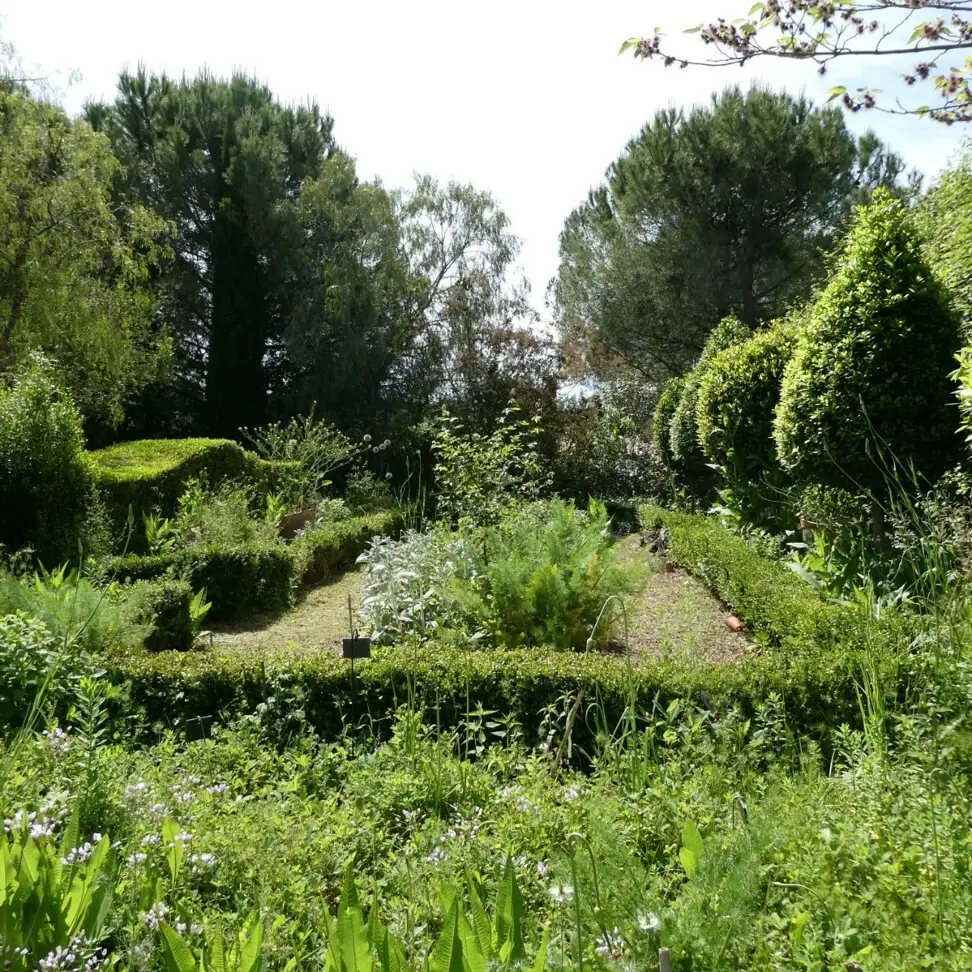
The garden itself is laid out with a logic borrowed from the perfumer's organ. Plants are grouped not by botanical family or flowering season but by olfactory note — floral, fruity, spiced, woody, hesperidic, musky. Walk from one section to the next and the shift is perceptible before you can name it. Around the old canal, terraces rise toward slopes of olive and cypress. Pergolas and stone fountains mark transitions between spaces. In June, depending on the year, jasmine and rose are likely to be in early flower; lavender, rosemary and rose geranium hold the air between them.
'Formes et couleurs des plantes à parfum et aromatiques guident le regard, tandis que leurs senteurs naturelles accompagnent la visite' — the garden's own description of what a walk here asks of you.
The Visit Itself
On Saturday 6 and Sunday 7 June 2026, the museum offers something outside its standard programme: a guided visit led by the head gardener, beginning at 10h both days at 979 Chemin des Gourettes, Mouans-Sartoux. The format is deliberately intimate — limited to the first 25 people — which means the visit functions less as a tour and more as a working conversation between someone who has spent years with these plants and visitors willing to slow down and look properly.
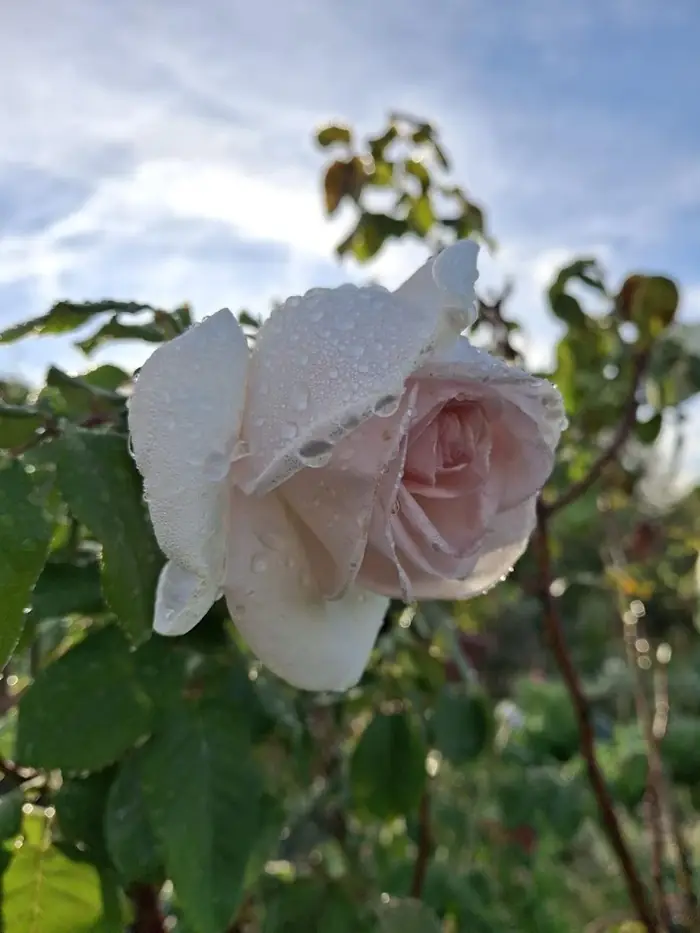
The stated focus is on two senses: sight and smell. The gardener draws attention to the visual character of aromatic and perfume plants — their forms, their colours, the way they hold structure through the heat of a Provençal summer — while their natural scents provide what the event description calls an accompaniment to the walk. It is a framework that rewards the observant. The difference between a jasmine in bud and one open for harvest is not subtle once you know what to look for; neither is the texture of a geranium leaf against the softer surface of a rose petal.
For anyone travelling through the Alpes-Maritimes in early June, Mouans-Sartoux sits conveniently between Cannes and Grasse, and the address — Chemin des Gourettes — places the gardens slightly outside the town centre, on a road that still feels agricultural. Arrive a few minutes early. The capacity constraint is real, and the museum's fuller programme, including permanent collections in Grasse itself, is worth building a half-day around.
The fuller picture of what Grasse represents — five centuries of perfume craft, the particular microclimate of the pre-Alps that allows jasmine and tuberose to develop their highest aromatic intensity, the families and workshops that have maintained these traditions across generations — gives this modest garden walk a weight that extends well beyond horticulture. To walk it with the person responsible for its upkeep is to access a form of knowledge that does not appear in any catalogue.