There is a particular quality of light on the Côte d'Azur in September — softer than August, less performative, the kind that makes you look at things twice. It arrives precisely when the crowds thin and the coast recovers something of its older self: the one that drew writers and painters here not for the season but for the long, unhurried days that follow it. It is fitting, then, that an exhibition born from exactly that kind of unhurried intimacy should open in Antibes at this moment of the year.
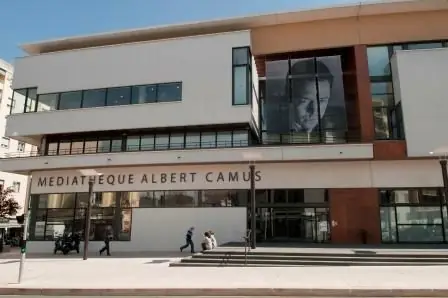
'24 voyages pour Graham Greene' opens at the Médiathèque Albert Camus in Antibes on 18 and 19 September 2026. The venue — named, with quiet regional pride, after the author who spent his final years just along the coast in Nice — sits at 19 bis boulevard Chancel. The exhibition is the work of photographer François Goalec, who works under the name Lookace Bamber.
A Passenger Seat, a Dream Journal, a Camera
Bamber's connection to this stretch of coast is not incidental. He lived and worked in Cannes and Vallauris from 1968 to 2001 — three decades that placed him squarely in the orbit of the artists, writers and figures who made the western Riviera their home or their habit. It was during this period that he accompanied the British novelist Graham Greene on what he describes as their 'déambulations' — wanderings, really, conducted largely from inside a car moving through the landscape they both knew.
What passed between them in that car became the seed of this body of work. Greene, who lived in Antibes for many years and set his 1969 novel Travels with My Aunt partly in the imaginative register of the place, kept a meticulous dream journal. Each morning he would record what he had dreamed the night before. In the car, he would share fragments of these dreams aloud — episodes, images, the residue of a sleeping mind given briefly to the daylight.
'Ces rêves dits au jour le jour et portés sur les parois de mon inconscient me révélaient des continents d'aventures.' — Lookace Bamber
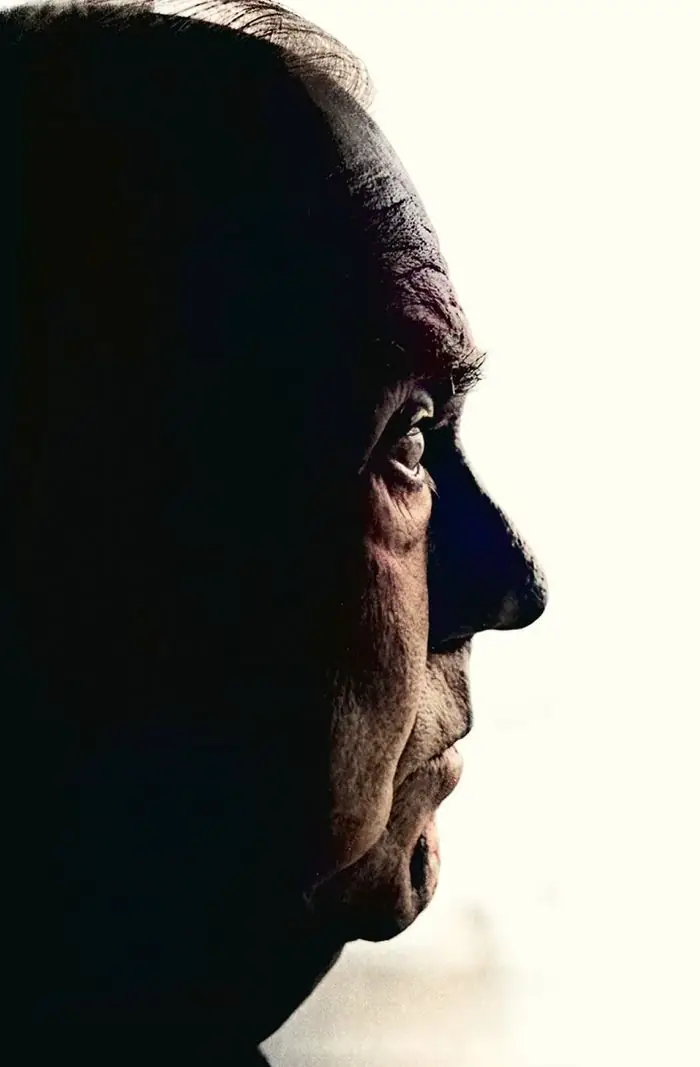
Bamber absorbed these recounted dreams the way a landscape absorbs weather — slowly, without immediate evidence, until the effect becomes visible in everything. The series that resulted takes the form of what he calls 'photographic letters': images shaped not by documentary instinct but by something more interior, more oblique. The colours of Greene's dreams, he writes, and the writer's 'silent turpitudes' — his private moral wrestlings, the preoccupations that ran beneath his public surface — pushed Bamber toward what he describes as 'la beauté carnassière de ce Monde': the carnivorous beauty of the world. It is not a comforting phrase, and it is not meant to be.
Antibes as a Setting, Not a Backdrop
Antibes is the right place for this. Greene lived here for decades, in a flat on the avenue Pasteur, and the town appears — sometimes named, sometimes displaced — in several of his later works. The old port, the ramparts of the Vieille Ville, the proximity to Nice and Monaco: these were not merely scenery for him but the texture of a life conducted at a deliberate remove from London. He died in Vevey in 1991, but his Antibes years gave him the distance he needed to write about the world with the cold, clear sympathy that distinguishes his best work.
Vallauris, where Bamber also lived, carries its own creative weight: Picasso worked there in the early 1950s, and the town's association with craft, ceramics and artistic residency persists. The corridor between Cannes, Vallauris and Antibes that Bamber navigated for thirty years is one of the more densely layered stretches of the European Mediterranean — history compressed into a short drive along the coast road.
Bamber has lived in Amiens since 2001, but the work in this exhibition belongs entirely to the years before that move, to the coast and its light and the voice of a novelist describing his dreams from the passenger seat. The exhibition runs across two days only. The Médiathèque Albert Camus is open to the public; further practical details are available at the venue's website. For those already in the region in mid-September, or those for whom the conjunction of Greene, the Riviera and the particular grammar of photographic letters means something — this is where to be.