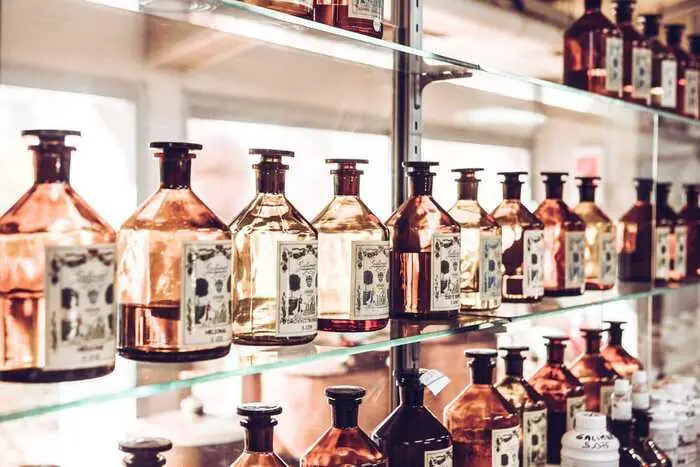
There is a particular quality to the air in Grasse on a June morning — warm, faintly floral, carrying something you cannot quite name. The town sits above the Côte d'Azur like a terracotta amphitheatre, its narrow streets climbing away from the coast, and for centuries it has been the place where the language of scent was first codified into something approaching science. To arrive here is to understand, almost immediately, that perfume is not decoration. It is memory, agriculture, chemistry, and craft folded into a single invisible form.
From 5 to 7 June 2026, the Maison Galimard — one of Grasse's historic perfume houses, located at 73 route de Cannes — opens its factory doors for guided visits, offered free of charge to the public. The visits take guests through the working laboratories and the conditioning rooms where raw materials become finished product, tracing the origins of perfumery and the methods used to extract essences from natural matter. It is, in the most literal sense, a tour behind the curtain.
A House With Deep Roots
Grasse earned its designation as the world capital of perfumery not by declaration but by geography and history. The region's microclimate — mild winters, long dry summers, limestone hillsides — proved ideal for cultivating the flowers that perfumery depends upon: jasmine, rose de mai, tuberose, mimosa. Tanneries had long established Grasse as a centre of craft; it was a short step from treating leather to scenting gloves, and from scenting gloves to the manufacture of perfume itself. By the eighteenth century, the town's reputation was established across Europe.
Galimard is among the maisons that shaped that reputation. Today, the house on the route de Cannes continues to operate as both a working factory and a place of transmission — a site where the accumulated knowledge of the trade is made legible to visitors willing to pay attention.
"The 'Nez' — the nose — is what perfumers call the master composer of a house: the person whose trained perception can identify and combine hundreds of raw materials into a coherent whole."
During the guided tour, guests move through the spaces where this work actually happens: the laboratories, the conditioning rooms, the archive of antique machinery and museum pieces that chart the evolution of the craft. The centrepiece, in a sense, is the organ — not a musical instrument but the tiered structure of bottles and raw materials from which the in-house perfumer, the Nez, works. A few of its secrets, the house promises, will be shared.
What the Visit Offers
The programme across the three days is structured around the free factory tour, which covers:
- The origins and history of perfumery as practised in Grasse
- Extraction methods for raw materials
- The museum collection of antique machines and historic pieces
- The perfumer's organ and the role of the Nez
Following the tour, visitors have access to Galimard's full product range, available at factory prices — a detail worth noting for anyone with a considered interest in fragrance rather than a duty-free impulse.
Separately, the house also offers creation workshops at the Studio des Fragrances Galimard, conducted by the in-house perfumer. These ateliers — available independently in Grasse — give participants the chance to compose their own fragrance under professional guidance. The distinction matters: the factory visit is an act of observation; the studio workshop is an act of making.
Grasse in early June sits in a particular sweet spot of the Provençal calendar. The heat has not yet reached its August intensity; the rose harvest — one of the great agricultural spectacles of the region — is either underway or recently concluded. The town is busy but not overwhelmed. The light in the late afternoon, falling across the old quarter and the valley below, has the quality that painters have been chasing on this coast for two hundred years.
To spend a morning at Galimard during these three days is not a grand gesture. It is something quieter: a chance to understand, through sight and smell and the explanations of people who know this trade well, why a small hilltop town became the place where the world's perfume industry learned to speak. That understanding, once acquired, tends to change the way you open a bottle.