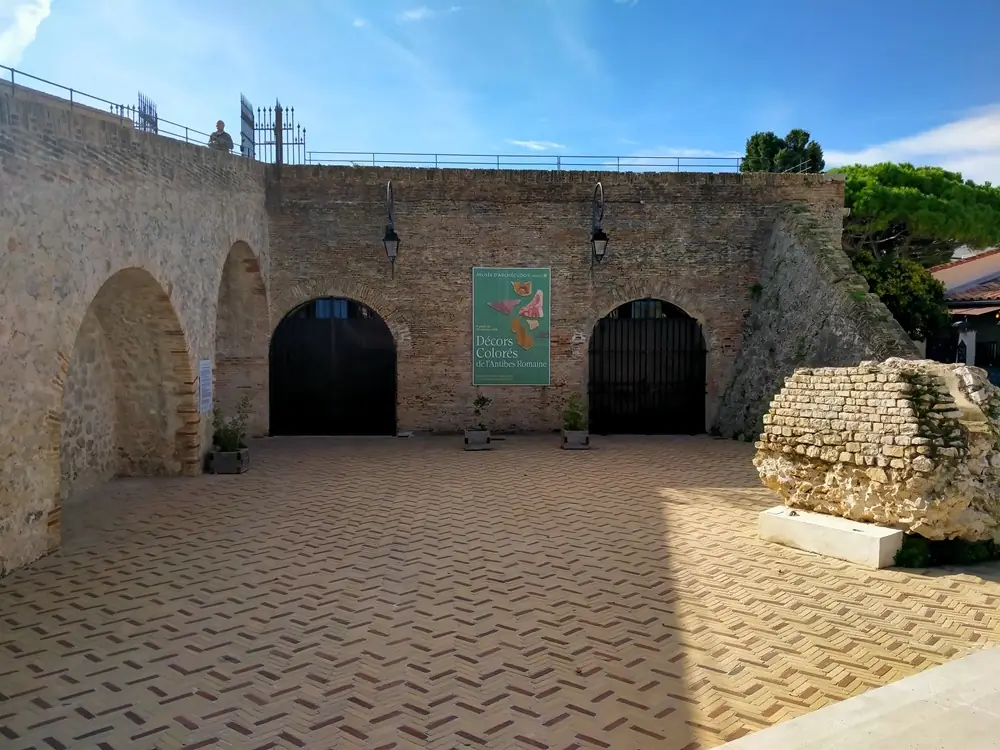
There is a particular quality of light in Antibes on a June morning — coastal, unhurried, bouncing off limestone walls that have absorbed centuries of Mediterranean heat. The old town sits on a headland between two bays, and the Musée d'Archéologie occupies a position that feels almost inevitable: close to the sea, close to the ramparts, close to the layers of time that this peninsula has been quietly accumulating since at least the seventh century BC. It is the kind of place where the distance between a display case and an active excavation site feels very small indeed.
On 13 and 14 June 2026, the museum opens its doors for 'Atelier Les Experts — Céramologue': a hands-on workshop inviting participants aged eight and above to examine ceramic fragments actually discovered in a cellar and a ditch dating from the early modern period. The session begins at 8:45 in the morning, and places are limited, so arrival with time to spare is advisable.
What a Céramologue Actually Does
The French term céramologue — a specialist in the study and classification of ceramic artefacts — describes a discipline that sits at the intersection of archaeology, art history and forensic analysis. Ceramics are among the most durable and informative materials a dig can yield: they do not rot, they carry the fingerprints of their manufacture, and their forms shift with enough consistency across periods that a trained eye can often date a fragment to within a generation. On a site as historically layered as Antibes, where Ligurian, Greek, Roman and medieval occupation have left their marks in the soil, a single trench can produce material spanning a thousand years.
The fragments at the centre of this workshop come from a cave — a cellar or storage space — and a fossé, a ditch, both from the early modern era: roughly the sixteenth to eighteenth centuries. These are not glamorous Roman amphorae or Hellenistic figurines. They are the ordinary crockery of ordinary lives, and that is precisely what makes them interesting. A broken jug from a merchant's kitchen tells a different story from a ceremonial vessel, and the workshop invites participants to learn how to read it.
'Expertiser' in French carries a professional weight that 'examine' does not quite capture — it implies assessment, judgement, a reasoned conclusion drawn from evidence.
The Musée d'Archéologie itself was inaugurated in 1963 and has spent the decades since assembling objects from both terrestrial and underwater excavations around Antibes. The collection traces the history of ancient Antipolis — the Greek colony founded here, according to tradition, by settlers from Marseille — from the seventh century BC through to the fifth century AD. The underwater element is worth pausing on: the seabed off the Cap d'Antibes and the Lérins Islands has yielded wrecks, anchors and amphorae that attest to the sheer volume of maritime trade that passed through this stretch of coast in antiquity. The museum holds evidence of a world that was already, two and a half millennia ago, thoroughly connected.
What to Expect on the Day
The workshop is described as accessible to all from the age of eight, which suggests an approach designed to be genuinely participatory rather than merely observational. Participants can expect to handle or closely examine the ceramic fragments, to learn something of the methodology used to date and classify them, and to engage with the kind of close, patient looking that archaeology demands. No prior knowledge is required.
For families visiting the Côte d'Azur in early June — before the peak-season crowds have fully settled in, when the market stalls in the old town are still selling strawberries from the Var — this is the sort of morning that earns its place in the itinerary not through spectacle but through texture. The museum's address is 1 Avenue Général Maizière, a short walk from the market square and the sea walls.
Antibes in June is a town that rewards those who look carefully. The same instinct that makes a good céramologue — the willingness to pick up a fragment and ask what it was, who used it, how it ended up here — turns out to be a reasonable approach to the town itself.