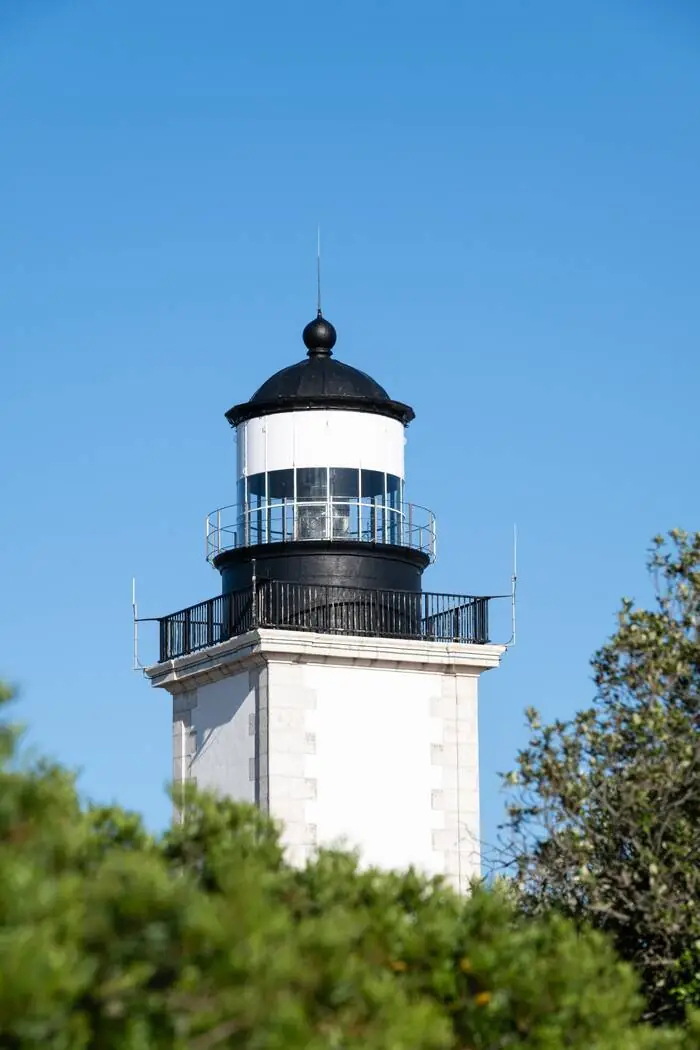
There is a particular quality of light on the Cap Camarat peninsula in early autumn. The summer crowds have thinned, the garrigue is dry and aromatic, and the sea — visible in almost every direction — holds that deep, considered blue it reserves for September. It is the kind of morning that makes the forty-minute walk from Ramatuelle village feel less like an effort and more like a prelude.
On Saturday, 19 September, the Phare de Camarat opens its doors to the public as part of the Journées Européennes du Patrimoine — the annual European Heritage Days that, each third weekend of September, grant access to sites across the continent that are otherwise closed or restricted. At Camarat, that means guided sessions running across the day at 09:00, 10:00, 11:00, 13:00, 14:00 and 15:00, with a maximum of eight visitors per slot. Entry is free. Reservations are handled through the Office de Tourisme et de la Culture de Ramatuelle.
A Lighthouse at the Southern Edge of the Var
The Phare de Camarat stands at the tip of one of the most dramatic headlands on the French Riviera — not the groomed, villa-studded Riviera of Cannes and Nice, but the wilder southern Var coast where the Massif des Maures meets the Mediterranean. At roughly 130 metres above sea level, it is among the tallest lighthouses in France, its tower visible far out to sea and, on clear days, its beam reaching vessels navigating between the Gulf of Saint-Tropez and the open water beyond the Îles d'Or.
The peninsula itself has been a navigational concern for centuries. The waters off Camarat are strewn with wrecks — testament to the difficulty of the passage and to the storms that arrive without ceremony off the Provençal coast. The lighthouse was constructed in the nineteenth century precisely to address this hazard, and it has been operational ever since, now automated like most French lighthouses and managed by the Direction des Affaires Maritimes.
From the exterior terrace, the panorama opens in every direction: the commune of Ramatuelle to the north, the Îles d'Or to the south, and on clear days, the Alps in the far distance.
That 360-degree view is, for many visitors, the principal revelation. To the south, the Îles d'Or — Porquerolles, Port-Cros, the Île du Levant — float low on the horizon like punctuation marks. To the north, the red-roofed village of Ramatuelle sits on its ridge above the vineyards of the Côtes de Provence appellation. On an exceptional morning, the white peaks of the Alps are visible beyond the coastal ranges — a reminder that this corner of France compresses an unusual range of geographies into a small area.
Inside: Three Rooms, Several Centuries
The interior museum is divided into three spaces, each with a distinct focus. The first two address the natural and maritime world of the cape: local fauna and flora — the maquis scrubland, the seabirds, the posidonia meadows below the waterline — alongside the maritime routes that have crossed these waters since antiquity, and documentation of the wrecks that lie on the seabed nearby. The third room turns to the history of lighthouses as a technology and institution, with particular attention to Camarat itself.
It is a compact presentation, calibrated to the size of the space and the rhythm of a guided visit, but it gives the lighthouse a legibility it lacks when seen only from the outside. The building stops being merely scenic and becomes, briefly, an object with a specific history and a continuing purpose.
Practical matters are worth noting: visitors are asked to arrive ten minutes before their session, and the organisers specifically request carpooling to reduce pressure on the limited parking at the site. The road to the lighthouse is narrow, the parking area small, and the logic of sharing a car is both practical and, on a morning this fine, sociable. Slots are booked through the Ramatuelle tourism office website at ramatuelle-tourisme.com.
September on the Var coast has its own particular tempo — slower than August, more considered, the light already shifting toward the amber register of autumn. An hour at the top of Camarat, with the sea laid out below and the Alps on the far edge of visibility, is a good way to take the measure of that change.