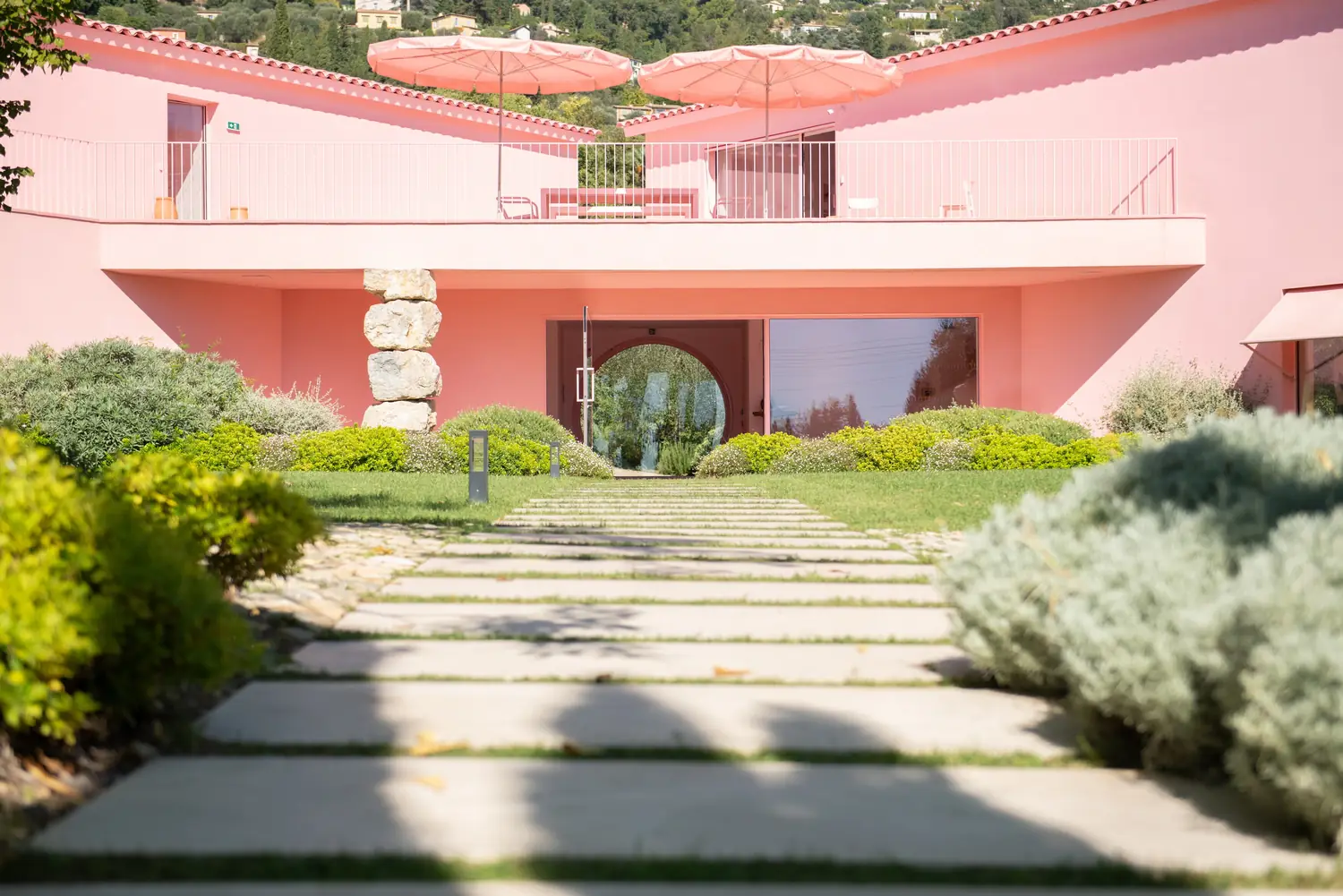
There is a particular quality to the air above Grasse in late September. The summer heat has begun to soften, the light arrives at an angle that turns limestone walls the colour of warm bread, and the hills — terraced, ancient, smelling faintly of something you cannot quite name — hold their breath before autumn. It is the kind of morning that makes you want to slow down, to pay attention to what you are actually breathing in.
On 19 and 20 September 2026, the Domaine de la Rose at 74 Chemin de Saint-Jean opens for a guided sensory visit — a rare two-day window into a working estate that sits at the intersection of Lancôme's ancestral perfumery traditions and contemporary olfactory innovation. Each session accommodates a maximum of 82 participants, which keeps the experience close, unhurried, and genuinely attentive.
The Capital of Perfume, and What That Actually Means
Grasse did not become the world's perfume capital by accident. The town's microclimate — sheltered from the mistral, warmed by the Mediterranean just thirty kilometres south, watered by the pre-Alps to the north — produces flowers of exceptional aromatic concentration. May rose, jasmine, tuberose: for centuries, the hillside estates around Grasse supplied the raw materials for the great Parisian maisons. The relationship between field and flacon here is not metaphor. It is agricultural, chemical, and deeply local.
Lancôme's connection to this landscape is woven into the house's identity. The Domaine de la Rose is where that connection becomes physical: a working estate where the cultivation of roses is not decorative backdrop but living archive, the source material from which fragrance begins.
'À la croisée des savoir-faire ancestraux de Lancôme et de l'innovation olfactive' — the estate positions itself precisely at that threshold between inheritance and invention.
What the Visit Offers
The tour is described as sensorielle — sensory — which in the context of perfumery means something specific. This is not a standard heritage walk with laminated panels. The programme engages participants through the olfactory register: the smell of the estate itself, the vocabulary of fragrance materials, the methods — both traditional and contemporary — by which raw flower becomes finished accord.
The guided format ensures that what you encounter is interpreted rather than simply observed. Visitors move through the estate with someone who can translate the landscape: why a particular variety of rose is grown here, how harvesting decisions affect aromatic character, where ancestral technique and modern precision converge.
Practical notes for those planning to attend:
- Dates:** 19 and 20 September 2026
- Location:** Domaine de la Rose, 74 Chemin de Saint-Jean, 06130 Grasse
- Capacity:** 82 participants maximum per session
- Pricing and booking details should be confirmed directly with the venue
Grasse itself rewards a longer stay. The old town's narrow streets, its 17th-century cathedral, the Musée International de la Parfumerie — these are not incidental. They are the urban counterpart to the hillside estates, and together they give the visit its full depth of context. The Domaine de la Rose sits a short drive from the town centre, on roads that wind through the kind of Provençal countryside that has changed less than you might expect.
September is a considered moment to be here. The summer crowds have thinned. The light is better. The roses, by this point in the season, have completed their cycle — which means the visit is less about the spectacle of bloom and more about understanding what comes after: the knowledge, the process, the translation of something ephemeral into something that lasts. That, in the end, is what perfumery is. And Grasse, on a quiet September morning, is still the best place in the world to learn it.