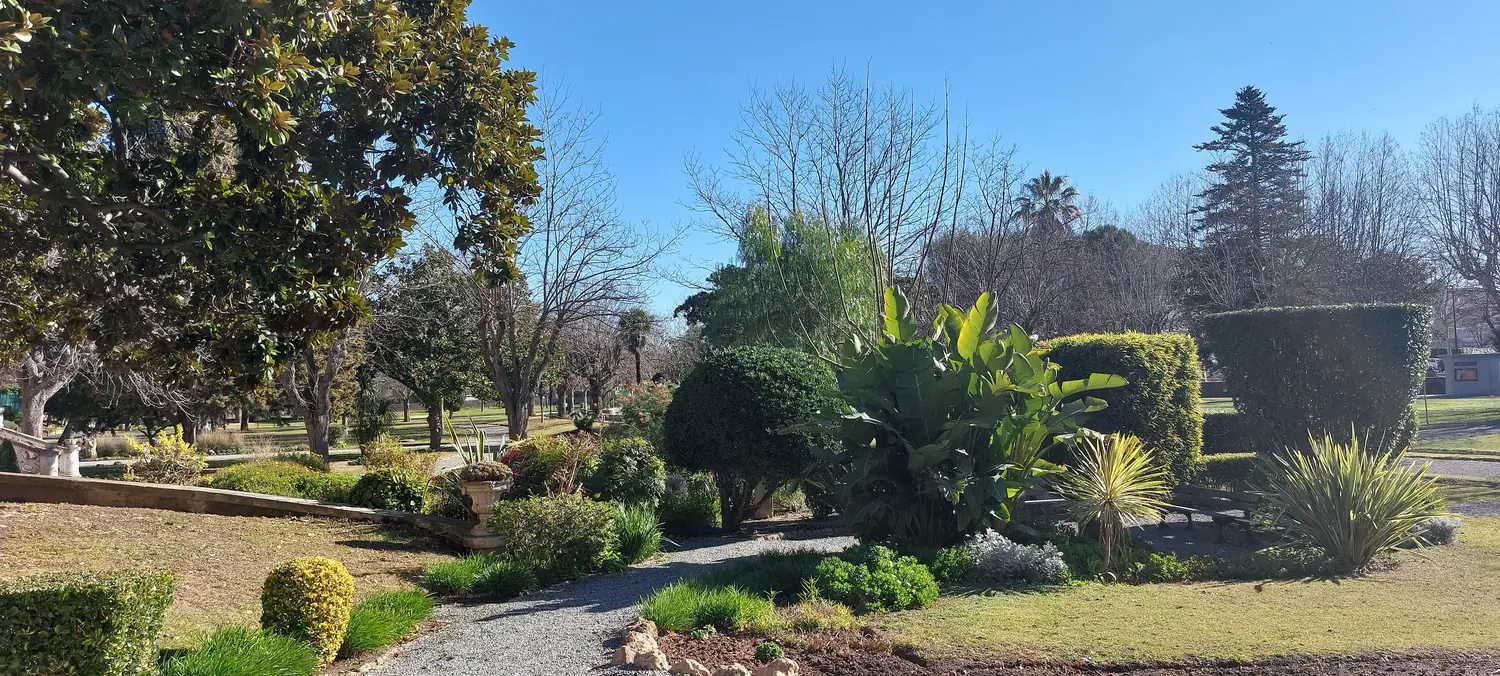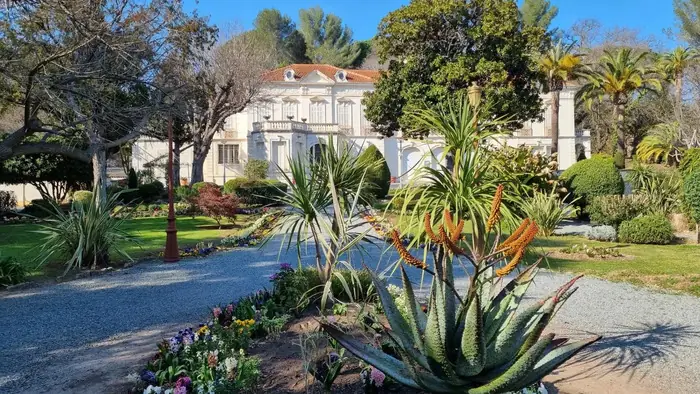
There is a particular quality of light in Fréjus on a June afternoon — warm and slightly diffuse, softened by the proximity of the Esterel massif and the old stones that line the town's streets. It is the kind of light that suits gardens well. At 447 avenue Aristide Briand, behind the gracious façade of the Villa Marie, two hectares of formal planting absorb that light and give it back in layers: the silver-green of a Washington palm frond, the deep gloss of a magnolia leaf, the feathery silhouette of a weeping sophora against an old wall.
On Saturday 6 June 2026, beginning at 14h00, the Jardins de la Villa-Marie open for a guided botanical visit — a structured walk through one of the Riviera's more quietly distinguished green spaces, led with the purpose of introducing visitors to the plant species that define the aesthetic of Côte d'Azur horticulture.
A Garden Between Two Worlds
The Villa Marie was built as a grand bourgeois residence at the turn of the twentieth century, at a moment when Fréjus was consolidating its identity as both a working Provençal town and a destination of some refinement. The garden was laid out in the French formal manner — parterres, allées, a classical basin and statue — yet its planting palette draws from a much wider geography. The Himalayan cedar (Cedrus deodara) and the Atlas cedar (Cedrus atlantica) grow here alongside the Colorado blue spruce, Washington palms, yews, photinias, lagerstroemia and the slow-architectural Sophora japonica pendula, whose weeping form makes it one of the more theatrically planted specimens on the grounds. Mediterranean species mix with exotics in a combination that was entirely fashionable among the villa gardens of the Belle Époque Riviera, and that reads today as a kind of living record of that era's botanical ambitions.
What makes the setting still more resonant is the ground beneath it. The Villa Marie stands against the remains of a Roman platform that once bordered the ancient port of Forum Julii — the colony founded by Julius Caesar in 49 BC, from which Fréjus takes its name and much of its character. The building itself now houses the town's médiathèque. To walk these gardens is, in a small way, to move across two thousand years of accumulated occupation.
'Ce jardin dit à la française, dont les essences reflètent l'esthétique des jardins de la Côte d'Azur.'
What the Afternoon Holds
The visit is botanical in focus: the intention is to read the garden through its plants — their origins, their habits, the reasons they were chosen. For anyone with even a passing interest in Mediterranean horticulture, the selection here is instructive. The Magnolia grandiflora allées are among the garden's most immediately impressive features, their canopy dense enough to alter the temperature of the air beneath them. The Washington palms (Washingtonia filifera), native to the desert oases of California and Baja California, are a reminder of how thoroughly the Riviera's garden culture reinvented the region's native flora over the course of a century.
Practical details to note:
- Date and time:** Saturday 6 June 2026, 14h00
- Location:** Jardins de la Villa-Marie, 447 avenue Aristide Briand, 83600 Fréjus
- Enquiries:** 04 94 51 01 89
- Further information at bm-frejus.com
No admission price is listed in the available information; it is worth confirming directly with the organisers via the number above.
Fréjus is not a town that announces itself. It sits between the better-publicised claims of Saint-Raphaël to the west and the Esterel to the north, and it rewards the visitor who arrives without a fixed itinerary. The Villa Marie's garden is precisely the kind of place the town does well — composed, historically layered, and best appreciated at walking pace. June, before the full weight of summer arrives, is the right moment: the magnolias have finished flowering but the garden is in full leaf, and the afternoon light at 14h00 falls at an angle that suits both the formal geometry of the parterres and the more irregular volumes of the mature trees. Come with comfortable shoes and, if the day is warm, something to shade against the sun between the allées.