There is a particular quality of light in Cannes on a June Saturday afternoon — warm, unhurried, the kind that makes the walk up through the residential quarter above the Croisette feel less like an errand and more like a decision. The C'Picaud arts centre sits on avenue du Docteur Raymond Picaud, away from the harbour crowds, in the quieter Cannes that locals actually inhabit. It is the kind of venue where the audience tends to know one another, where someone will have brought flowers, and where the silence before a performance carries genuine weight.
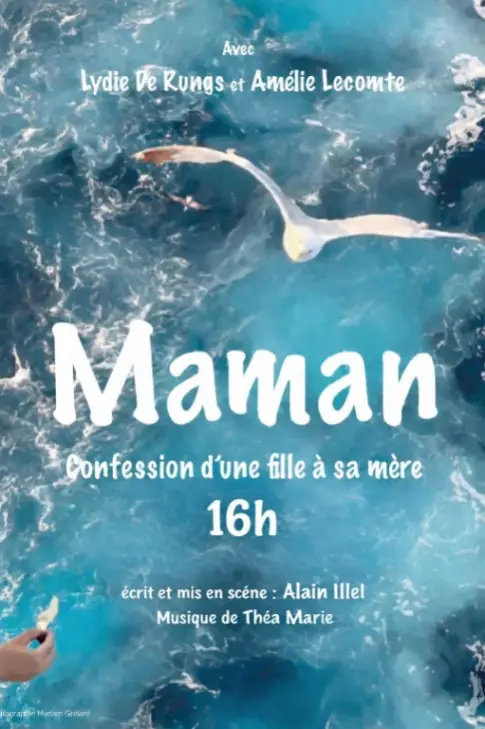
On 20 June 2026 at 16h, that silence will be broken by something rather difficult to stage well: the truth between a mother and a daughter. Maman is a seventy-minute theatre piece written by Alain Illel, performed by Lydie De Rungs and Amélie Lecomte, with original music composed by Théa Marie. Tickets are priced at 10€.
A Confession That Takes a Lifetime to Write
The premise is deceptively simple. A daughter addresses her mother — directly, intimately — and says everything that was never quite said from birth onwards. Not in anger, not in resolution, but in the halting, circling, sometimes laughing way that real reckonings actually unfold. Illel has structured the piece as what the production calls a 'monologue-dialogue': a form that holds both voices in tension even when only one is speaking aloud. It is a device that asks the audience to hear the mother in the daughter's pauses, in the things she skirts around, in the moments she laughs instead of weeps.
The French theatrical tradition has long been drawn to this territory — the interior drama of family, the archaeology of what is inherited and what must be shed. From Marguerite Duras to contemporary autofiction, the mother-daughter bond has proved one of the most durable subjects in French letters precisely because it resists easy resolution. Maman does not appear to seek resolution either. Its stated purpose is liberation: the daughter's journey towards becoming fully herself, which requires, first, the courage to speak.
The production is dedicated 'à toutes les Mères Veilleuses' — to all the watchful mothers, those who keep vigil without ever quite being seen.
What to Expect on the Day
The performance runs one hour and ten minutes without an interval, which feels right for the material — long enough to go somewhere real, short enough to hold the tension intact. De Rungs and Lecomte carry the piece between them, navigating the tonal shifts that the script demands: the rires et larmes, the laughter and tears, that any honest account of a close relationship will contain. Théa Marie's music is woven through the production, providing the kind of underscore that marks emotional transitions without announcing them.
C'Picaud is a municipal cultural space that hosts theatre, dance and community events throughout the year — functional, welcoming, without the formality of the Palais des Festivals a few kilometres down the hill. Arriving early enough to find a seat and settle is advisable; at 10€, the house is likely to fill.
For visitors spending the weekend in Cannes, the timing places the performance comfortably within an afternoon that could begin with lunch in the Marché Forville neighbourhood and end, after the show, with the slow walk back down towards the old port as the evening light shifts over the Lérins islands. The city in June, between the film festival's departure and the full press of summer, has a particular ease to it — still alive, not yet overwhelmed.
Maman is not spectacle in any conventional sense. It is an hour and ten minutes of someone saying the hardest things, in a room where the audience is invited to recognise themselves — as daughters, as mothers, as people who have also let years pass without speaking plainly. That is, quietly, a considerable invitation.