There is a particular quality to Sunday mornings in Vence — the light arriving at an angle through the medieval ramparts, the market stalls still exhaling the cool of the night, the old town holding its breath before the day properly begins. It is the kind of place where history feels less like a subject and more like a texture underfoot. Which makes it, perhaps, the ideal setting for an afternoon spent learning to read what lies beneath.
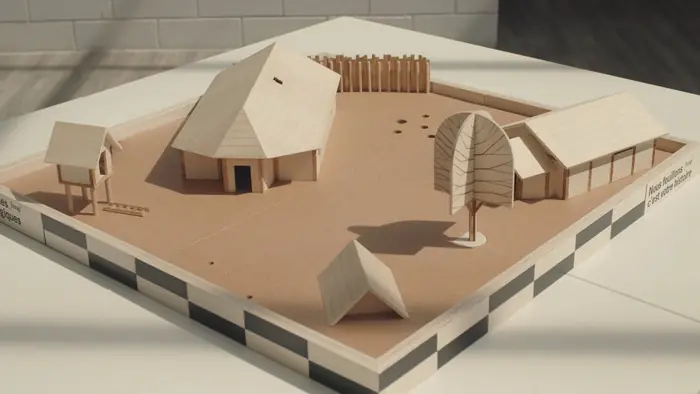
On Sunday 14 June 2026, the Villa Alexandrine — the tourist information and conference centre on Place du Grand Jardin — opens its doors for Archéomaquette, a free, drop-in workshop built around a single deceptively simple object: a scale model of an archaeological excavation site. Sessions run at 10:00 and 14:00, with no reservation required.
What the Model Reveals
The premise is modest in scale and generous in ambition. Working from the maquette, visitors are walked through the successive stages of a real excavation project — from the initial development plan that triggers a dig, through the painstaking removal of soil layers, to the interpretation of scientific data once the earth has given up what it knows. The workshop is designed to be playful (ludique is the word the organisers use, and it matters), meaning the learning happens through handling, looking and asking rather than through passive listening.
Central to the experience is the concept of stratigraphy — the reading of soil strata. Each layer of ground is, in effect, a chapter of time, compressed and reordered by centuries of human activity, natural upheaval and slow accumulation. To understand how archaeologists navigate these layers is to understand something fundamental about how the past is recovered at all: not as a single buried moment, but as a palimpsest, each stratum in conversation with the ones above and below it.
'Remonter le temps en explorant les différentes strates du sol' — to travel back in time by reading the layers of earth — is as precise a description of archaeology as you will find.
Vence, Where the Ground Remembers
The choice of Vence as a setting for this kind of event is not incidental. The town sits in the pre-Alpine hills above Nice, its origins stretching back through Roman occupation — it was once Vintium, a settlement of the Ligures — and forward through centuries of episcopal rule that left it with a cathedral, a baptistery, and a dense, layered urban fabric that archaeologists have found consistently rewarding. The surrounding Alpes-Maritimes department is among the more archaeologically active in southern France, where infrastructure projects routinely uncover evidence of prehistoric, Gallo-Roman and medieval occupation.
Archaeology in France operates under a system of preventive excavation (archéologie préventive), meaning that any significant construction or development project must first be assessed for its potential impact on buried heritage. It is this system — the one that begins with a projet d'aménagement and ends, sometimes years later, with published scientific data — that the Archéomaquette workshop traces in miniature. Understanding it helps explain why so much of what we know about the Côte d'Azur's deep past has emerged not from planned research digs, but from the foundations of motorways and apartment blocks.
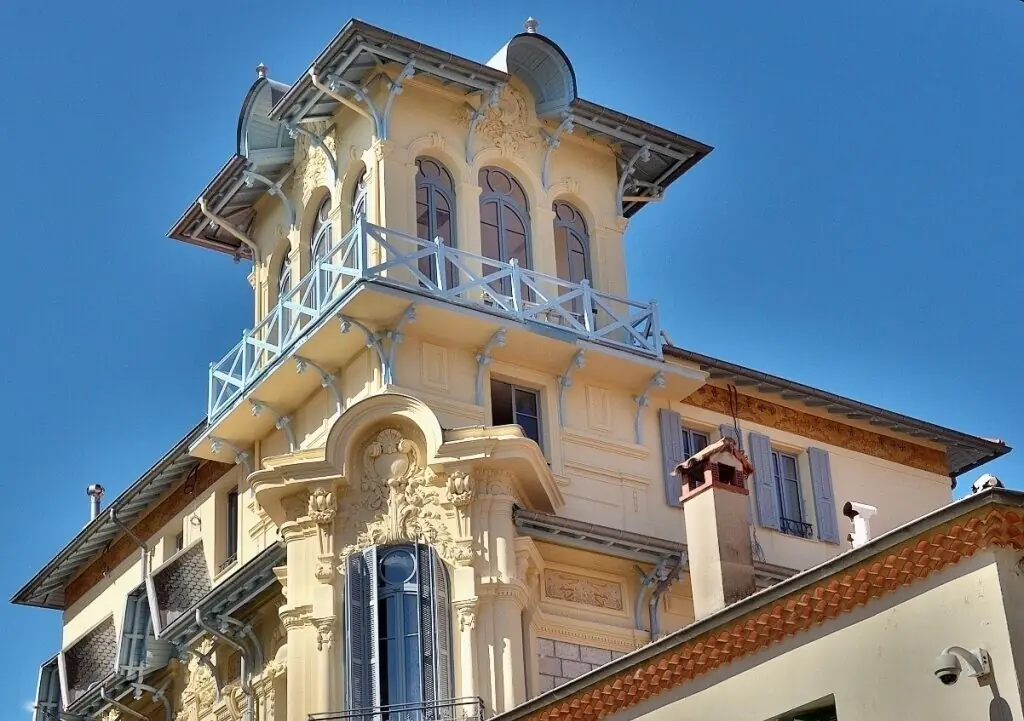
The Villa Alexandrine itself occupies a calm corner of the Place du Grand Jardin, the broad square that anchors the modern town just outside the medieval walls. As a conference and information centre, it is accustomed to hosting talks and presentations; the Archéomaquette workshop fits naturally into that civic role, bringing something substantive into a space that might otherwise feel purely administrative.
Admission is free. There is no need to book ahead. You can arrive at ten in the morning with a coffee still in hand, or drift in after lunch at two. The workshop runs continuously, which means you set the pace — linger over the maquette, ask the question you were not sure was worth asking, stay for the part about data interpretation that turns out to be more absorbing than expected. Vence will still be there when you emerge, its stones a little more legible than before.