There is a particular quality of light in Fréjus on a June afternoon — warm, unhurried, filtered through the plane trees that line Place Clemenceau. The square feels ordinary enough: a roundabout, a café terrace, the low hum of a Provençal market town going about its business. And yet the ground beneath your feet has been accumulating history for more than two thousand years. Fréjus — ancient Forum Julii — was founded by Julius Caesar and enlarged by Augustus into one of the most significant Roman port cities in Gaul. Its amphitheatre, aqueduct, and the traces of a naval base that once sheltered the fleet of Actium are still legible in the urban fabric, if you know how to read them.
On 12 and 14 June 2026, that reading becomes rather more literal. At the Espace Patrimoine, tucked inside a 16th-century circular tower on Place Clemenceau, an archaeologist from the city's Direction de l'Archéologie et du Patrimoine will present an active excavation currently under way in the town centre. The sessions begin at 14:00. Each visit is limited to 30 people — a figure that is less a logistical footnote than a statement of intent: this is not a lecture hall event, but something closer to a professional briefing.
A Tower That Holds the City's Memory
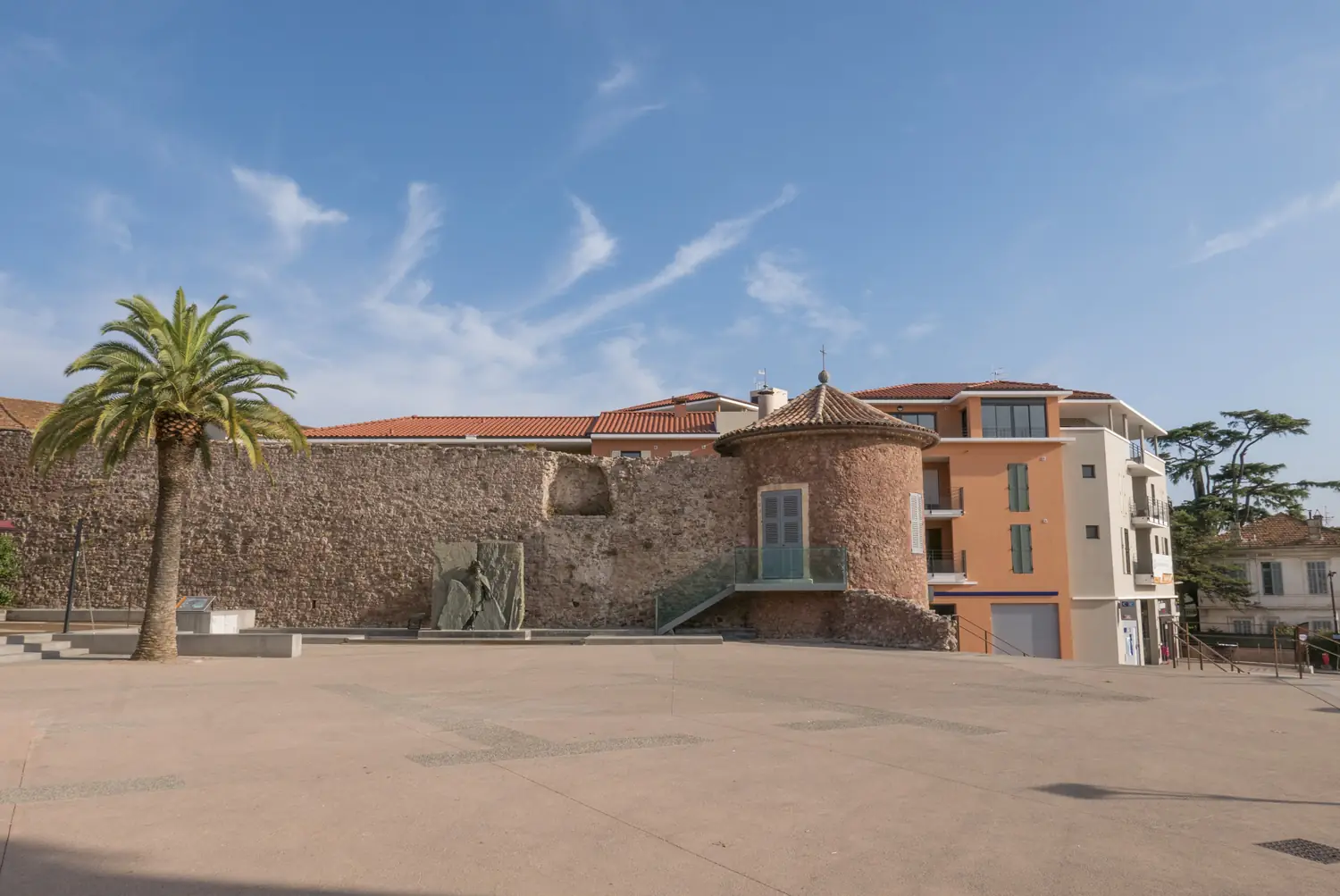
The Espace Patrimoine is itself worth a moment's attention before the talk begins. Housed in a circular rampart tower that once formed part of Fréjus's Renaissance-era fortifications, the space is devoted to the living practice of heritage — rotating exhibitions on current digs, ongoing restorations of listed monuments, and the results of recent scientific research. Each year the programme renews itself around whatever the city's archaeologists and conservators are actively working on. There is no permanent collection in the conventional sense; the exhibition is always, in some sense, a work in progress.
That philosophy feels especially apt for a city where the past has a habit of surfacing without warning. Urban excavations in Fréjus are not academic exercises conducted at a comfortable remove from daily life — they happen in the middle of construction sites, road works, and renovation projects, interrupted by deadlines and bureaucratic schedules. An archaeologist navigating that environment is part scientist, part negotiator, part urban planner.
'En exclusivité, un archéologue de la direction de l'Archéologie et du Patrimoine présentera les fouilles en cours d'un chantier en centre urbain.'
What the Ground Gives Up
Urban archaeology is a discipline shaped by constraint. Unlike a field excavation on open land, a dig in the centre of a living town must work around infrastructure, property boundaries, and the simple fact that the city cannot stop functioning while researchers sift through its foundations. The stratigraphy — the layered record of occupation — is rarely clean. Roman levels sit beneath medieval ones, which sit beneath early modern ones, which sit beneath the tarmac you crossed this morning. Reading that sequence requires both technical rigour and a kind of lateral imagination.
What the archaeologist will present on these two June afternoons is the current state of one such chantier — an active site, findings still being processed, interpretations still being formed. That provisional quality is precisely what makes it interesting. Visitors will not be receiving a polished narrative with a beginning, middle, and end. They will be shown a discipline in motion.
For those planning a visit to Fréjus around these dates, the surrounding context rewards exploration:
- The Roman amphitheatre, one of the oldest in France, is a short walk from Place Clemenceau
- The cathedral baptistery, dating to late antiquity, is among the best-preserved in the country
- The Musée Archéologique holds finds from decades of excavation across the commune
Fréjus is less than an hour from Nice along the A8, and sits at the western edge of the Var département where the Esterel massif meets the sea. It is a town that rewards the visitor who arrives with curiosity rather than a checklist.
The session on Place Clemenceau will last as long as the questions do. Thirty people, an archaeologist with soil still metaphorically on their hands, and two millennia of city beneath their feet. June light, as noted, is generous here — and it falls at exactly the right angle.