There is a particular quality to the light in the hills above Grasse in early June — warm but not yet punishing, filtered through the silver-green of olive groves and the dark verticals of cypress. It is the kind of afternoon that makes you slow down without deciding to. At 979 Chemin des Gourettes in Mouans-Sartoux, that slowness has been cultivated deliberately, in soil turned by many different pairs of hands.
On Friday, 5 June, from 14:00 to 19:00, the gardens of the Musée international de la parfumerie open for the public presentation of a participatory plot developed as part of the Jardins pour tous project. The event is free to attend and structured around two distinct moments in the afternoon.
Two Acts in the Garden
From 14:00 to 16:15, visitors are invited to gather around the new plot for advice, conversation and a guided exchange about the garden itself — led by young people from the SAT La Cardeline and the Apprentis d'Auteuil, two organisations involved in professional training. Then, from 17:00 to 19:00, the afternoon shifts register: a family-friendly treasure hunt takes participants through the participatory garden, plant by plant, in the manner of a slow, sensory discovery rather than a race.
What makes this afternoon worth attending is not the programme alone, but the story behind the ground underfoot. The Jardins pour tous initiative brought together participants of all ages and backgrounds — people with no prior gardening experience alongside those further along in life — supported by cultural mediators and professional gardeners. The young adults facilitating the sessions are themselves in vocational training, so the exchange of knowledge runs in more than one direction. The garden, in other words, was not designed for the public; it was designed by a version of the public.
"L'objectif du projet est de permettre à chacun de découvrir le jardinage, de s'initier aux savoir-faire locaux et d'offrir aux visiteurs un nouvel espace d'accueil, de partage et de création."
A Conservatory in All But Name
The setting adds its own weight to the occasion. These two hectares of garden were originally conceived as a conservatory of perfume plants — a living archive of the raw materials that built Grasse's reputation over centuries. In 2010, the conservatory merged with the Musée international de la parfumerie, and the grounds became an extension of that institution's broader mission: to preserve and transmit the savoir-faire of perfumery, recognised by UNESCO as Intangible Cultural Heritage of Humanity in 2018.
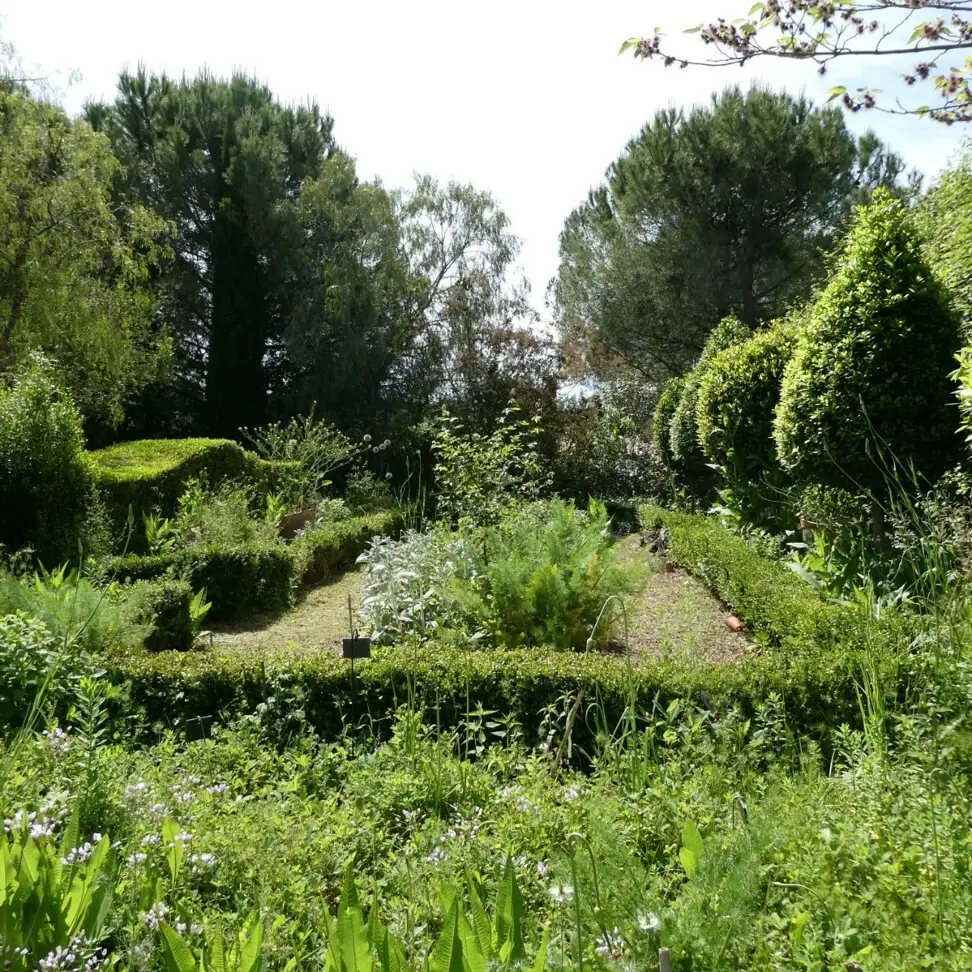
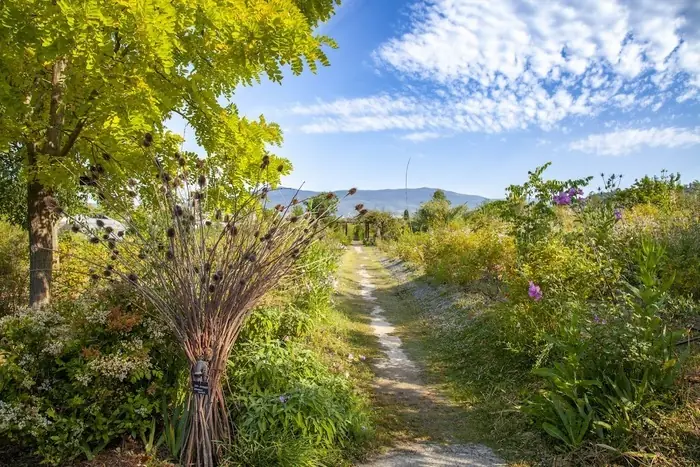
The layout of the gardens reflects the logic of the perfumer's palette rather than the botanist's taxonomy. Plants are grouped by olfactory family — floral, fruity, spiced, woody, hesperidic, musky — so that a walk through the terraces is also a lesson in how fragrance is constructed. Along an old canal, beneath pergolas and beside stone fountains, the emblematic flowers of Grasse perfumery grow in seasonal succession: tuberose, jasmine, rose, lavender, rose geranium, iris. On a June afternoon, several of these will be in bloom simultaneously.
The participatory plot sits within this landscape as something newer and less formal — a patch of ground that carries the marks of collective decision-making, of arguments about spacing and questions about watering, of afternoons spent learning by doing. It is, in that sense, a different kind of garden from the curated terraces around it, and the contrast is instructive.
For visitors travelling through the Côte d'Azur hinterland, Mouans-Sartoux is already known for its commitment to thoughtful local initiatives — the town has maintained an organic municipal farm supplying school canteens for years, a project that attracted international attention. The Jardins pour tous afternoon fits that same civic sensibility: inclusion and local knowledge-sharing treated not as peripheral concerns but as the point.
Come for the garden, stay for the treasure hunt with children, or simply find a spot near the canal and let the afternoon do what June afternoons in the Provençal hills do best. The museum's website at museesdegrasse.com carries further details on the site and its programming.