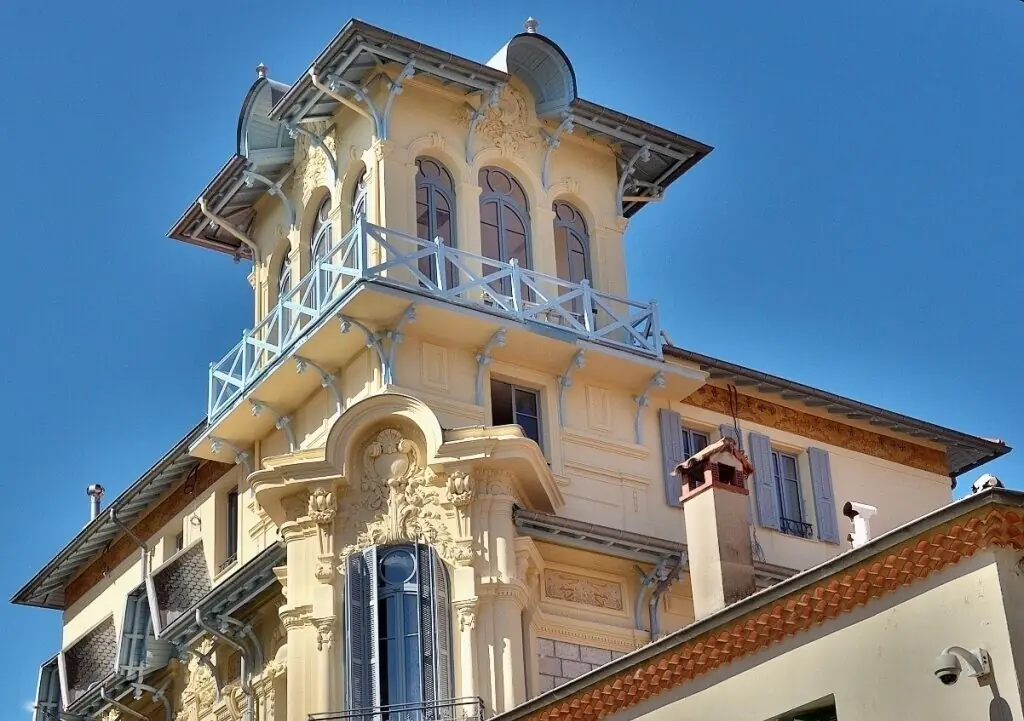
There is a particular quality of light in Vence on a June evening — the kind that turns limestone the colour of warm bread and makes the shadows in old doorways seem to hold their breath. The town sits above the coastal plain of the Alpes-Maritimes, close enough to the Mediterranean to catch its salt on the breeze, yet high enough to feel genuinely apart from the resort energy of the coast below. It is a place that rewards slowness, and on Saturday 13 June, it offers a considered way to practise exactly that.
The event is a visite théâtralisée — a theatrical guided walk — titled 'Il était une fois Vintium': 'Once Upon a Time, Vintium.' Vintium was the Roman name for the settlement that would eventually become Vence, and the title signals the evening's ambition clearly. This is not a heritage tour in the conventional sense. A guide-lecturer in period costume will lead participants through the historic city, stopping at the Roman stones that remain embedded in and around its ancient fabric. The meeting point is the Villa Alexandrine on Place du Grand Jardin, where the town's tourist information office is based. The walk begins at 17:00. Entry is free; reservation is required, and places can be booked by calling 04 93 58 06 38.
The City the Romans Left Behind
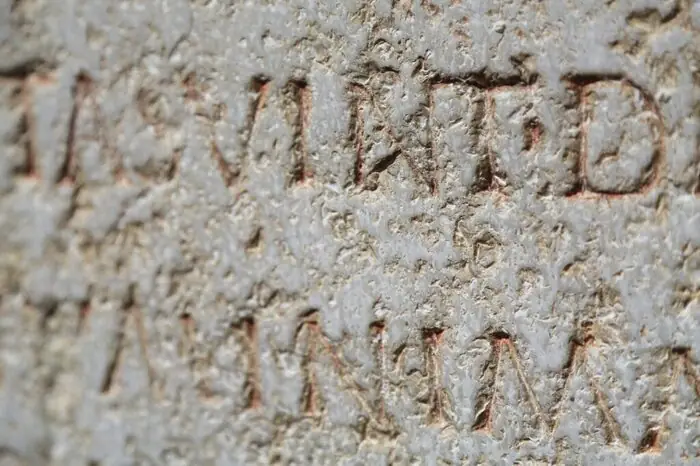
Vence earned its bishopric early — it was one of the smallest cathedral cities in France, a distinction that shaped its medieval character and left it with a compact vieille ville of extraordinary density. But the story starts earlier. The Romans established Vintium here, and traces of that occupation have never entirely disappeared. Fragments of Roman masonry are incorporated into later buildings; inscriptions have been found, studied, and in some cases moved. The pleasure of this kind of walk is precisely the layering — the way a costumed guide can make a repurposed stone in a medieval wall suddenly legible as something far older.
The theatrical dimension matters. A guide in costume does something that a conventional audio tour or printed leaflet cannot: she creates a frame of presence, a slight displacement in time that asks you to look at familiar or overlooked surfaces differently. The vieille ville of Vence is well-walked — Matisse lived here, the Chapelle du Rosaire bears his complete decorative vision, the cathedral contains a Chagall mosaic — but the Roman layer is less often foregrounded, and an evening dedicated to it feels genuinely corrective.
What to Expect
The format is a walking tour through the historic centre, led by a single guide-lecturer whose role combines scholarly knowledge with theatrical delivery. Participants gather outside the Villa Alexandrine — a practical and symbolic starting point, given that the building serves as the town's main information hub and sits on the edge of the old city. From there, the route follows the guide's narrative logic rather than a fixed circuit, pausing wherever the Roman evidence presents itself.
A few practical notes for those planning the evening:
- The walk is free of charge, but reservation is mandatory — call 04 93 58 06 38 to secure a place.
- Meeting point: Villa Alexandrine, Place du Grand Jardin, 06140 Vence.
- Start time: 17:00 on Saturday 13 June 2026.
- Vence is approximately 25 kilometres from Nice, accessible by bus or car via the D2210.
June in the Alpes-Maritimes is warm but not yet at its August intensity; a 17:00 start means the group will walk through the old city in full afternoon light, with the temperature beginning its gradual evening descent. The stones will be warm underfoot. The place will be quiet in the way that Vence, unlike its coastal neighbours, often manages to be.
'Votre guide-conférencière, en costume, vous mènera à la découverte des pierres romaines de la cité historique.'
There is something clarifying about being asked to look at a place through a single, specific lens. Vence accumulates centuries with unusual ease — Roman, early Christian, medieval, modern — and the tendency when visiting is to take all of it at once, to let Matisse's chapel and the cathedral baptistery and the rampart walls blur into a general impression of age. This evening proposes something more disciplined: two hours, one guide, one layer of time. The Roman stones have been waiting here since before the bishopric, before the medieval walls, before any of the names most visitors arrive with. On a warm June evening, with the light doing what it does in Vence, that seems like sufficient reason to show up.