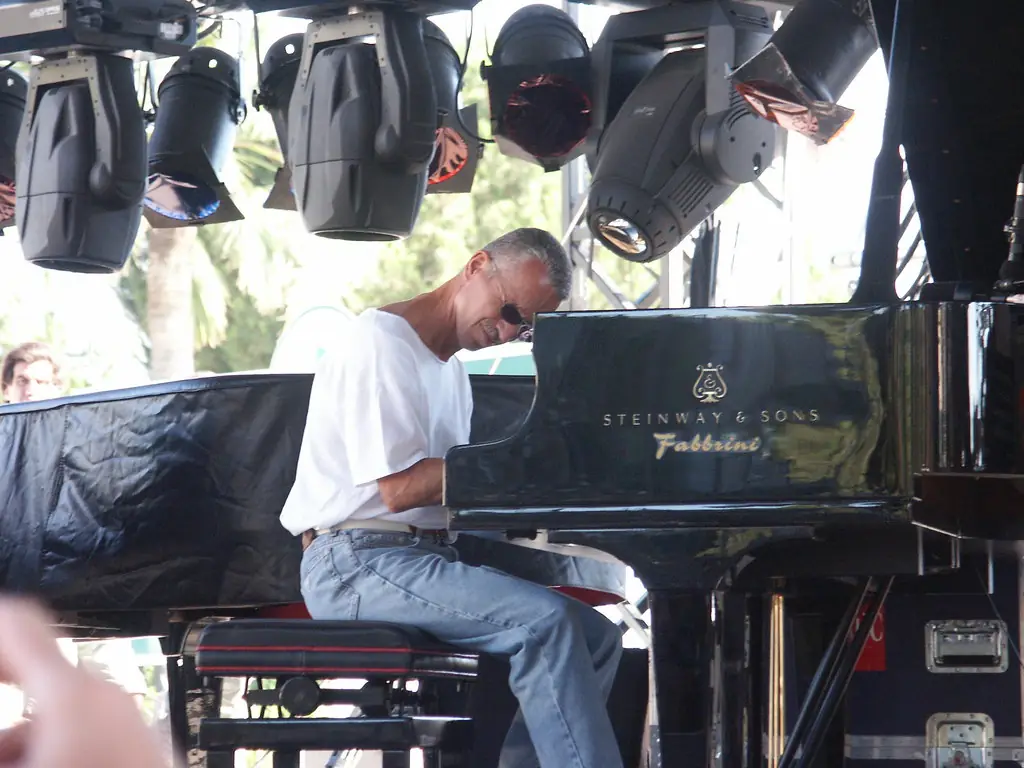
There is a particular quality to the light at Antibes in July — the way it lingers well past nine in the evening, turning the Mediterranean a shade of hammered copper before it finally relents. It is the kind of light that makes everything feel slightly cinematic, slightly improbable. And perhaps that is why a pine grove on the Boulevard Edouard Baudoin has, for more than six decades, felt like the right place to hear a trumpet solo dissolve into the night air.
The Festival International Jazz à Juan returns on 9 July 2026, continuing a tradition that began in 1960 and has since established itself as one of the most prestigious jazz festivals in the world. The setting is the Pinède Gould — a natural amphitheatre of umbrella pines on Antibes' seafront — and the address alone tells you something: this is not a festival that happens despite its location, but because of it.
Sixty-Five Years of the Same Pine Grove
To understand what Jazz à Juan means to the Côte d'Azur, it helps to remember what the festival has witnessed. Since its founding in 1960, the stages of the Pinède Gould have received some of the most consequential names in jazz history. The festival's longevity is not merely a function of institutional persistence; it reflects something about the relationship between this particular stretch of coastline and a music that has always thrived in the tension between structure and improvisation. The Riviera of the 1960s — restless, cosmopolitan, flush with postwar optimism — was a natural habitat for jazz, and the festival has carried that original charge forward through every subsequent decade.
Antibes itself is a city of layered histories. The old town, enclosed within its Vauban ramparts, looks out over the same bay that the Phoenicians once navigated. The Picasso Museum occupies a castle where the painter worked intensively in the autumn of 1946. The weekly market on the Cours Masséna smells of lavender and fresh fish. Jazz à Juan is, in this sense, entirely in keeping with a place that has always known how to hold the ancient and the contemporary in the same frame.
'Dans un cadre exceptionnel, découvrez la programmation de l'un des festivals de jazz les plus prestigieux du monde.' — Jazz à Juan
What the Evening Holds
The Pinède Gould is an outdoor venue, and the experience of attending Jazz à Juan is inseparable from its physical conditions. Umbrella pines filter the last of the daylight. The sea is close enough that you are aware of it — a faint salt presence at the edge of things. Audiences arrive as the heat of the day begins to soften, and the concerts unspool into the small hours.
The festival's programming draws from the full breadth of what jazz has become: the tradition and its mutations, acoustic and electric, the canonical and the contemporary. Specific artists for the 2026 edition had not been announced at the time of publication; the full programme is available at jazzajuan.com as dates are confirmed.
For those planning a stay around the festival, the logistics of the Côte d'Azur in July require some forethought:
- Antibes is well served by train from Nice (roughly 20 minutes) and Cannes (10 minutes), making it accessible without a car.
- The old town offers hotels and rental apartments within walking distance of the Pinède Gould.
- July on the Riviera is high season; accommodation booked early will cost less and offer more choice.
Ticket and pricing information for the 2026 edition was not available at the time of writing. The festival's official site carries the most current details.
There is a specific pleasure in attending a festival that is older than most of its audience — the sense that you are stepping into something with real sediment to it, a history that the pine trees themselves seem to have absorbed. Jazz à Juan in July is not a diversion from the Riviera; it is one of the clearest expressions of what the Riviera, at its best, actually is.