There is a particular quality of light in Cagnes-sur-Mer in early June — still soft enough in the morning to be kind, already warm enough by ten o'clock to remind you that summer has arrived without asking permission. The town sits between Nice and Antibes in a fold of the Alpes-Maritimes, its medieval hilltop quarter watched over by the Grimaldi château, its lower streets running toward a coastline that the Impressionists — Renoir chief among them — found irresistible. It is not the most-photographed address on the Riviera, which is precisely part of its appeal. And on the weekend of 6 and 7 June 2026, one of its quieter corners will be briefly, deliberately, opened to the public.
The Propriété Marro, at 3 avenue Germaine, is a former market-garden estate — an ancienne propriété maraîchère — of the kind that once supplied the tables of coastal towns before the Côte d'Azur became a destination rather than a larder. The visit runs across both days, beginning at eight in the morning, and is limited to 25 people at a time: a number that keeps the experience unhurried and the paths uncrowded. Admission is four euros; visitors under eighteen enter free.
What the Garden Holds
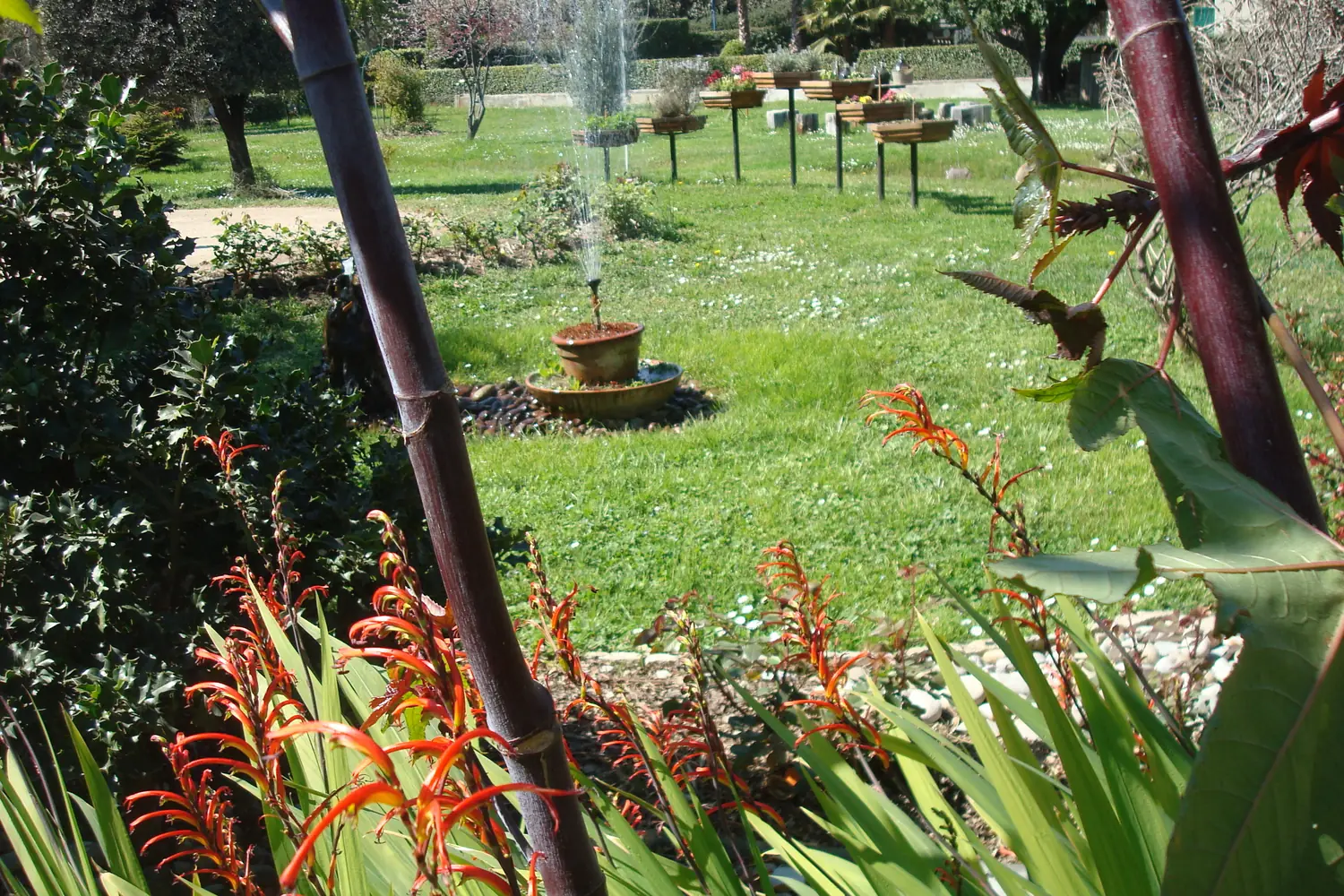
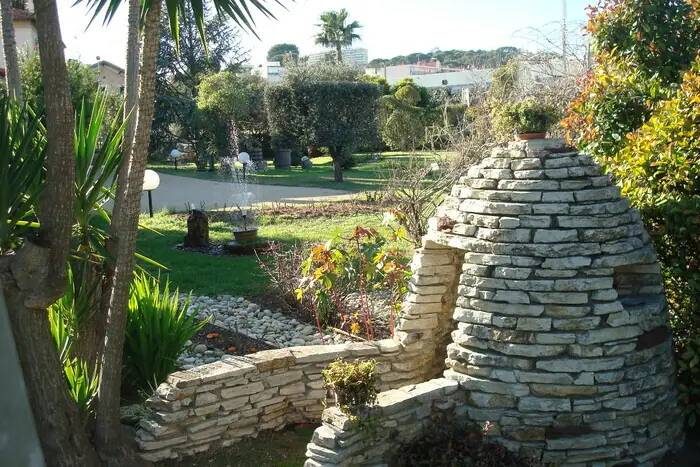
The visit begins indoors, with a short slideshow tracing the evolution of the garden over time — a useful orientation before you step outside and begin to read the space for yourself. From there, the hosts walk guests through the property, pausing at its various elements: the topiaires, those sculpted evergreens clipped into geometric or figurative forms that require years of patient attention to achieve; a potager en permaculture, a kitchen garden managed according to permaculture principles, where companion planting and soil health take precedence over conventional tidiness; dry fountains — fontaines sèches — which punctuate the layout with a Mediterranean restraint that suits a region where water has always been treated as something to be respected rather than squandered; and a rose garden, a roseraie, which in early June should be at or near its seasonal peak.
Permaculture as a practice has gained considerable ground in French private gardens over the past two decades, moving from the margins of horticultural debate into the mainstream of thoughtful garden design. It is not a single technique but a set of principles — working with natural systems rather than against them, reducing inputs, building long-term resilience into the soil. Seeing it applied in a domestic garden of this scale, on a former agricultural property, gives the concept a legibility that a lecture or a book rarely manages.
"Après avoir visionné un court diaporama sur l'évolution du jardin, vous découvrirez quelques outils anciens puis nous vous accompagnerons pour la visite..."
The mention of old tools — outils anciens — is a small but telling detail. A working garden accumulates its own material history: the implements that shaped it, the methods they imply, the hands that used them. In a region where agricultural land has been steadily absorbed by construction since the postwar decades, a property that retains this kind of memory is worth a morning of anyone's attention.
The Larger Context
Cagnes-sur-Mer rewards the visitor who is willing to look past its more obvious neighbours. Renoir's house and studio, the Domaine des Collettes, sits within the town and remains one of the most affecting artist's residences on the coast — the painter spent the last twelve years of his life here, continuing to work despite severe arthritis, surrounded by olive trees that still stand. The medieval village of Haut-de-Cagnes, reached by a short climb, offers the kind of compressed, stone-built atmosphere that the more touristed hilltop villages of the region have largely traded away for restaurant terraces and souvenir shops.
The Propriété Marro fits naturally into a day that moves between these registers: the cultivated and the wild, the historical and the quietly contemporary. The garden visit is not a grand spectacle. It is a considered, small-scale encounter with a place that has been tended over time, by people who appear to find the tending worthwhile — and who, for two days in June, are willing to show you why.
For those arriving from Nice or Antibes, Cagnes-sur-Mer is accessible by train in under twenty minutes. The visit's early start — eight o'clock — makes it possible to be standing among the topiaires while the light is still doing its best work, before the heat of the day settles in and the Riviera remembers what month it is.