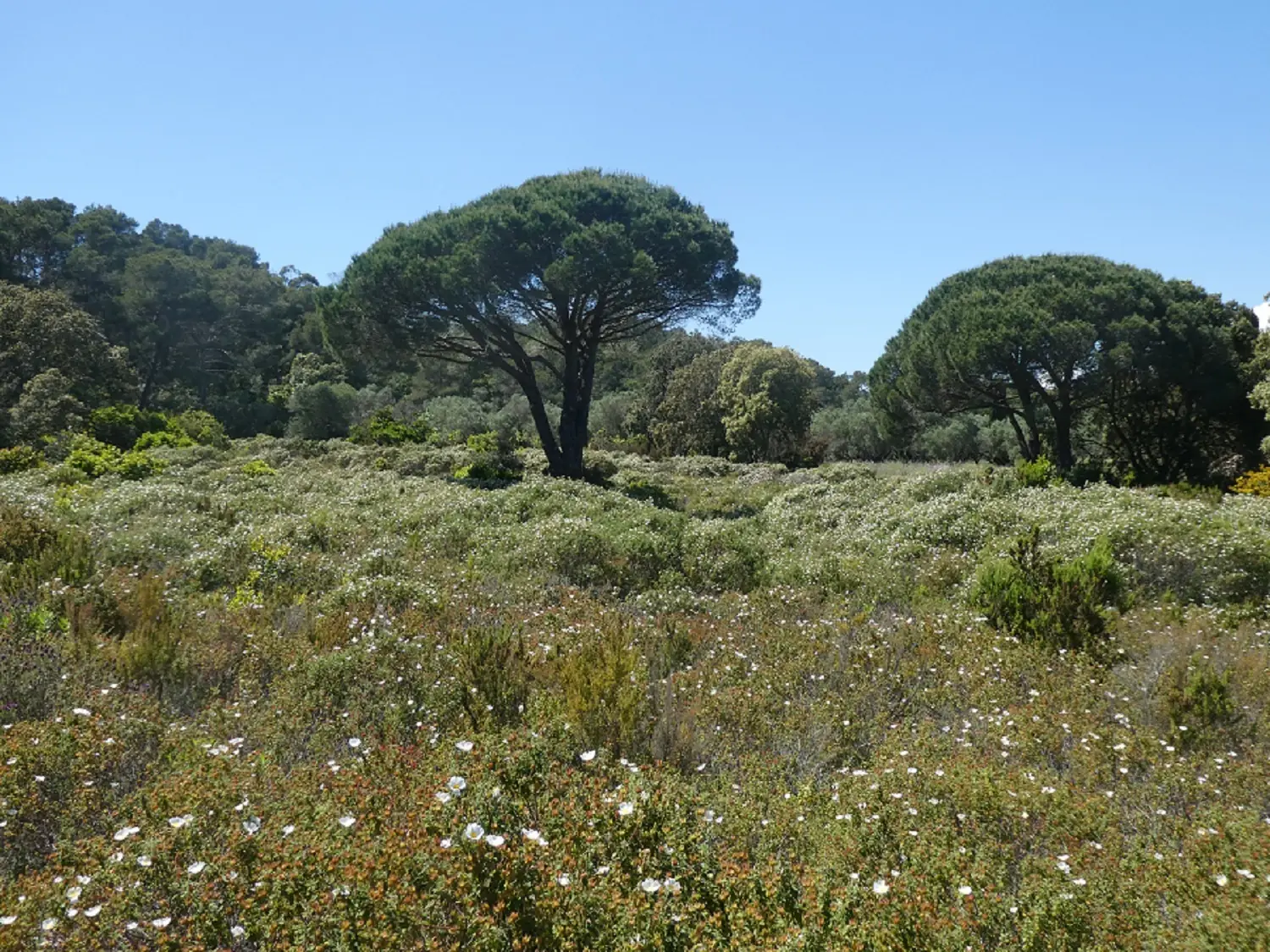
There is a particular quality of light on the Île de Porquerolles in early June — salt-bright, already warm by noon, filtered through the canopies of stone pines that have stood here for generations. It is the kind of light that makes everything look considered, as though the landscape itself has been composed. At Villa Carmignac, that impression is not entirely wrong.
On 6 and 7 June 2026, the Fondation Carmignac opens the gardens of its island villa to a carefully limited gathering — no more than 25 visitors per session — as part of the national event 'Rendez-vous aux Jardins'. The visit is priced at 23€ and led jointly by a cultural mediator and one of the villa's own gardeners: two disciplines, two ways of reading the same terrain. The address, Chemin de la Courtade, sits within the Parc National de Port-Cros, one of the most protected natural areas in France.
Where the Landscape Was Designed to Remember Itself
The gardens surrounding Villa Carmignac were conceived by landscape architect Louis Benech, whose brief was precise: preserve the identity of the site, protect local biodiversity, and resist the temptation to impose. The result is a composition of distinct territories. Closest to the villa, an exotic mound gathers plants from Mediterranean-climate zones across the world — a nod to the eucalyptus, mimosa, and citrus that earlier inhabitants brought to Porquerolles over centuries. Wide views open towards the neighbouring vineyard and the sea beyond.
Descend from there and the mood shifts. A northern meadow, edged with Provençal reeds, gives way to a kitchen garden and orchard — a deliberate echo of the site's agricultural past. To the south, a vast garrigue of cistus stretches towards the forest edge, punctuated by veteran stone pines. In season, the rare endemic Serapias orchid opens in the clearings between them. It is a landscape that holds its history lightly, without annotation.
'Cette déambulation mettra en lumière des œuvres permanentes qui habitent les jardins comme des présences vivantes.' — Fondation Carmignac
Sculpture as Resident, Not Ornament
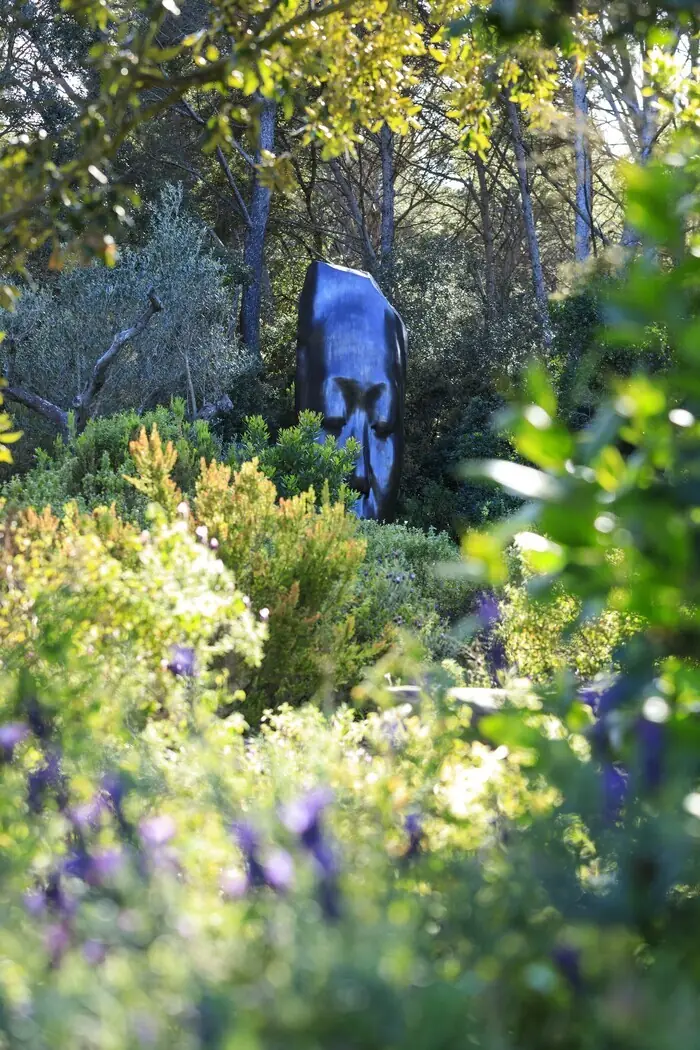
What distinguishes this particular walk from a straightforward garden visit is the framing. The permanent sculptures placed throughout the grounds were created for this site specifically — some of them imposing in scale, others encountered with a degree of surprise around a bend in the path. During the 'Le jardin comme œuvre vivante' sessions, these works are read alongside the plants that surround them: the cultural mediator drawing out their context within contemporary art, the gardener speaking to the living material that frames and sometimes obscures them. Scale, season, and sightline all become part of the reading.
This dual-guide format reflects something the Fondation Carmignac has long understood: that art placed in a natural setting requires two kinds of attention simultaneously. The sculptures do not merely inhabit the garden — according to the foundation's own description, they live there, as presences rather than objects. The distinction is worth holding onto as you walk.
For visitors arriving by ferry from Hyères or Giens, the journey to Porquerolles is itself a kind of preparation — twenty minutes across the Petit Straits, watching the island's silhouette resolve from a dark ridge into individual pine crowns and pale limestone. The island has no private cars; the pace adjusts accordingly. By the time you reach the villa, the tendency to move quickly has usually passed.
Places are strictly limited to 25 participants, which means the visit retains the quality of a private tour rather than a public programme. Booking through the foundation's website — fondationcarmignac.com — is essential. June on Porquerolles is already high season; the gardens, the light, and the company of people who came specifically to look carefully are not something to leave to chance.