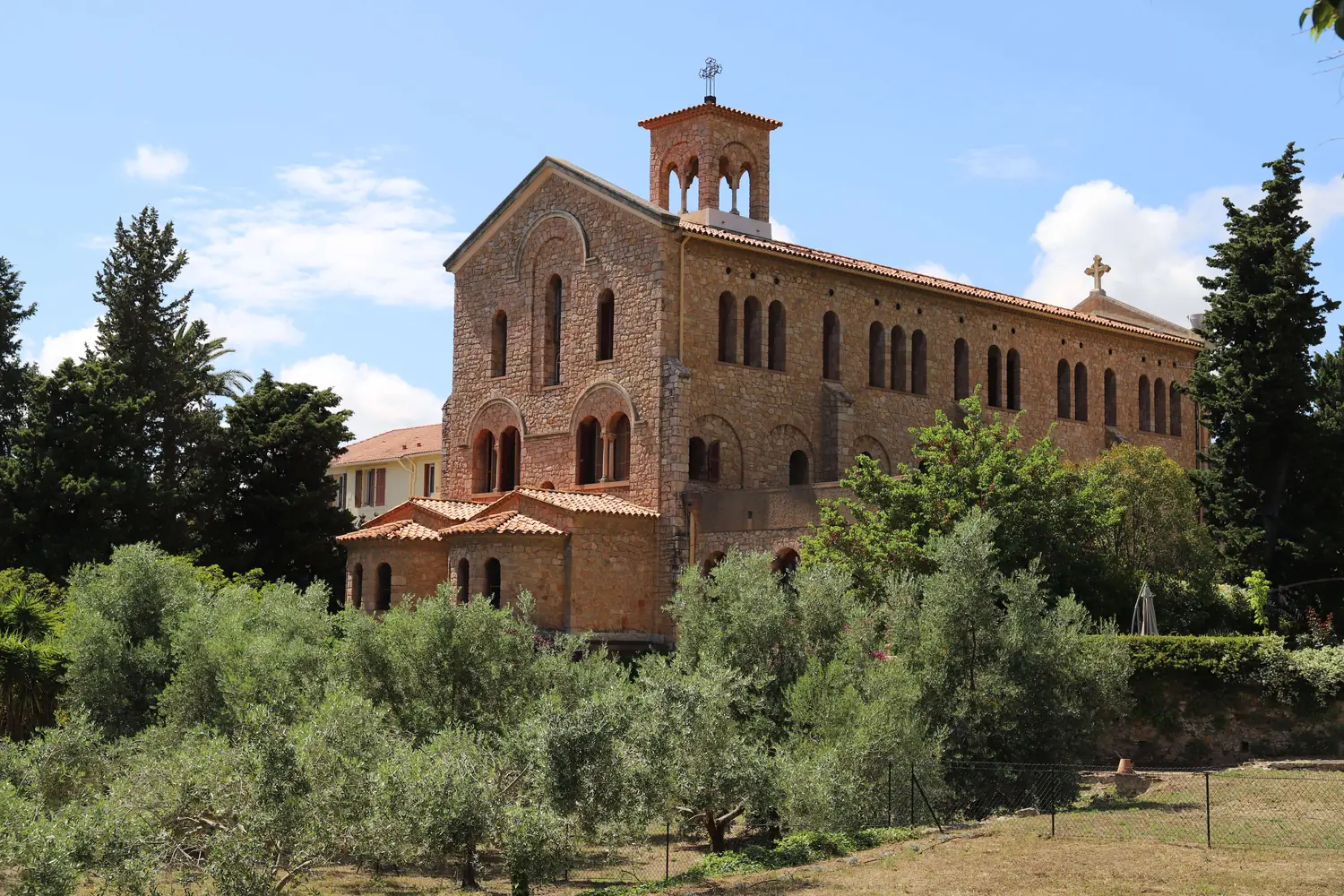
There is a particular quality to light in Hyères in early June — warm without being punishing, long enough in the evening to make stone walls glow. Rue Victor Hugo is a quiet address in this oldest of Riviera towns, and number five gives little away from the street. But step through the gate of the former convent that houses the Ensoleillado residence, operated by the Umane group, and the proportions shift. The chapel of Sainte-Marie-des-Anges was built in 1930, and its architecture carries the measured confidence of that era — solid, deliberate, oriented around interior silence.
On Friday, 5 June 2026, at 17:00, the chapel opens for a guided and commented visit led by a guide from the Patrimoine service of Hyères. The visit begins outside, in front of the chapel itself, before moving within. What follows is not simply a tour of vaulted ceilings and religious iconography: the residents of Sainte-Marie-des-Anges — those who live here today, in what is now a residential facility — present a theatrical performance of their own making. The event requires prior registration, and visitors are asked, with quiet courtesy, not to ring at the foyer. Admission is €20.
A Convent Repurposed, a Community Revealed
Hyères holds a particular position in the history of the French Riviera. It was here, long before Cannes or Nice claimed the international imagination, that nineteenth-century English aristocrats and consumptive poets came to winter. The town's heritage service — the same body whose guide leads this visit — has spent years documenting the layers of that history: the medieval old town on the hill, the Art Deco villas in the palm-lined quartiers below, and the religious institutions that once gave the town much of its civic structure.
The convent at rue Victor Hugo belongs to that longer story. Built in 1930, it was designed to serve a contemplative community; the chapel at its heart was the still point around which daily life organised itself. Today, as the Ensoleillado residence of the Umane group, the building has been given a different kind of purpose — housing residents who now, in turn, have made it their own. It is a conversion that is increasingly common across southern France, where religious communities have diminished and heritage buildings have found new custodians. What is less common is the decision to open those spaces to the public in this particular way.
'La guide du service Patrimoine et les résidents vous font découvrir ce site exceptionnel.'
What the Evening Holds
The structure of the visit is worth understanding before you arrive. The guided commentary will situate the chapel architecturally and historically — its construction date, its original function, the details that reward a slow look: proportions, materials, the quality of light through its windows on a June afternoon. Then comes the theatrical element, performed by the residents themselves. This is not professional theatre imported from outside; it is something made from within the community that inhabits these walls. That distinction matters.
For a visitor, the experience offers several things at once:
- A rare access to a private residential site of genuine architectural interest
- A guide with specialist knowledge of Hyères' built heritage
- A performance that places living presence inside historical space
Hyères is not always on the itinerary of visitors moving along the coast between Toulon and Saint-Tropez. That is, in some respects, its advantage. The old town retains the texture of a place that has not been entirely reconfigured for tourism: the market on the place Massillon, the Moorish Villa Noailles above, the extraordinary salt flats and flamingo colonies of the Giens peninsula just to the south. An evening at Sainte-Marie-des-Anges fits that register — specific, unhurried, rooted in place.
Registration is required. Given the residential nature of the site and the intimacy of what is being offered, numbers will almost certainly be limited. The practical instruction not to ring at the foyer is a small but telling detail: this is a home as much as a heritage site, and the visit asks for a corresponding attentiveness from those who come. Arrive at the chapel entrance on rue Victor Hugo at five o'clock, and let the stone and the voices do the rest.