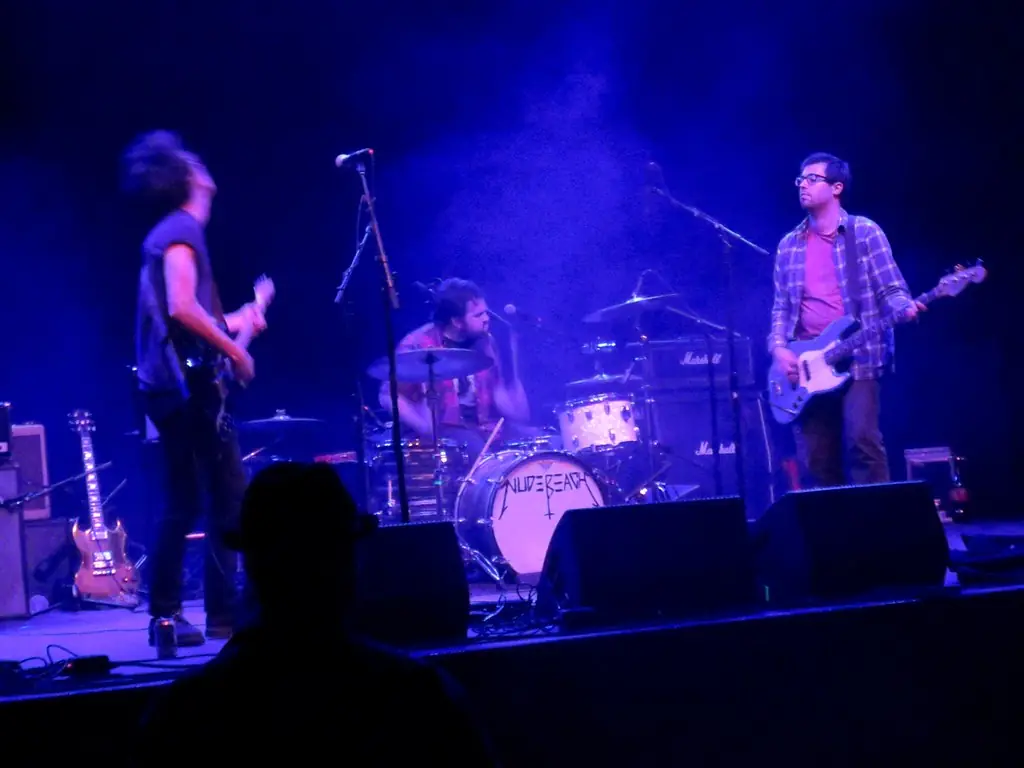
There is a particular quality to the light in Antibes on a July evening — the way it thickens to amber over the ramparts, the way the salt air carries sound just a little farther than it should. The Petite Pinède, tucked along the Boulevard Édouard Baudoin at the edge of Juan-les-Pins, knows this light well. For decades, this pine-shaded garden has served as an outdoor stage for jazz that feels less performed than simply exhaled into the warm night.
On 16 July 2026, the Jammin Summer Session series brings the Etienne Manchon Trio to that stage — piano, double bass, and drums in their most essential configuration, with nothing between the music and the audience but open air.
Three Musicians, One Conversation
The trio is built around Etienne Manchon, who handles both piano and keyboards, alongside Jules Billé on double bass and Théo Moutou on drums. The format is as old as modern jazz itself: a rhythm section that is simultaneously its own soloist, each instrument pulling against and toward the others in a conversation that has no fixed outcome. There are no horns to carry the melody, no vocalist to anchor the listener. What remains is architecture — the way a left hand comps beneath a right-hand line, the way a brushed snare opens space for the bass to breathe.
The Jammin Summer Session is part of the broader Jazz à Juan ecosystem, one of the oldest jazz festivals on the French Riviera. Juan-les-Pins has been drawing musicians and their audiences since the 1960s, when names like Miles Davis and Ella Fitzgerald played under these same pines. The Petite Pinède is the more intimate of the site's two stages — a deliberate counter-programming to spectacle, a place where the distance between performer and listener collapses.
What to Expect on the Night
The Petite Pinède is a standing and seated garden venue, open to the evening air. Arriving early allows time to settle, to watch the last of the daylight leave the canopy of umbrella pines, and to feel the temperature drop by the degree or two that makes a July night on the Côte d'Azur bearable.
The trio format strips jazz back to its load-bearing walls — and what stands is always more interesting than what decoration might have hidden.
For visitors already in Antibes or the surrounding area, the logistics are straightforward: the venue sits within walking distance of the Juan-les-Pins waterfront, and the town itself is well connected by rail along the coast. Admission details are not listed for this session — checking the Jazz à Juan website at jazzajuan.com before the evening is advisable for any ticketing requirements.
Antibes in mid-July is at its most itself: the markets full, the port busy with boats heading nowhere in particular, the old town still cool in the morning before the heat reasserts itself. An evening concert at the Petite Pinède fits into this rhythm without disrupting it — it is an addition, not an event requiring reorganisation of an entire day.
What the Etienne Manchon Trio offers on the 16th is, in the end, a simple proposition: three musicians in a garden, playing jazz as the Mediterranean night comes in. The Côte d'Azur has always understood that simplicity, presented with care, is its own form of luxury.