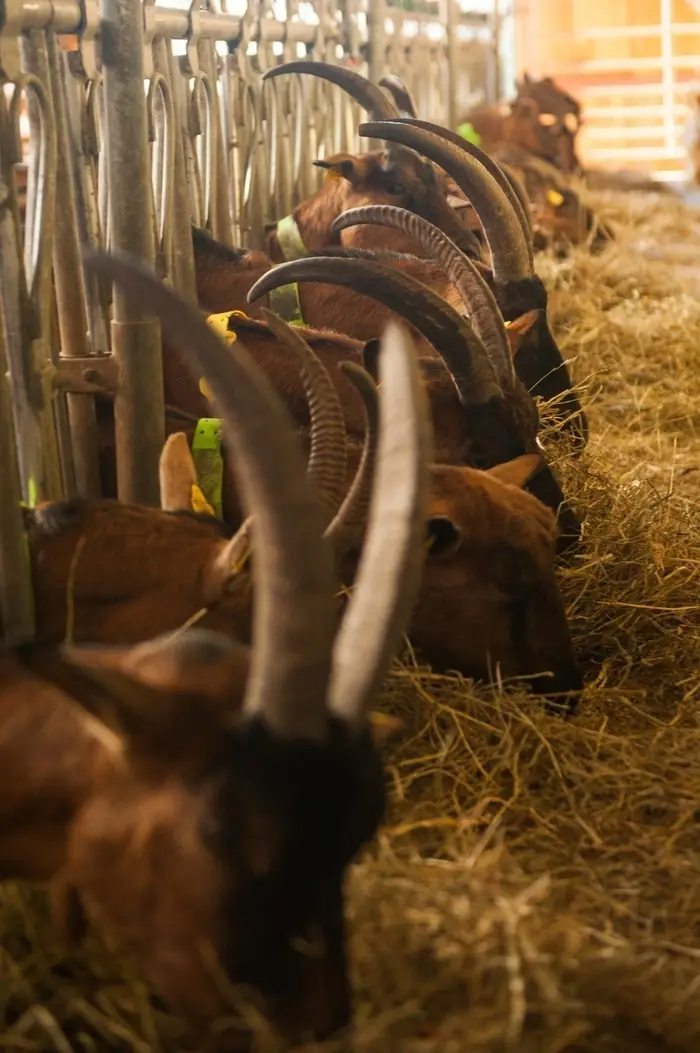
There is a particular quality to the light at half past nine on a June morning in the arrière-pays above Antibes — slanted, still cool, carrying the faint resin of pine and the sharper note of animals and damp stone. At the Chèvrerie de Valbonne, that light falls across a working farm that has no interest in performance. The goats are already restless. The milking is about to begin.
On Saturday 6 June 2026, the farm at 1382 route de Biot opens its gates for a structured day of discovery built around the rhythms of the herd rather than the convenience of visitors. The morning session starts at 9h30 with the traite — the milking — followed at 10h30 by the chance to accompany the troupeau out to its grazing park, walking alongside the shepherd as the animals find their pace. The day closes with a second passage: at 16h30, guests can join the shepherd again to bring the goats back in for the evening. Three moments, each anchored to what the farm actually does.
The Village Behind the Tech Corridor
Valbonne sits in an unusual position in the Alpes-Maritimes. It is, on one side, the medieval village of winding arcaded streets and a Romanesque abbey founded in the twelfth century; on the other, it borders Sophia Antipolis, Europe's oldest and largest technology park. The tension between these two identities has, if anything, sharpened local attachment to the land. The farms and market gardens that persist in the hills around the village carry a weight of cultural meaning beyond simple agriculture — they are evidence that the region has not been entirely reclassified as a suburb of innovation.
The Chèvrerie de Valbonne produces certified organic goat's cheese, sold direct from the farm on Wednesdays and Fridays from 15h to 19h, and on Saturdays from 10h to 12h and again from 15h to 19h. The cheeses are made on site from the milk of the herd you can watch being milked that morning — a circularity that is rarer than it should be, even in Provence.
The Saturday Market and the Beekeeper
Every Saturday afternoon from 15h to 19h, the farm hosts a small producers' market — a mini-marché drawing together a rotation of local vendors. The stalls on any given Saturday might include organic vegetables, olive oil, bread, jams, chocolate, honey, saffron, kimchi, orange blossom water, succulents, and craft beers. The list is specific enough to suggest real producers with real specialities rather than a generic artisan fair.
On 6 June specifically, at 15h30, a beekeeper named Suzie will lead a session on the world of bees — her work as an apicultrice, the life of the hive, and what that means for the landscape around Valbonne. The format is conversational; questions are encouraged. Honey, presumably, will be available.
"Consommer local, circuit court, direct producteur" — the farm's stated values read less like a marketing line than a practical description of how the place operates.
For a visitor whose idea of the Côte d'Azur is still organised around the Croisette and the port at Antibes, a morning at a working goat farm in the hills might require a small adjustment of expectation. The road out of Valbonne village climbs quickly into a landscape that feels genuinely agricultural — terraced land, olive groves, the occasional vineyard. The farm is not a curated experience with a gift shop attached. It is a place where cheese is made, goats are fed, and a beekeeper has agreed to share what she knows on a Saturday afternoon in early summer.
The practical details are straightforward: arrive by 9h30 if you want the milking; come back at 15h for the market and Suzie's bee talk; stay for the 16h30 return of the herd if the day has earned it. No ticket price is listed — contact the farm directly. Wear shoes you are comfortable walking in. The goats, as a rule, do not wait.