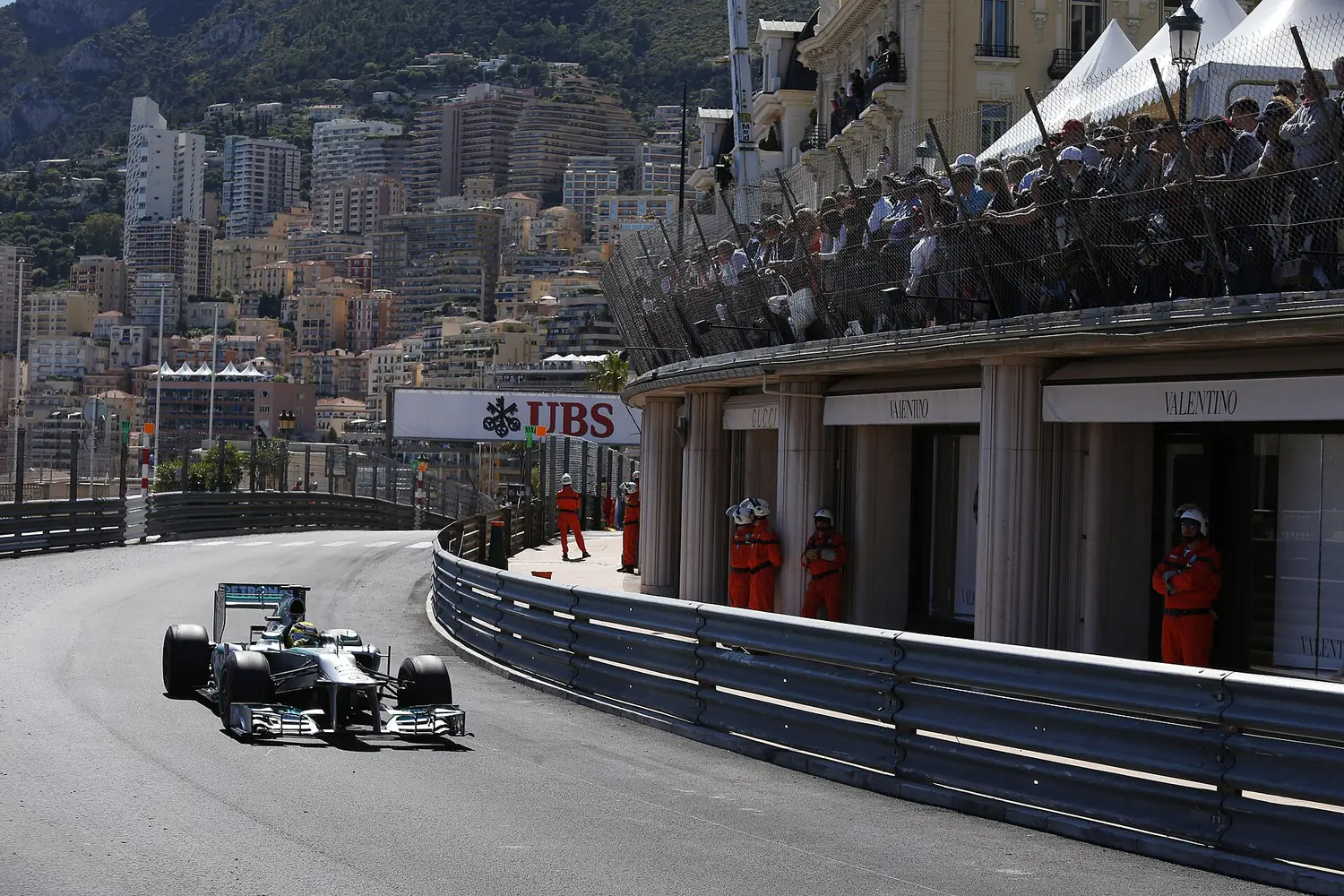
There is a moment, sometime on Thursday evening before the weekend begins, when Monaco stops being Monaco. The harbour cranes have retreated, the last steel barrier has been bolted to the tarmac on Boulevard Albert Ier, and the principality — all 2.02 square kilometres of it — has quietly transformed into something else entirely. The grandstands are empty, the paddock is sealed, and the streets that will carry Formula 1 machinery at 280 kilometres per hour still hold the particular silence of a stage before curtain-rise. If you walk the circuit at that hour, you understand why drivers call it unlike anywhere else. The barriers are not abstract. They are the walls of actual buildings.
The Grand Prix de Monaco 2026 takes place from 5 to 7 June, with the race itself run on Sunday 7 June over 78 laps of the Circuit de Monaco. It is the sixth round of the Formula 1 World Championship that season. Tickets — for grandstand tribunes and paddock access — are available through the official Formula 1 event page.
A Circuit Built From the City Itself
The layout has not changed in its essentials since the race was first held in 1929: 3.337 kilometres of public streets threaded between Port Hercule, the climbing hairpin of Sainte-Dévote, a tunnel carved beneath a hotel, and the tight elbow of the Fairmont hairpin. Nothing here is permanent. Every barrier, every grandstand, every pit-lane structure is assembled in the weeks before the race and dismantled immediately after. The circuit borrows the city's fabric — casino square, the seafront, the tunnel — and then returns it. Monaco resumes being Monaco before the month is out.
What makes the circuit so demanding is precisely what makes it so watchable. It is the slowest lap on the Formula 1 calendar, yet the least forgiving. There is almost no room to overtake; the race is, in large part, decided by Saturday's qualifying session, when drivers must extract a perfect lap from streets where the margin between the ideal line and the armco barrier is measured in centimetres. The tunnel section compresses sensory experience to a near-absurd degree — full throttle, near-darkness, the sound bouncing off concrete before the car erupts back into Mediterranean light at the chicane.
'Ici on ne double presque jamais' — here you almost never overtake — which is precisely why every position gained in qualifying carries the weight of the race itself.
What the Weekend Holds
For a guest arriving on 5 June, the programme unfolds across three distinct registers. Practice and qualifying sessions shape the earlier days, giving the paddock and grandstands their particular energy — technical, concentrated, punctuated by the compressed roar of engines bouncing between apartment façades. By race morning on 7 June, the atmosphere has shifted into something harder to name: a city holding its breath.
The viewing experience varies sharply depending on where you sit:
- Grandstand tribunes** along the harbour offer the widest sightlines and the longest stretches of visible track
- The Fairmont hairpin section is the slowest point on the circuit — cars are briefly visible, almost stationary by Formula 1 standards, before accelerating away
- Paddock access, where available, brings you into the operational heart of the weekend, within reach of the teams and machinery
Beyond the circuit, Monaco's geography does what it always does: compresses glamour and function into an improbably small space. The yachts moored in Port Hercule have been there for the race weekend for decades; the terraces of La Condamine fill with people who may or may not have tickets but want proximity to the sound. The Riviera light in early June is long and clear, the evenings warm enough to sit outside until well past nine.
There is something worth noting about the scale of the place. Unlike any other Formula 1 venue, you can walk the circuit's approximate route on foot in under half an hour. The geography that makes the track so difficult — its elevation changes, its compression, its lack of run-off — is simply the topography of a working city. The race does not happen in a purpose-built facility at the edge of town. It happens here, in the streets, and then it leaves.
For those who have never attended a Formula 1 race before, Monaco in June is not the most straightforward introduction — logistics require planning well in advance, and the principality's size means accommodation and access must be considered carefully. But as a piece of sporting theatre set against one of the Mediterranean's most precisely arranged backdrops, the weekend has accumulated nearly a century of reasons to make the journey.