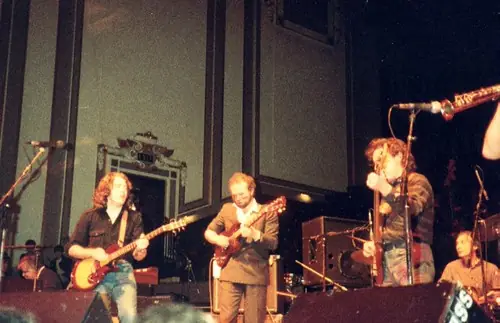
There is a particular quality to the light at Pinède Gould in the hour before a concert begins. The Mediterranean has already done its work on the day — bleached the limestone walls, stilled the air over the bay — and what remains is that rare coastal dusk when the temperature drops just enough to make sitting outside feel like a considered pleasure rather than an endurance. It is into this setting that Jazz à Juan returns each summer, and it has been doing so, on the same stretch of Antibes coastline, since 1960.
On 17 July 2026, the festival's stage on Boulevard Edouard Baudoin hosts a pairing that reads less like a booking and more like a statement of intent. Marcus Miller — bassist, composer, producer, and one of the most consequential figures in jazz's post-fusion landscape — arrives with his 'We Want Miles! The Reunion Tour 2026', a programme built around the music of Miles Davis. Sharing the bill is Samara Joy, the New York vocalist whose spare, deeply schooled approach to jazz singing has made her one of the most closely watched voices of her generation.
A Stage Built on History
Jazz à Juan does not need to manufacture prestige. Its roster across the decades reads like a survey of the art form itself: Davis performed here, as did Ella Fitzgerald, Ray Charles, and B.B. King. The Pinède Gould — a pine grove pressed against the sea between Antibes and Juan-les-Pins — provides something no indoor venue can replicate: the sound of cicadas in the intervals, the faint salt in the air, the way an upright bass carries differently when there are no walls to reflect it. The festival has always understood that the setting is part of the performance.
Marcus Miller's connection to Miles Davis was not incidental. Miller played bass and co-produced some of Davis's most celebrated work of the 1980s, including the album Tutu, and remained close to him until Davis's death in 1991. A tour titled 'We Want Miles!' — a phrase Davis's audiences famously chanted — is therefore something other than a tribute act. It is a musician revisiting a creative relationship that shaped his own voice, performing music he helped make, in a context where that history is understood.
'We Want Miles!' was the chant that greeted Davis at his 1981 comeback concerts — a demand, an affection, and a kind of collective memory compressed into three words.
What the Evening Holds
The double bill format is itself a kind of argument about the breadth of jazz in 2026. Samara Joy works in an idiom — classic vocal jazz, rooted in the bebop and hard bop tradition — that is distinct from Miller's electric, groove-centred approach, and the contrast is the point. Audiences arriving at Pinède Gould on the 17th will move through two very different registers of the same art form over the course of a single evening.
For those travelling to the Côte d'Azur specifically for the concert, the geography is generous. Antibes is twenty minutes from Nice by train, and the old town — its ramparts, the Picasso Museum, the morning market on Cours Masséna — rewards the extra day on either side of a festival visit. Juan-les-Pins, immediately adjacent to the Pinède, has the kind of low-key seafront that the more celebrated resorts along the coast have largely lost.
Tickets and full programme details are available at jazzajuan.com. The festival's site is the only reliable source for pricing and availability as the July dates approach — both tend to move quickly once the season opens.
What Jazz à Juan offers, ultimately, is not spectacle for its own sake but a particular alignment: serious music, played seriously, in a place that has earned its place in the story of that music. On a July evening in the pines above the bay, that alignment is worth the journey.