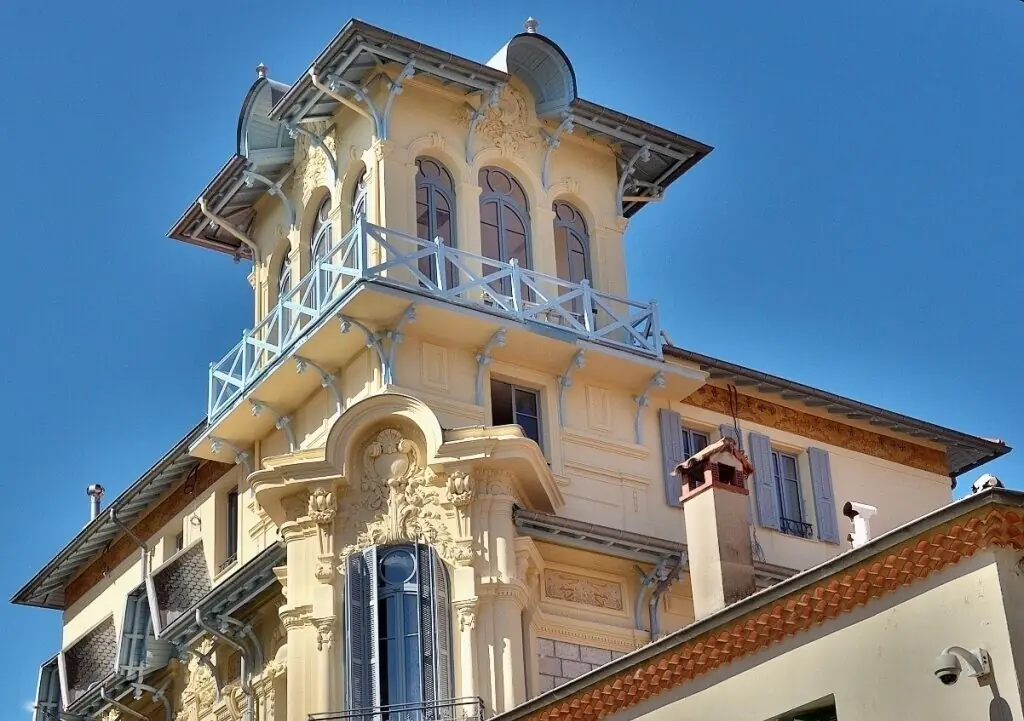
There is a particular quality of light in Vence on a June afternoon — thick and golden, the kind that makes the old town's medieval ramparts look freshly quarried. The Place du Grand Jardin sits just outside those walls, unhurried, shaded by plane trees, the Villa Alexandrine occupying its corner with the quiet authority of a building that has seen several centuries come and go. On Saturday 13 June 2026, that calm will be broken — deliberately, delightfully — by a small crime.
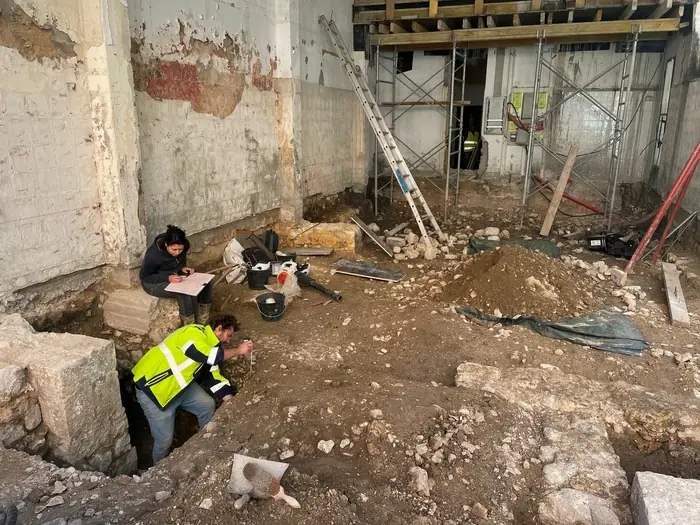
Something has been stolen. Relics of the past, the organisers warn, have been taken and buried deep in the sand. The only people who can recover them are the youngest visitors to Vence.
The Case, the Crime, the Dig
The atelier 'Les petits archéologues' runs from 14h00 throughout the afternoon, continuously, so there is no fixed slot to book and no fee to pay — entry is free and no reservation is required. Children from three years old are welcome. The rendezvous point is the tourist information bureau inside the Villa Alexandrine, at Place du Grand Jardin, 06140 Vence: a logical headquarters for a mission of recovery, given that the building already serves as the town's institutional memory, a place where maps are consulted and histories explained.
The premise is straightforward and rather clever. By framing the workshop as an investigation — a theft, a burial, a search — the organisers sidestep the earnest didacticism that can make children's cultural programming feel like homework. Instead, the afternoon becomes a narrative the child is already inside before they've picked up a brush or sifted a single grain of sand.
'Au voleur!' — someone has made off with the past, and the petits archéologues are the only ones who can bring it back.
Archaeology, as a discipline, asks people to read the earth the way others read a page: layer by layer, slowly, with attention. For a three-year-old, that patience is aspirational rather than practical — but the physical act of searching, of finding something buried, carries its own satisfaction that requires no explanation.
Vence and the Weight of What Lies Beneath
The choice of setting matters here. Vence is one of the oldest continuously inhabited towns on the Côte d'Azur, its origins reaching back to a Ligurian settlement and later a Roman city known as Vintium. The medieval cathedral at its centre incorporates Roman-era stonework; the narrow streets of the old town follow paths worn long before the current buildings were raised. The region's soil has yielded Roman coins, Gallo-Roman inscriptions, traces of lives that predate the tourism economy by two millennia. When a workshop in Vence asks children to think about what lies underground, it is not purely imaginative — the ground here genuinely holds things.
That context gives the afternoon's playfulness a certain resonance. The Côte d'Azur is so thoroughly associated with the present tense — the yacht, the rosé, the season — that its depth of history can feel like a kept secret. An afternoon that asks even the youngest visitors to consider what came before, and to take the question seriously enough to dig for it, is doing something quietly worthwhile.
For families spending time in or around Vence this June, the practical details are as undemanding as the event itself. The Villa Alexandrine is easy to find — the Place du Grand Jardin is the natural gathering point at the edge of the old town — and the continuous format means arriving at 15h30 is as valid as arriving at 14h00. There is no registration form, no wristband, no queue to join in advance. A free Saturday afternoon, a mission to complete, a town old enough to make the mission feel real.
Vence will still be there when the digging is done: the cathedral, the Chapelle du Rosaire that Matisse designed in his final years, the market square, the long view south toward the coast. But for a few hours on a June afternoon, the most important square metre in town will be the one concealing something that needs to be found.