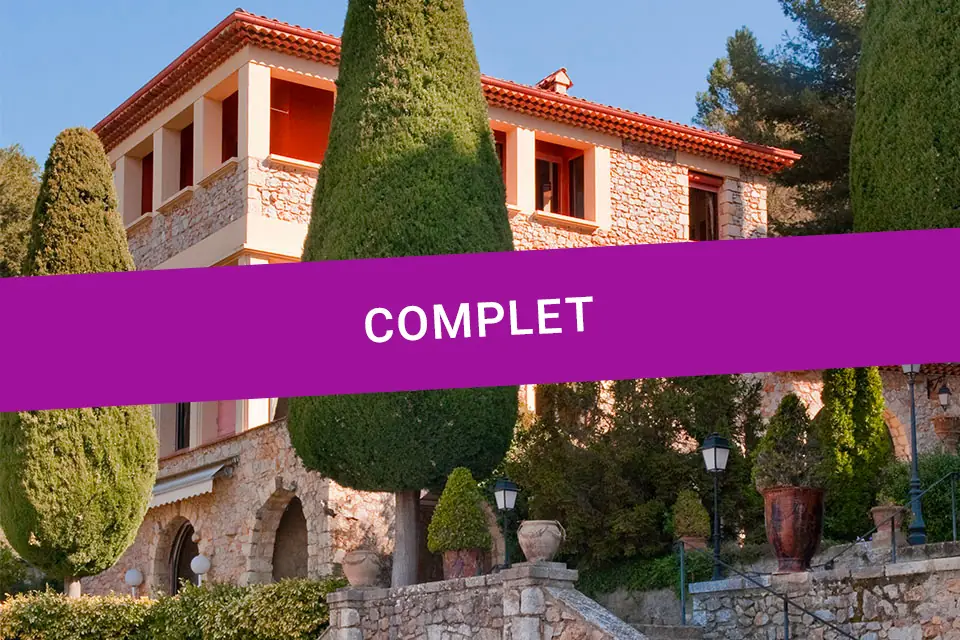
There is a particular quality of light on the heights above Cannes in early September — the summer crowds have begun to thin, the mimosa is still months from blooming, and the Mediterranean below sits flat and silver in the afternoon heat. It is in this transitional stillness that Villa Domergue receives its visitors: once a month, no more, by reservation only.
The villa sits at 15 avenue Fiesole, at the end of an impasse that keeps it deliberately removed from the city's noise. On Saturday, 5 September 2026, two guided visits are offered — one at 15:00, one at 16:00 — each lasting one hour. Tickets are priced at 8.50 € for a full-price entry, 5.50 € for those aged 18 to 25, Cannes Pass Culture holders, and Cannes Seniors Le Club members, and 2 € for under-18s, students, job-seekers, and those carrying a disability card along with their companion. Booking online in advance is mandatory.
A House Built for Beauty, Then Protected by Law
Villa Domergue was classified as a monument historique in 1990 — a designation that, in France, signals not merely architectural interest but a collective decision that something must not be lost. The villa takes its name from Jean-Gabriel Domergue, the early twentieth-century painter whose elegant, elongated portraits of Parisian women became one of the defining visual signatures of a certain interwar glamour. He and his wife Odette built this house on the Cannes hillside as both a home and a working studio, and the property retains that dual character: a place made for living and for looking.
The gardens are as much a part of the estate as the walls. Terraced and planted in the Mediterranean tradition — stone, cypress, the slow architecture of old olive trees — they offer what the streets below cannot: a sense of composed distance from the city. From here, the Lérins Islands are visible on clear days, sitting low in the sea like a rumour of somewhere quieter still.
'Classée monument historique depuis 1990, la Villa Domergue ouvre ses portes une fois par mois pour des visites exclusives guidées.'
What the Hour Holds
The guided format is deliberate. A villa of this kind — private in spirit even when open to the public — is best understood with someone who can read the rooms. The guide moves visitors through the intersection of art, nature, and patrimoine that defines the property: the paintings and decorative objects that remain within it, the relationship between interior and garden, the story of how a working artist's home becomes, over decades, a piece of a city's identity.
An hour is the right amount of time. It is long enough to register the textures — terracotta, painted plaster, the particular weight of Mediterranean afternoon light through old shutters — and short enough that nothing is laboured. Visitors leave with a sense of having been let in on something, rather than having processed a site.
For those spending a September weekend on the Côte d'Azur, the visit fits naturally into an afternoon that might begin with lunch in the Suquet, Cannes's old quarter, and end somewhere along the Croisette as the day cools. The villa is not a detour from the city; it is a different angle on it — the private, cultivated, slightly elevated version of a place that usually presents itself at sea level and full volume.
Reservations are required online and, given the monthly frequency and the two-slot structure of each opening, places fill at a pace that rewards early planning. The website for the venue is listed through the city of Cannes's cultural agenda. September, with its returning light and its restored quiet, is among the better months to make the climb.