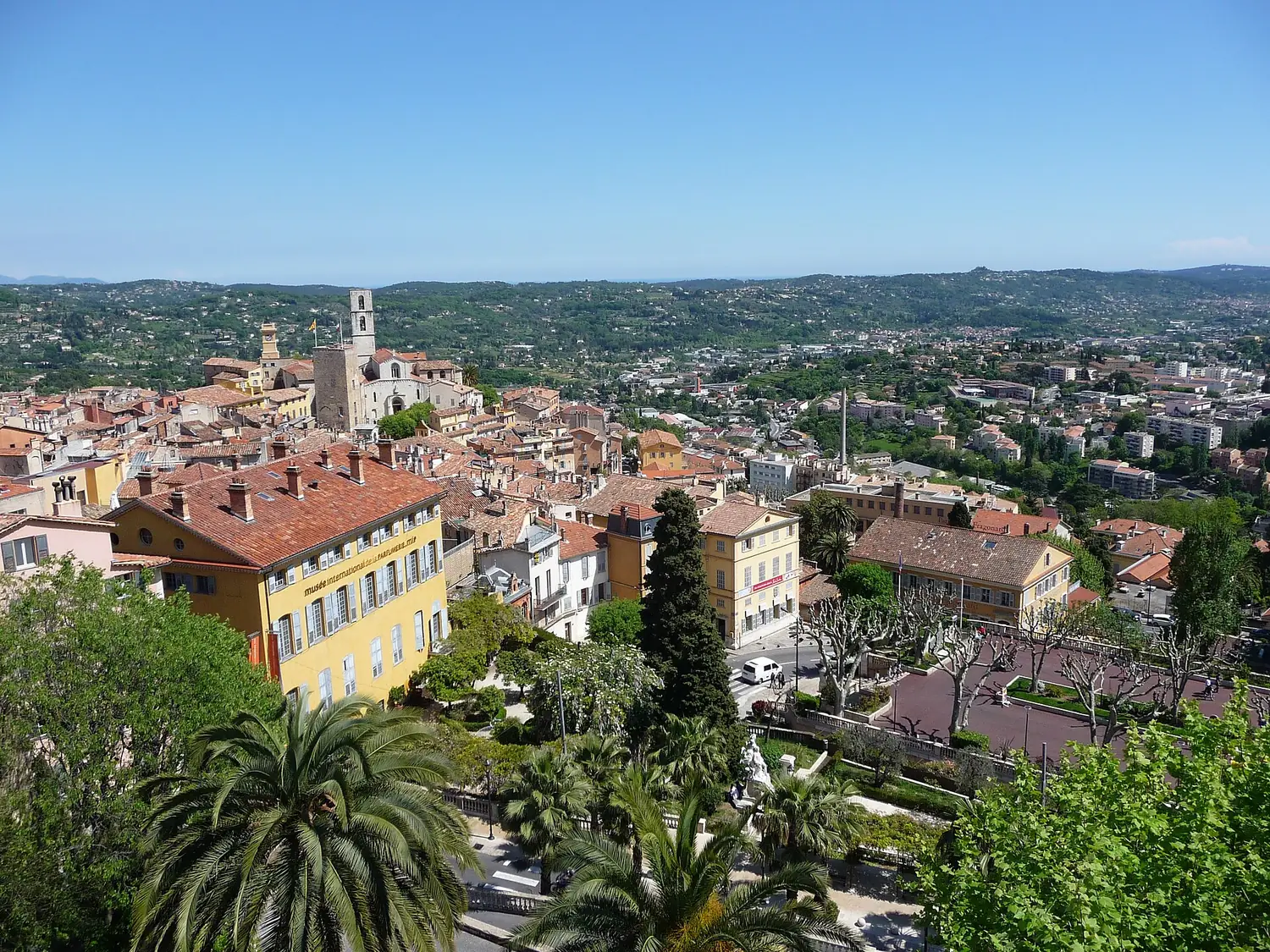
There is a particular quality to the air in Grasse on a November morning — cooler than the coast below, carrying something floral even in the off-season, as though the town itself cannot quite forget its vocation. The jasmine fields have long been harvested by this point, but the industry they built remains very much alive in the workshops, laboratories and training centres tucked into the hillside streets above the Côte d'Azur.
On Thursday 26 November, a group of job-seekers registered with France Travail Grasse will be welcomed to the ASFO centre at 48 Avenue Riou Blanquet for a guided discovery of the professions that make up the perfumery trade. The visit, which begins at 09:00, is organised for people actively looking for work in the sector — an introduction to what a career in this industry can actually look like from the inside.
The Capital of a Craft
Grasse has been synonymous with perfume since the sixteenth century, when local tanners began scenting their leather gloves — a luxury trade that gradually gave way to something more lasting. Today the town holds a designation as a UNESCO Intangible Cultural Heritage site for its savoir-faire in perfumery, and it remains home to some of the largest fragrance houses in the world, supplying raw materials and expertise to the global industry. The professions involved are more varied than the romantic image of the solitary 'nose' suggests: extraction technicians, quality controllers, raw-material buyers, laboratory assistants, and logistics specialists all form part of an ecosystem that employs thousands across the Alpes-Maritimes.
'Grasse is not just a place where perfume is made — it is where the knowledge of how to make it is kept alive.'
ASFO — the Association pour la Formation Professionnelle — operates as a vocational training organisation, and its Grasse centre is positioned at the intersection of this heritage industry and the contemporary labour market. Visits of this kind, arranged for France Travail participants, serve a practical purpose: they connect people who are between jobs with employers and trainers who can explain, concretely, what entry into the sector requires.
What the Morning Holds
The format is a structured discovery session rather than a public open day. Attendees can expect to learn about the range of métiers — the skilled trades — that constitute the perfumery industry in Grasse, and to understand the training pathways that ASFO offers toward them. For someone considering a professional reorientation, or simply trying to understand whether a career in fragrance is realistic, an hour or two inside a centre like this offers more clarity than any brochure.
The ASFO building sits on Avenue Riou Blanquet, on the edge of town, within easy reach of the historic centre with its Musée International de la Parfumerie and the old distilleries that have been welcoming visitors for generations. Grasse itself is forty minutes by road from Nice and roughly twenty from Cannes — close enough to the coast to feel connected, high enough in the hills to feel apart from it.
November is a quieter month in Grasse. The summer tourists have gone, the rose harvest is months away, and the town returns to something closer to its working self. It is, in that sense, a fitting time to look at the industry not as spectacle but as livelihood — to ask not what perfume smells like, but what it takes to make it, and who does the making. That is precisely the question this morning at ASFO is designed to answer.