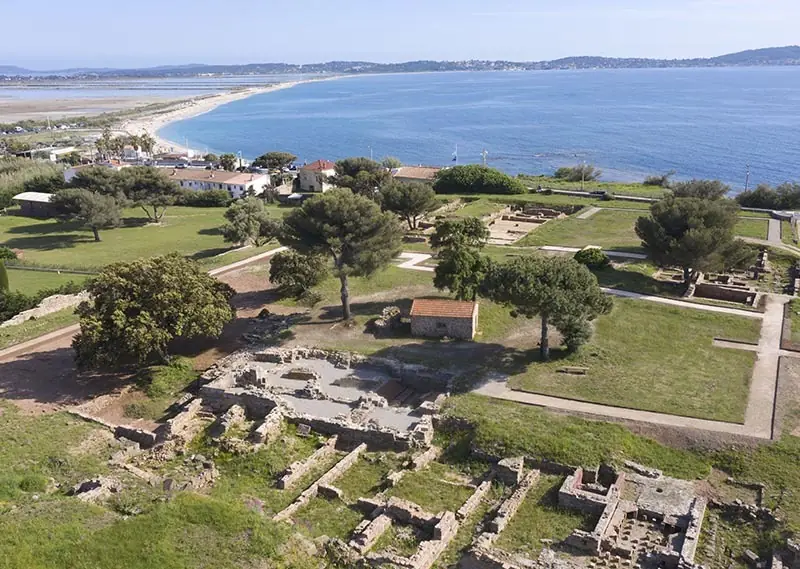
The road to Olbia runs along the Almanarre shoreline, where the Mediterranean sits low and silver in the early summer light. Salt flats shimmer to the west; the Giens peninsula curves away to the south. It is easy, driving this stretch of coast, to miss the slight promontory where the ruins begin — stones the colour of dry earth, half-hidden by scrub, exhaling a quiet that feels older than the surrounding beach traffic. Which, in every meaningful sense, it is.
On 13 and 14 June 2026, the Site archéologique d'Olbia opens its doors for a series of commented visits tied to the exhibition Histoires d'Hyères : ce que raconte l'archéologie en 2025. The visit lasts approximately 40 minutes and is open to anyone aged 12 and over — children must be accompanied by an adult. Booking is required through the site's online ticketing system.
A City That Survived a Thousand Years
Olbia is not merely old. It is, by the reckoning of archaeologists, something rarer: an ancient Greek colonial town whose ground plan survives intact — the only such example from the network of fortress-colonies established by Massalia (present-day Marseille) from the fourth century BC onward. The first Olbians were soldier-settlers: citizens of Marseille dispatched to fish, farm, and — above all — secure the maritime trade routes that kept the wider Greek colonial project alive along this coast.
What they built endures in outline if not in height. Fortifications, laid-out streets complete with drainage channels and raised pavements, a communal well, blocks of housing divided into individual dwellings, shops, thermal baths, sanctuaries — the infrastructure of a functioning urban community, legible beneath your feet across a span of ten centuries. Medieval Hyères added another layer: the remains of the abbey of Saint-Pierre de l'Almanarre were discovered on the same site, folding a further chapter into an already dense palimpsest.
'Les vestiges mis au jour permettent aux visiteurs de comprendre l'évolution urbaine d'une ville antique sur 1000 ans.' — Site archéologique d'Olbia
What the Latest Excavations Have Found
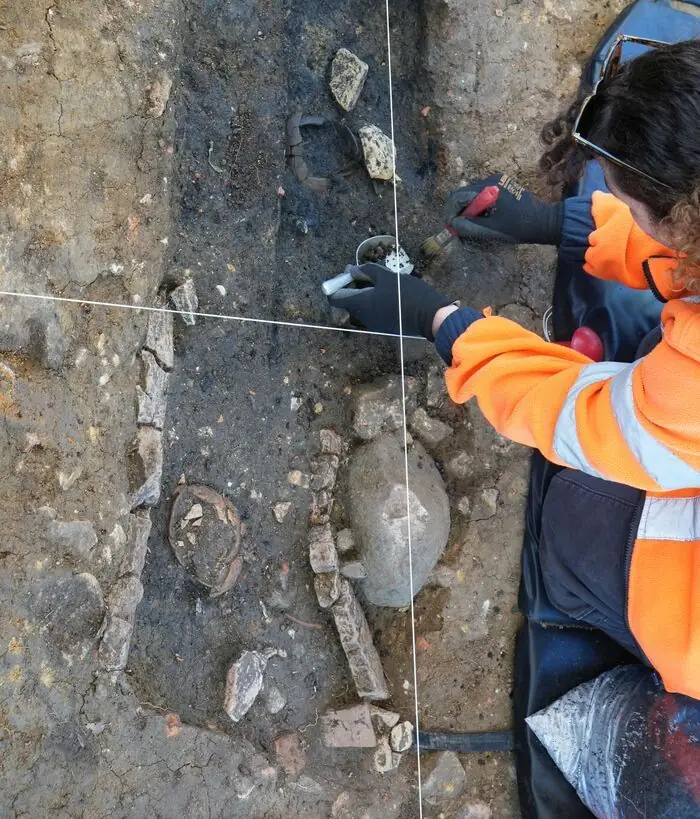
The commented visit this June is built around new research. Guides will walk visitors through the findings of recent fouilles préventives — preventive excavations — conducted at Olbia by the Département du Var and the Institut national de recherches archéologiques préventives (Inrap), with particular focus on a Roman-era necropolis uncovered during the work. Alongside this, the visit addresses the results of planned excavations at the Château d'Hyères, carried out by the Laboratoire d'archéologie médiévale et moderne en Méditerranée (LA3M). Both strands feed into the 2025 research cycle that the exhibition documents — meaning what visitors hear is not a rehearsed museum script but a live account of archaeology still in progress.
For anyone with a passing interest in how cities grow, adapt, and disappear, this is a precise and grounded forty minutes. The format — guided, commented, structured around actual excavation data — suits the site's character. Olbia does not traffic in reconstructions or theatrical staging. The ruins speak plainly, and the commentary exists to translate.
The practical details are straightforward: - Dates: 13 and 14 June 2026 - Location: Site archéologique d'Olbia, Route de l'Almanarre, 83400 Hyères - Duration: approximately 40 minutes - Age: 12 and over; adult presence required - Booking: online via the venue's ticketing platform at hyeres.fr
Hyères itself — the oldest winter resort on the Côte d'Azur, favoured by Tolstoy, Stevenson, and Queen Victoria before the railway pushed fashionable attention further east toward Nice and Cannes — retains a certain composed self-sufficiency. It does not perform for visitors. Neither does Olbia. The site sits at the edge of the sea in the same matter-of-fact way it has for two and a half millennia, and on these two June mornings it will have something specific and recent to say about itself.