There is something quietly disorienting about standing inside a neo-Palladian château on the Côte d'Azur and watching the megalithic alignments of Carnac materialise on a screen before you — stone rows planted four thousand years before anyone thought to build here, on this limestone ridge above the Loup valley. That mild vertigo, the sense of being simultaneously rooted and transported, is precisely what the Micro-Folie programme was designed to produce.
On Sunday, 20 September 2026, the Micro-Folie de Villeneuve-Loubet opens its doors from 11 a.m. for a free, reservation-required screening event titled Patrimoine français — Un voyage à travers les monuments. The occasion is the Journées du Patrimoine, France's annual open-heritage weekend coordinated by the Ministère de la Culture — a day when châteaux, ministries and monuments across the country lower their thresholds and invite the public in. Here, the invitation is extended through a different kind of door: a digital one.
The Château That Became a Cultural Centre
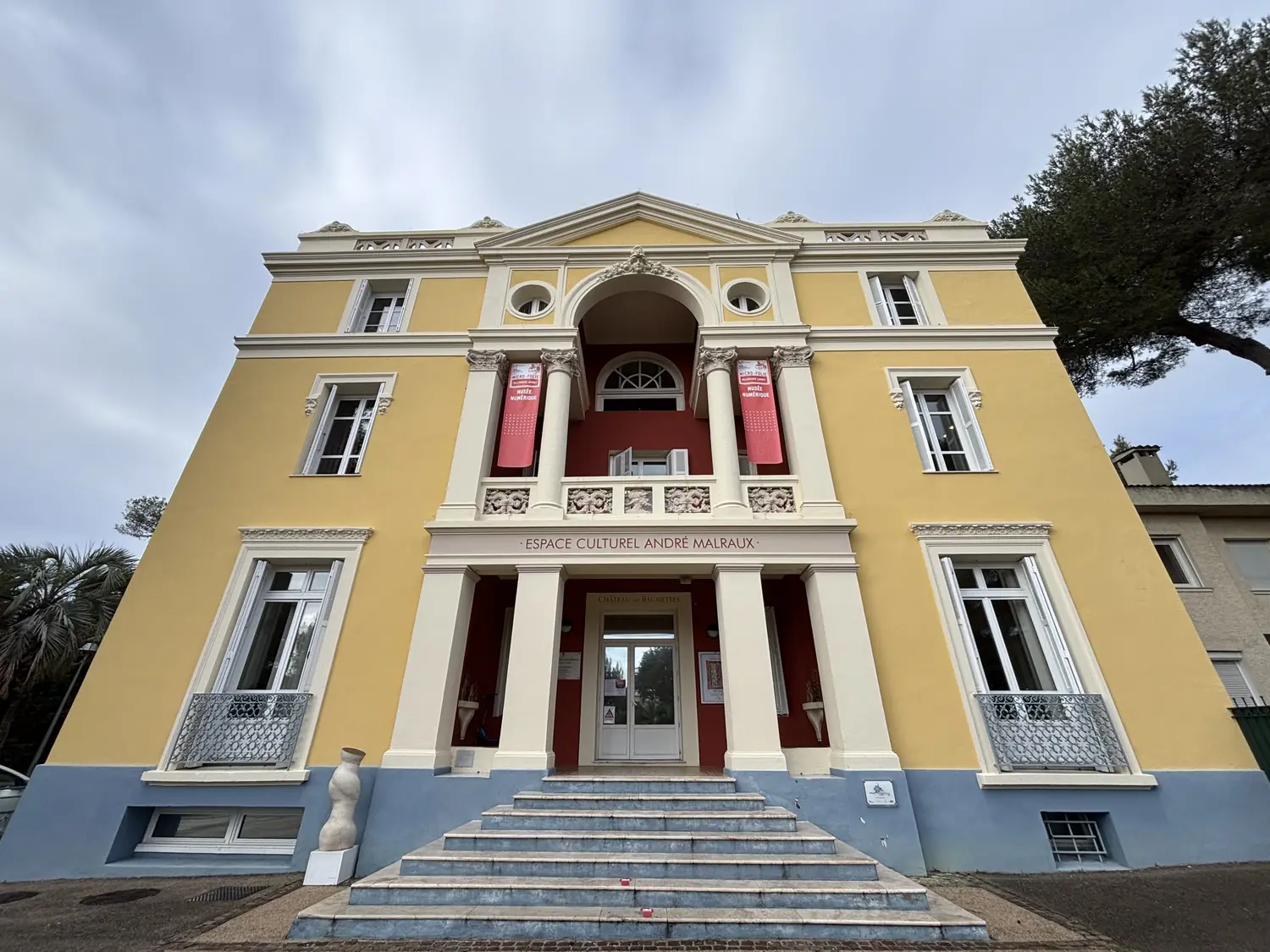
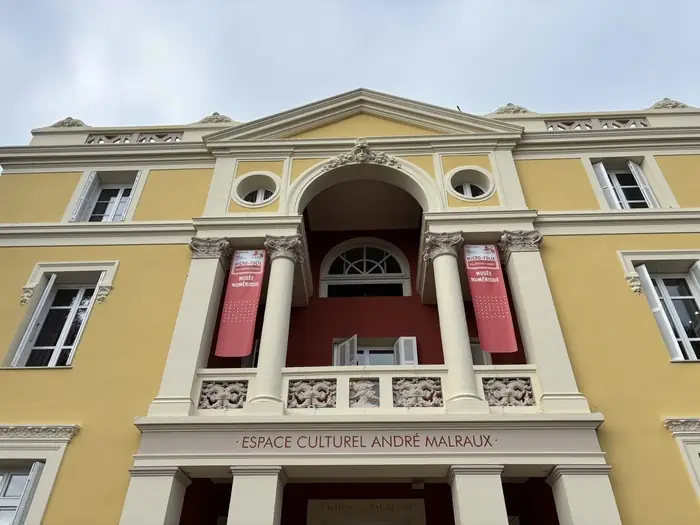
The venue itself earns attention before a single image appears on screen. The Espace Culturel André Malraux — known locally as the E.C.A.M. — occupies the Château des Baumettes, a neo-Palladian residence that has been recognised with the Rubans du Patrimoine award for the quality of its restoration. The building sits at 142 allée André Malraux, its proportions measured and unhurried in the manner of a house that has learned to wait. Converted into a contemporary arts centre, it now hosts temporary exhibitions, workshops, school-holiday programmes and the Micro-Folie installation that will anchor Sunday's event.
The Micro-Folie network — a national initiative seeded by the Ministère de la Culture and rolled out across dozens of French municipalities — works on the premise that geography should not determine cultural access. Each node in the network receives the same suite of digital tools: high-resolution reproductions drawn from the collections of major national institutions, projection equipment, and a pedagogical framework designed to meet audiences wherever they are, whether they arrive as specialists or as complete newcomers.
'Des alignements de Carnac à la Villa Kérylos en passant par la cité médiévale de Carcassonne' — the programme traces France's heritage from prehistoric Brittany to the Belle Époque Mediterranean coast.
What the Screening Covers
The projection is conceived as a chronological and geographic journey across France's monumental inheritance. The arc is deliberately wide:
- The alignements de Carnac in Brittany: thousands of standing stones arranged across four kilometres of Morbihan moorland, among the largest Neolithic complexes in the world.
- The cité médiévale de Carcassonne: the double-walled fortified city in the Aude, restored by Viollet-le-Duc in the nineteenth century and now a UNESCO World Heritage site.
- The Villa Kérylos at Beaulieu-sur-Mer: a meticulous early-twentieth-century reconstruction of an ancient Greek residence, built by archaeologist Théodore Reinach on a rocky promontory a short drive along this very coastline.
The selection is not arbitrary. It spans prehistory, the medieval period and the modern era; it moves from the Atlantic seaboard to the Mediterranean; it encompasses public fortifications and private obsession. Presented through the Micro-Folie's immersive tools, each site is accompanied by contextual commentary designed to be legible to all — no prior knowledge assumed, no expertise required.
That accessibility is, in a sense, the point. The Journées du Patrimoine were established in France in 1984, decades before the European Heritage Days network adopted the model continent-wide. The underlying argument has never changed: cultural patrimony belongs to everyone who lives alongside it, and the institutions that hold it have an obligation to make it legible. The Micro-Folie programme extends that argument into smaller cities and towns — places like Villeneuve-Loubet, which sits between Nice and Antibes on a stretch of coast better known for its marinas than its monuments.
Entry is free; reservation is required. The event runs from 11 a.m. on Sunday, 20 September. Details and booking are available through the venue's website. The Château des Baumettes is, on this particular Sunday, worth arriving at early — the light through its restored façade in the late morning has the quality of a thing that has been carefully looked after.