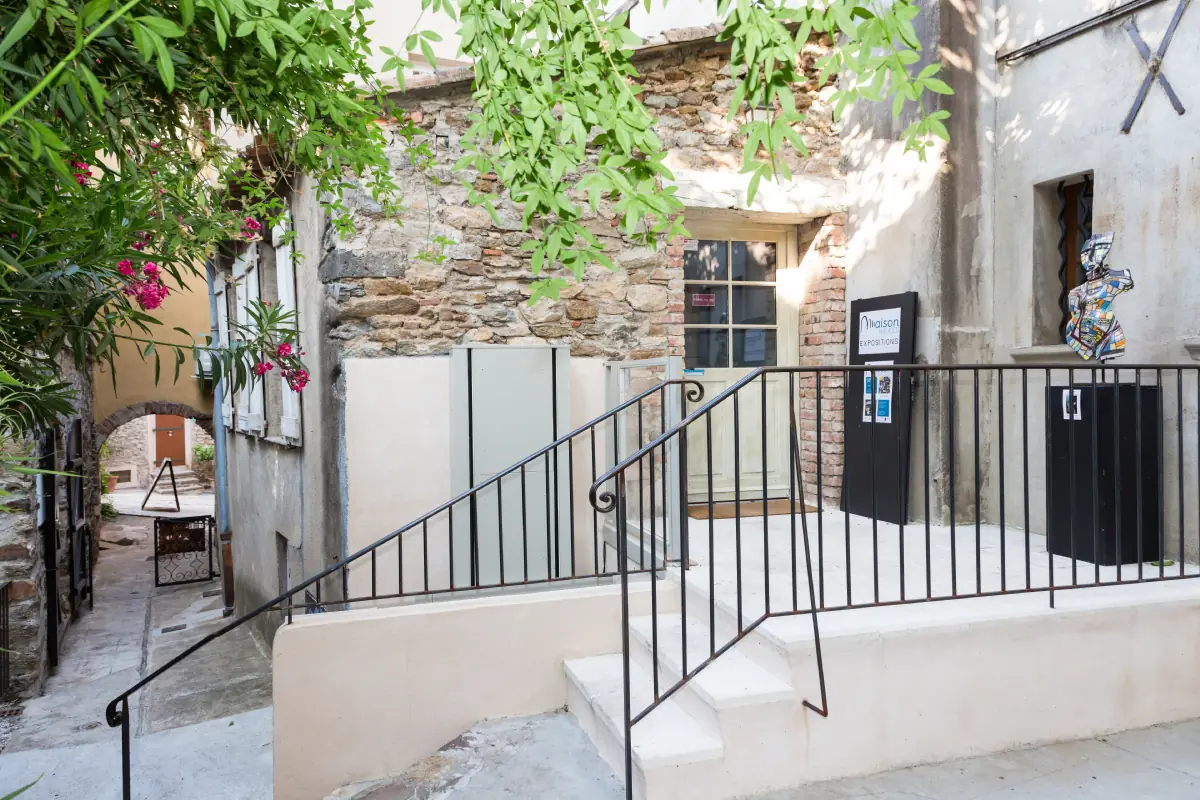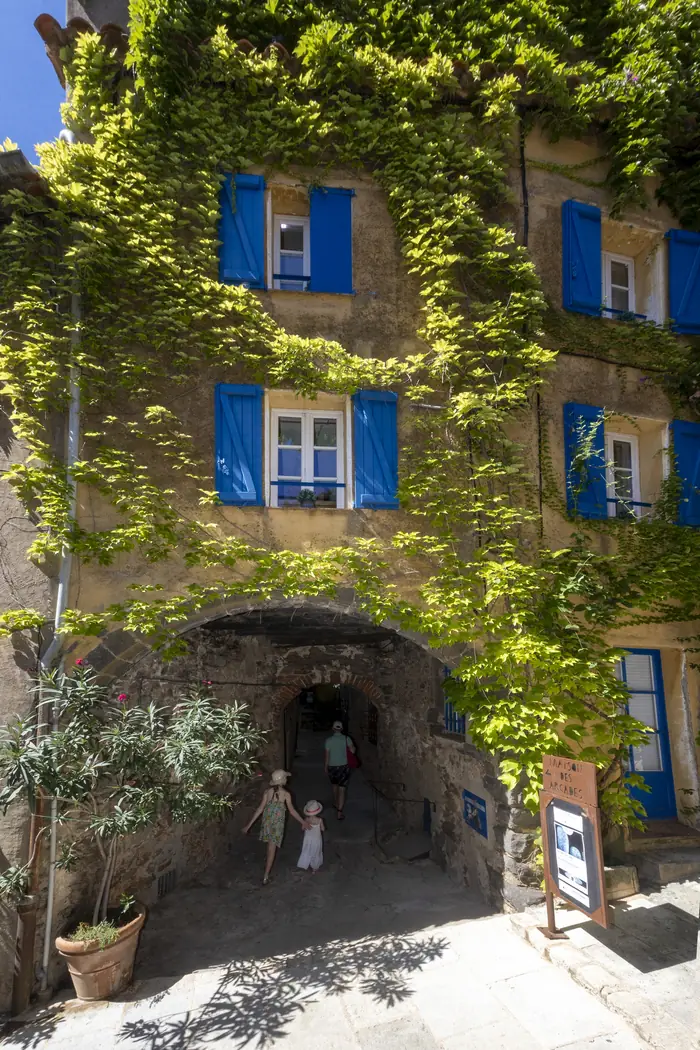
The village of Grimaud sits above the Gulf of Saint-Tropez like a stone crown, its lanes narrow enough to touch both walls with outstretched arms. In September the summer crowds thin, the light softens to something almost amber, and the medieval quarter reasserts its quiet authority. It is the kind of place where a house built in the fifteenth century does not feel like an anomaly — it feels like the natural order of things.
On 18, 19 and 20 September 2026, the Maison des Arcades on rue des Templiers opens its doors without charge for a free visit centred on the work of contemporary artist Sunny Sandhu. The building itself — a former maître's house dating to the fifteenth century — provides the frame: thick stone walls, vaulted ceilings, the particular silence of rooms that have absorbed several hundred years of sound.
A Life Between Continents and Frequencies
Sunny Sandhu was born in Punjab and lives today in Saint-Paul-de-Vence, the hill village north of Nice that has sheltered artists from Matisse to Braque. He works under the name Bhoomitra — Sanskrit for 'Friend of the Earth' — and that relationship with the living world runs through everything he makes. He is simultaneously a musician, a music therapist who teaches his discipline in the South of France, and a gallerist who has made it his project to bring Gond tribal art to European audiences.
Gond art originates among the Gondi people of central India — one of the country's largest adivasi, or indigenous, communities. Its visual language is dense and rhythmic: animals, trees, and spirits rendered in patterns of dots and lines that seem to vibrate on the surface. The tradition was largely unknown outside India until artists such as Jangarh Singh Shyam began painting on paper and canvas in the 1980s; since then it has found collectors and gallery walls across the world. Sandhu's role as a gallerist places him inside that ongoing conversation between tribal practice and the contemporary art market.
'He creates visual and sonic works inspired by nature and its vital forces' — the description offered by the organisers is spare, but it is enough.
His own artistic practice moves between the visual and the audible. The piece Si Ghan earned him the Beyond Music Award, a distinction that recognises work pushing at the boundaries of what music can do or mean. Music therapy, the field in which he teaches, proceeds from the understanding that sound acts on the body and the nervous system in ways that go beyond aesthetic pleasure — a premise that sits naturally alongside Gond art's animist worldview, in which every element of the natural world carries presence and intention.
Inside the Maison des Arcades
Grimaud's medieval village has long been one of the Var's better-kept pleasures — known to those who seek it out, but never overrun. The Maison des Arcades, tucked along rue des Templiers, carries the weight of that history lightly. Visiting during the three-day open period means moving through a fifteenth-century domestic interior now given over entirely to Sandhu's exhibition: the interplay between the building's age and the work's contemporary sensibility is, in itself, worth the detour.
Entry is free. No booking details are specified, so arriving at opening hours and walking in appears to be the intention — in keeping with the unhurried rhythm of the village itself.
For those making a longer stay of it, the Gulf of Saint-Tropez is minutes away by car, and the medieval castle ruins above Grimaud offer a view that takes in the Maures massif and, on clear days, the sea. September remains warm enough for both. The combination of a serious exhibition in an extraordinary building, set inside a village that rewards slow walking, makes for the kind of afternoon that the Var does better than almost anywhere.