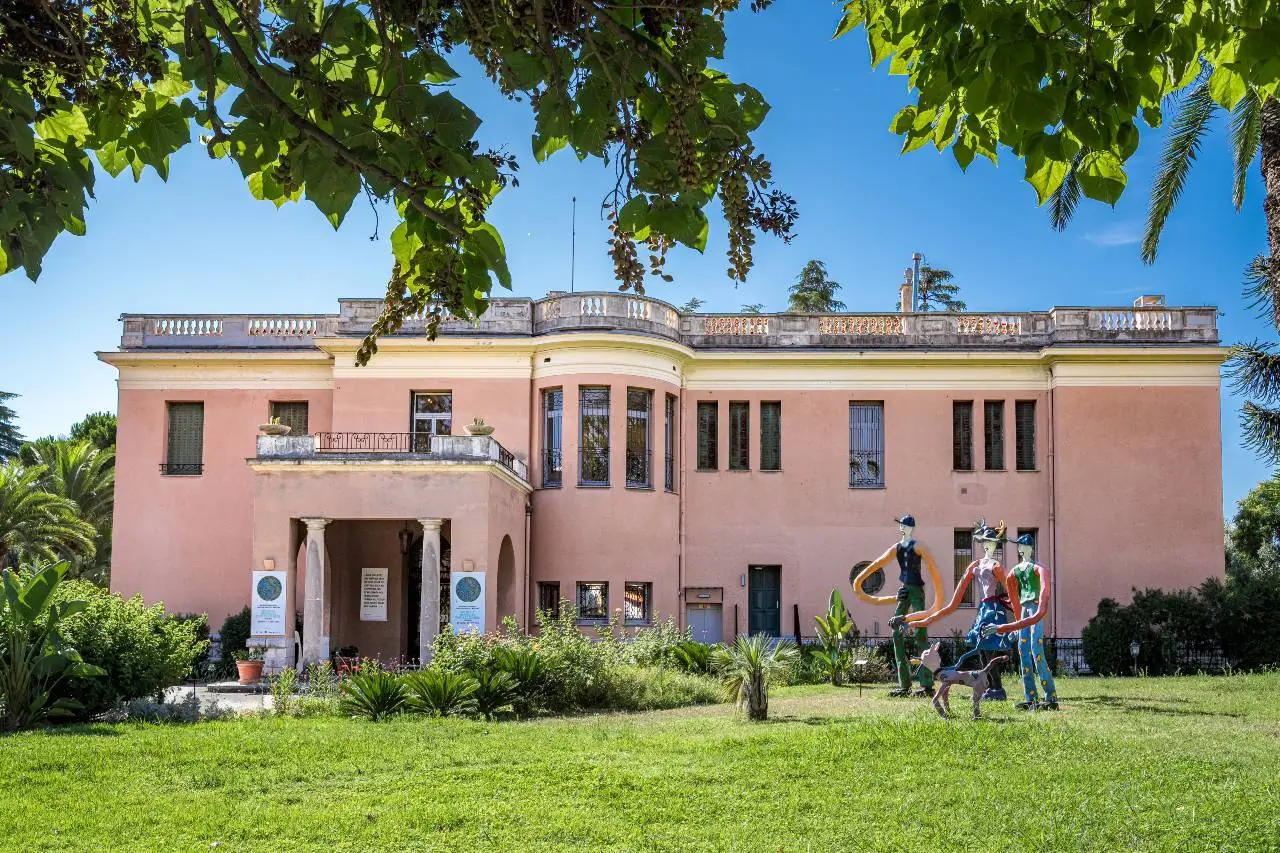
On a June Saturday in Nice, the light arrives early and stays late. By two in the afternoon it has settled into the park surrounding the Château Sainte-Hélène on the avenue de Fabron — filtering through rare-species trees, catching the pale stone of a villa that once belonged to the perfumer François Coty. It is the kind of afternoon that makes the idea of standing still in a garden feel not merely acceptable but necessary.
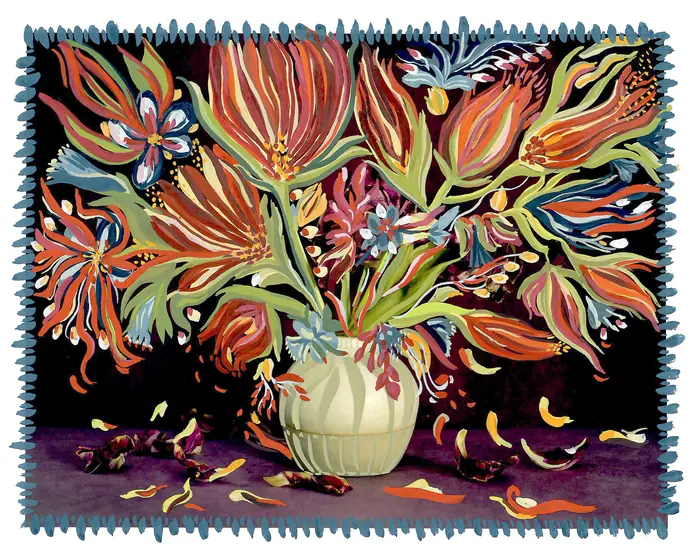
This is the setting for a guided visit on Saturday 6 June, hosted by the Musée International d'Art Naïf Anatole Jakovsky. Organised by the Association des Amis du Musée with the participation of the 46 St Paul Gallery, the afternoon brings together works from two artists united by a single subject: flowers. The guide leads visitors through the museum's garden and into the collection, drawing connections between the early-twentieth-century naïve painter Séraphine de Senlis and the contemporary artist Amélie Chassary, who also takes the natural world — and blooms in particular — as her primary material.
Séraphine, the Walls, the Garden
Séraphine Louis, known as Séraphine de Senlis, is one of the most quietly extraordinary figures in European art history. Working as a domestic servant in the town of Senlis north of Paris, she began painting in secret — mixing pigments from berries, blood and church candles — producing dense, visionary canvases of leaves and flowers that seem to grow beyond their frames. She was discovered by the German collector Wilhelm Uhde around 1912, exhibited, celebrated, and then — as the Depression stripped away patronage — committed to a psychiatric institution, where she died in 1942. Her work now belongs to the permanent collection of the Jakovsky, alongside pieces on long-term deposit from the Centre Pompidou.
The Jakovsky itself is worth understanding as a place before it is understood as an institution. Anatole Jakovsky, critic and champion of naïve art, donated his collection to the City of Nice in 1982, and the municipality installed it inside the Château Sainte-Hélène — Coty's former residence — with its surrounding park of rare botanical specimens. The result is a museum whose atmosphere is determined as much by what surrounds it as by what hangs on its walls. Naïve art — spontaneous, personal, constructed without formal academic training — has always had an affinity with gardens and with the natural world rendered through interior vision rather than observed convention. The setting is not incidental.
"Qualifié de 'naïf' car spontané, individuel, privilégiant la vision intérieure du peintre" — the museum's own definition of the movement it houses.
What the Afternoon Holds
The visit on 6 June is structured around a dialogue: Séraphine's flowers placed in conversation with those of Amélie Chassary. Where Séraphine's botanical forms tend toward the ecstatic — leaves multiplying, petals fusing into something almost cosmic — contemporary practice brings its own set of questions about representation, memory and the act of looking closely at living things. The curatorial conceit, modest in its framing, asks visitors to move between these two sensibilities and notice what shifts.
Guests can expect: - A walk through the museum's park, with its collection of rare-species trees - Engagement with selected works from the permanent collection, focused on natural imagery - A staged dialogue between works by Séraphine and Amélie Chassary - The participation of the 46 St Paul Gallery, bringing Chassary's contemporary practice into the frame
No ticket price has been announced for this event; visitors should confirm access conditions directly with the museum before attending.
The Jakovsky sits on the avenue de Fabron in western Nice, some distance from the tourist currents of the Promenade des Anglais. That distance is part of the point. Nice has always had a serious relationship with visual art — Matisse, Chagall and the School of Nice all have dedicated institutions here — but the Jakovsky operates at a different register: quieter, more particular, built around a movement that rewards patience. A Saturday afternoon in its garden, with Séraphine's painted flowers somewhere nearby, is the kind of thing that asks nothing dramatic of you. It simply asks you to look.