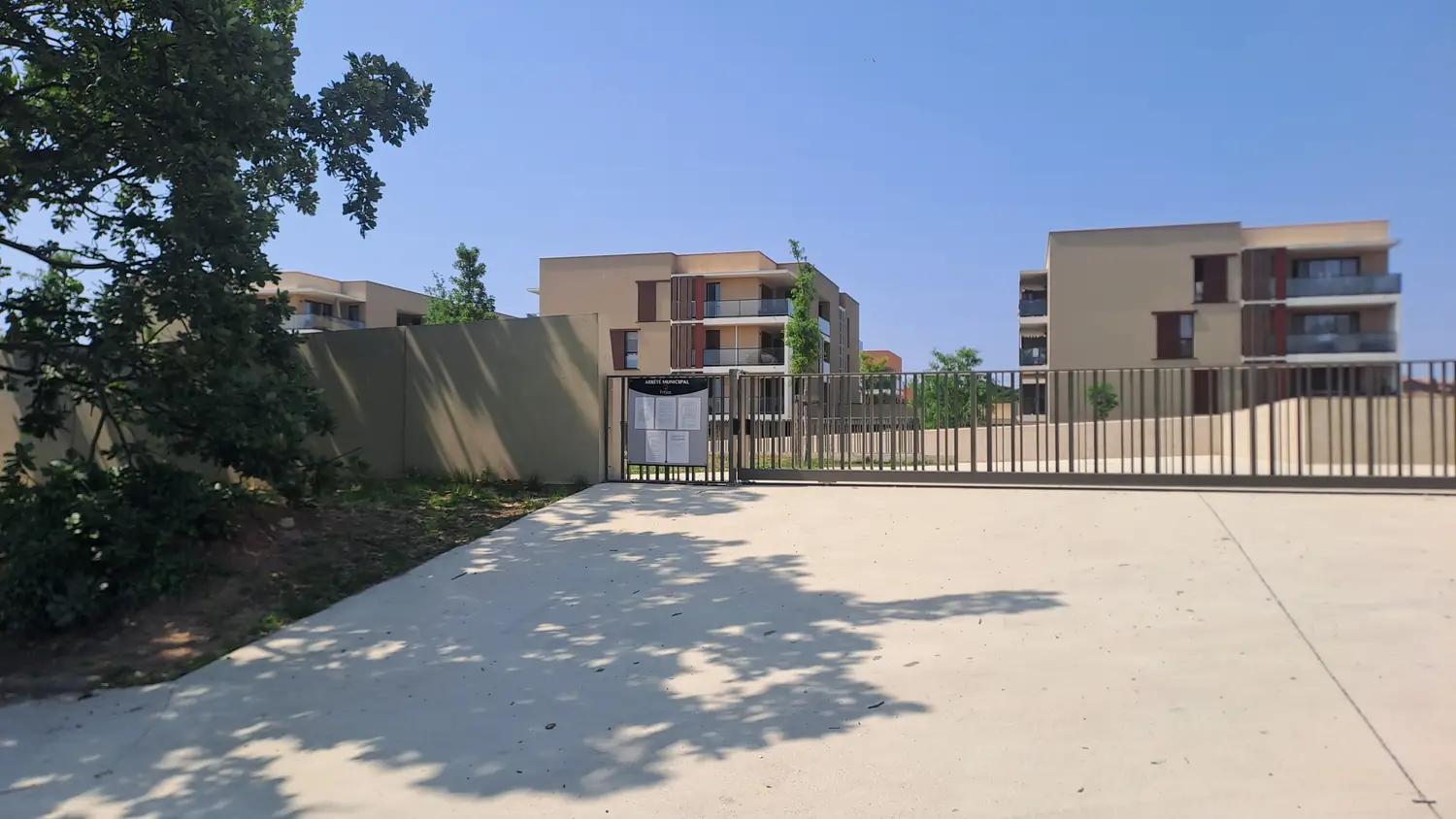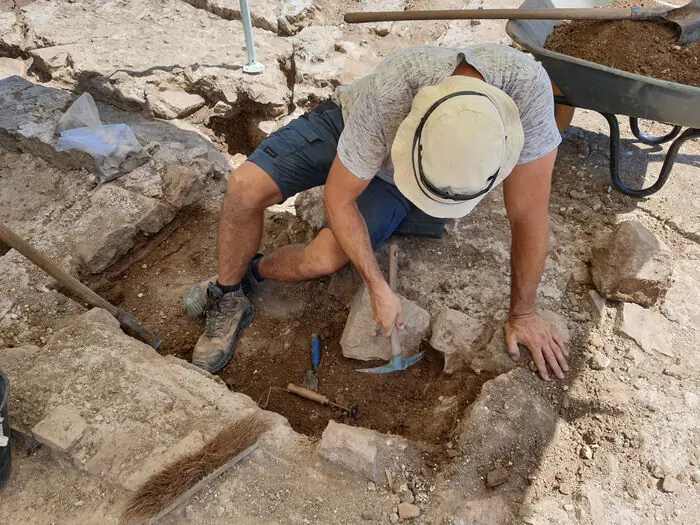
There is a particular quality to the light in Fréjus in early June — still soft enough in the morning to read stone by, sharp enough by noon to throw every carved edge into relief. It is the kind of light that archaeologists work by, crouching over a trench with a brush, waiting for shadow to reveal what the eye alone cannot. At the Parc de la Plate-Forme romaine, that patient, forensic attention is about to be shared with anyone who cares to walk through the gate.
Nine Years Under the Trowel
From 12 to 14 June 2026, the Parc de la Plate-Forme romaine at 355 Avenue du 15e Corps d'Armée hosts an exhibition that returns, in images, to the archaeological excavations and restoration works carried out on this site between 2016 and 2025. The title — La Plate-Forme romaine sous la truelle des archéologues — translates with satisfying literalness: 'The Roman Platform beneath the archaeologists' trowel.' What visitors encounter is not a reconstruction or a dramatisation, but a documentary record: the digs themselves, the scaffolding, the slow, methodical labour of conservation that rarely reaches a general audience.
Fréjus — Forum Iulii in the Roman world — was founded by Julius Caesar around 49 BC and later developed by Augustus as a naval base. It is one of the oldest Roman cities in Gaul, and its monumental remains are scattered across the modern town with an almost casual density: an amphitheatre, an aqueduct, a theatre, city walls, a lantern tower on the old harbour. The Plate-Forme romaine is among the most significant of these, classified as a monument historique since 1886 — a designation that predates the Eiffel Tower.
'L'ensemble monumental de la Plate-Forme romaine… constitue l'élément central de ce projet patrimonial intégré dans un aménagement urbain.' — Ville de Fréjus
A Park Built Around a Monument
The park itself is a relatively recent creation. Inaugurated at the end of 2021 on the site of the former Stade Pourcin, it was conceived as a landscaped visitor circuit at the scale of the city — not a museum in the conventional sense, but an urban space in which Roman vestiges are encountered as living fabric rather than behind glass. The project received financial support from the Ministère de la Culture through the regional conservation of historic monuments, a detail that signals both the seriousness of the scholarly ambition and the institutional confidence in making it publicly accessible.
What the exhibition offers, then, is a rare chance to see the workings behind the finished park. Archaeological sites, once opened to visitors, tend to present their conclusions: the exposed wall, the explanatory panel, the cleaned stone. What happens between the first survey trench and the final signage — the years of documentation, the debates over methodology, the physical reality of restoration work — is seldom shown. Here, that process becomes the subject. Nine years of fieldwork, from 2016 to 2025, rendered in photographs and visual records for three days in June.
For a visitor already drawn to Fréjus for its Roman character, the timing is well chosen. June brings long evenings and manageable crowds before the full surge of high summer. The Var coast in this season has a particular ease to it — the markets are full, the cafés have moved their tables outside, and the old town can still be walked at a pace that allows for looking. The park sits within the urban fabric, not at a remove from it, which means an hour spent with the exhibition can flow naturally into the rest of a day in the city.
Those planning a visit would do well to check the official city website at ville-frejus.fr for any updates on opening hours or access conditions, as entry details were not announced at time of writing. The address — 355 Avenue du 15e Corps d'Armée — places the park in a legible part of the city, reachable on foot from the historic centre.
Fréjus does not advertise itself loudly. It has the confidence of a place that knows what it contains. An exhibition about the archaeology of its most emblematic Roman monument, shown in the park built around that monument, feels entirely in keeping with that temperament — precise, grounded, and quietly worth the detour.