There is a particular quality of light in Le Suquet in early August — the kind that turns limestone walls the colour of old honey and makes the climb up from the port feel less like an effort and more like a transition. By the time you reach the Place de la Castre, the noise of the Croisette has fallen away entirely. What remains is the faint creak of a flag, the view across the Lérins islands, and the cool threshold of a museum that most visitors to Cannes never find.
The Musée des explorations du monde occupies the keep and chapel of the medieval castle that once belonged to the monks of Saint-Honorat. The building itself is the first exhibit: thick walls, vaulted ceilings, and a courtyard that predates the Palais du Festival by several centuries. It is an unlikely setting for an ethnographic collection, and precisely the right one.
Five Continents, One Hour
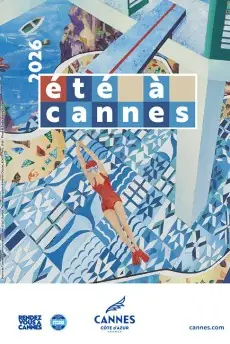
On Friday 7 August 2026 at 14h30, the museum offers a one-hour guided tour of its permanent collections under the title 'Le tour du monde en 60 minutes' — part of the city's broader summer programme, L'été à Cannes 2026. The tour takes participants through five distinct regions of the world: the Himalaya, the Arctic, Central America, Oceania, and Africa, each represented through objects and works held in the permanent collection. Admission with the guided visit costs 8.50 € at full price, 5.50 € for visitors aged 18 to 25, holders of the Cannes Pass Culture and APC Aventura cards, and 2 € for under-18s, students, job-seekers, people with disabilities, and their accompanying companions — proof of eligibility required.
The museum's permanent collection has been assembled over more than a century and reflects the era of French scientific and geographical exploration. There are Himalayan ritual objects, Arctic tools shaped for survival in conditions most of us will never experience, pre-Columbian artefacts from Central America, ceremonial pieces from the Pacific islands, and material from across the African continent. Taken together, they constitute something rarer than a conventional art collection: a record of how people have adapted, believed, and made meaning in climates and landscapes as far removed from the Côte d'Azur as it is possible to imagine.
'The building itself is the first exhibit: thick walls, vaulted ceilings, and a courtyard that predates the Palais du Festival by several centuries.'
The Weight of Objects
What a guided tour offers here — beyond orientation in a compact but dense collection — is the interpretive thread that transforms objects into stories. A carved figure from Oceania or a hunting implement from the Arctic carries little meaning without context; with it, the same object can reframe an entire understanding of a civilisation. The sixty-minute format is deliberately edited: not exhaustive, but curated, moving at a pace that allows attention to settle on individual pieces rather than skimming surfaces.
The museum sits within the old castle complex alongside the Tour du Suquet, the watchtower that has marked Cannes's skyline since the eleventh century. The surrounding gardens offer one of the most composed views on the coast — the old port below, the Estérel hills to the west, and on clear afternoons, the outline of Corsica on the horizon. It is worth arriving a few minutes early simply to stand in the courtyard before the tour begins.
For a city whose international reputation rests almost entirely on cinema and couture, the Musée des explorations du monde is a quiet corrective — a reminder that Cannes has a hilltop, a history, and a collection of objects that travelled here from the edges of the world long before the first camera rolled on the Croisette. An hour in its company, in the company of a guide who knows which stories to tell, is time that earns its own weight.