The Vésubie valley has a way of making the modern world feel provisional. Drive north from Nice along the D2565 and the Côte d'Azur gradually releases its grip — the palm-lined promenades give way to chestnut forests, the light turns cooler, and the road narrows until the valley walls close in on either side. By the time you reach Roquebillière, some sixty kilometres inland, you are in a different country altogether: high Alpine pasture, stone-built villages, and a silence that has weight.
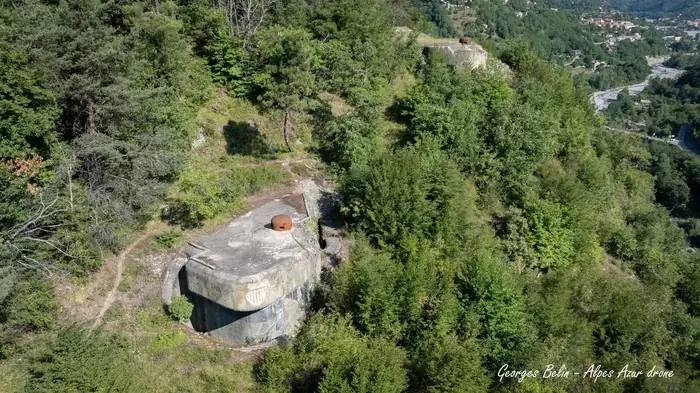
It is here, commanding the heights above the valley, that Fort de Gordolon stands — a fortification built as part of the Maginot Line extension into the Alps, a system of defences France constructed along its Italian frontier during the 1930s. Unlike the more famous northern Maginot works, these Alpine ouvrages were designed not for the flat plains of Lorraine but for the vertical logic of mountain warfare: tunnelled into ridgelines, oriented toward the passes, built to hold ground that could otherwise funnel an advancing army straight toward the coast. For two days this September — 19 and 20 September — Fort de Gordolon will open to guided visits, offering one of the rare occasions to see this structure properly, with a guide who knows its story.
The Battle the History Books Overlooked
The guided tour centres on a chapter of the Second World War that rarely makes it into the broader narrative: the Battle of the Alps. When Italy entered the war in June 1940, French Alpine troops — the Chasseurs Alpins — held positions along this frontier against an offensive that, despite Italian numerical advantage, made almost no territorial progress. The Vésubie valley was part of that front. The forts here were not overrun; they held. Understanding that history changes how you read the landscape — every ridgeline, every col, every stone structure takes on a different meaning.
'Visite guidée — découvrons ensemble l'histoire de la Bataille des Alpes dans la vallée de la Vésubie.'
Visits are conducted in groups of no more than 20 people, which is not an arbitrary limit but a practical one: the interior spaces of a mountain fort are not designed for crowds. The scale keeps the experience close — more conversation than lecture, more exploration than exhibition.
What to Expect on the Day
The visit is guided, and the focus is historical: the construction of the fort, its role in the Alpine defensive line, and the specific events of the 1940 campaign as they played out in this valley. Beyond the military history, the setting itself rewards attention — the position was chosen for sightlines, and those sightlines remain, across a valley that has changed remarkably little since the guns fell silent.
For those who want to make a full day of it, there is the option of a meal on site, prepared from local products. In a region where the markets still run on seasonal logic — lamb from the high pastures, cheese from valley farms, produce that has not travelled far — this is worth factoring into your plans rather than treating as an afterthought.
A few practical notes for the visit:
- Dates:** 19 and 20 September
- Location:** Fort de Gordolon, 06450 Roquebillière
- Group size:** 20 persons per guided group
- On-site meal:** available, local products only
Roquebillière itself is a village that asks for a little time. It sits in the lower Vésubie valley and carries the particular character of a place that has been rebuilt — a catastrophic flood in 1926 destroyed much of the old village, and the reconstruction gives it an early-20th-century coherence that is quietly interesting. The surrounding valley is walking country in the proper sense: the Mercantour national park begins nearby, and the light in September, when the summer crowds have thinned and the larches are beginning to turn, is the best the Alpes-Maritimes offers.
There are easier ways to spend a September weekend on the Côte d'Azur. There are also fewer ways to come away with a clearer sense of what this corner of France actually is — not the Monaco adjacency, not the rosé-and-superyacht version, but the older, more austere thing that the mountains have always been.