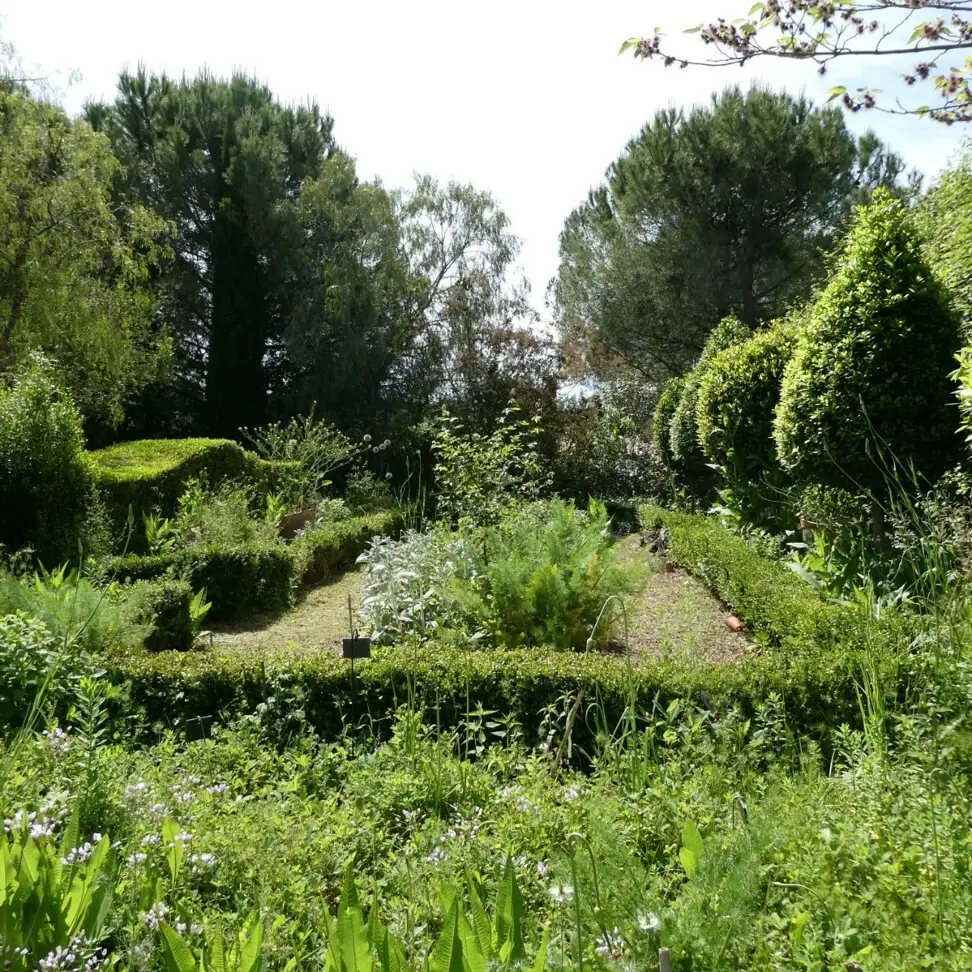
The light arrives early in the hills above Grasse. By seven in the morning it has already settled over the olive groves and cypress stands that frame the Jardins du Musée International de la Parfumerie — two hectares of terraced planting arranged, with the precision of a perfumer's organ, according to olfactory notes: floral, fruity, spiced, woody, hesperidic, musky. In June, when jasmine and rose are approaching their peak, the air itself becomes an argument for being here.
It is into this setting — one of the most considered sensory landscapes on the Côte d'Azur — that a group of young craftspeople will bring their work this summer.
A Year's Work, Brought to Light
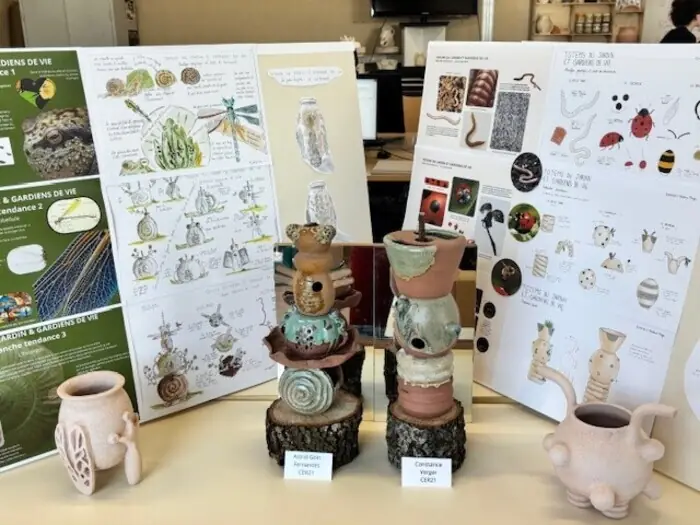
From 5 to 7 June 2026, the gardens host the culminating presentation of Totems des jardins et gardiens de vie, an inter-school artistic and cultural education project developed over the course of an entire academic year. Roughly sixty students from vocational and artistic programmes — BMA and CAP tracks specialising in ceramics, wood sculpture, metalwork and jewellery — were invited to explore the relationships between art, nature, mythology and craft. The result is a body of work that will be exhibited freely across the gardens for all three days of the event, as part of the broader national Rendez-vous aux Jardins initiative.
The pieces themselves are not decorative afterthoughts. They were shaped in dialogue with two distinct sources of inspiration: the collections of the Musée d'Art et d'Histoire de Provence in Grasse — its animals, chimeras and legendary figures — and direct observation of the biodiversity found within the gardens themselves. What emerged are zoomorphic totems, tripod jars, amulets and talismans: objects conceived as symbolic guardians of living things, mediating between the plant world, the animal world and the human one.
"Ces œuvres, pensées comme des gardiens symboliques de la vie, dialoguent avec le paysage et interrogent les relations entre le monde végétal, animal et humain."
Craft, Memory and a Garden Built on UNESCO Heritage
The site itself carries considerable weight. The conservatory of perfume plants at Mouans-Sartoux was established specifically to preserve the memory of aromatic cultivation in the Grasse region; in 2010 it merged with the International Perfume Museum to form the institution as it stands today. In 2018, UNESCO inscribed the perfume-making know-how of Grasse on its list of Intangible Cultural Heritage of Humanity — a recognition that placed this corner of the Alpes-Maritimes in the same register as flamenco, the Mediterranean diet and Japanese Noh theatre.
The gardens unfold around an old canal at the foot of the hills, punctuated by pergolas, basins and fountains. The planting follows the logic of a perfumer's palette: you move from one small garden to the next and the olfactory register shifts beneath your feet. Tuberose, jasmine, rose, lavender, rose geranium, iris — the emblematic flowers of Grassois perfumery appear according to season, and in early June several are simultaneously in bloom.
It is a landscape already accustomed to conversation between the cultivated and the wild, the human-made and the naturally occurring. The student works — ceramic forms emerging from planted beds, metal figures standing among the basins — will read differently here than they would in any gallery. The garden gives them a context that no white wall could supply.
For visitors, the three days offer something relatively rare: direct access to the outcome of sustained craft education, presented not in a school corridor but in a heritage landscape open to the public at no charge. There is no ticketed programme to navigate, no timed entry. The gardens at 979 Chemin des Gourettes are simply open, and the work is there.
Mouans-Sartoux sits between Cannes and Grasse, easily reached by car and manageable by regional transport. Those who arrive with time to spare will find the surrounding hills worth exploring — the perfume country that begins here extends north toward Grasse itself, a town whose steep medieval streets and distillery heritage reward a morning on foot.
June on the Côte d'Azur is already committed to spectacle: the film festival crowd has dispersed, the summer season is gathering pace, and the light has taken on the particular quality that painters from Renoir to Matisse spent careers trying to fix on canvas. Against all of that, a quiet garden in Mouans-Sartoux, populated by the handmade guardians of sixty young craftspeople, offers something worth pausing for.