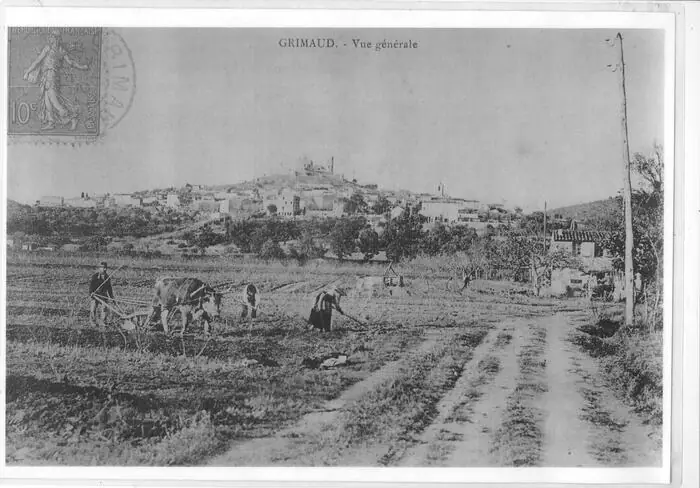
There is a particular quality of light in the Var in early June — the heat not yet punishing, the lavender not yet cut, the mornings still carrying a faint coastal coolness. It is the kind of light that makes you want to slow down, to look carefully at things. Which is, perhaps, exactly the right season for Grimaud to turn its gaze inward and ask: what did this place look like before we arrived?
From 9 to 13 June 2026, the Musée du Patrimoine on Route nationale in Grimaud opens its doors — free of charge — to an exhibition of archival photographs drawn from the personal collections of local residents. The premise is disarmingly simple: grimaudois have donated images from their family albums, their attics, their forgotten boxes, and together those fragments form a visual record of a landscape that no longer quite exists.
A Village That Has Always Known How to Keep Secrets
Grimaud is not the Var's most conspicuous village. It sits inland from the Gulf of Saint-Tropez, its medieval silhouette — ruined château, Romanesque church, tightly wound stone streets — visible from the coast but rarely the destination. That relative quiet is part of its character. The village has been inhabited since at least the eleventh century; the château ruins that crown the hill belonged to the Grimaldi family, from whom the name derives. Over the centuries, the surrounding landscape shifted with agriculture, with the railway, with the slow pressure of tourism that transformed the entire gulf region across the twentieth century. Photographs from that era, when they surface, tend to stop you.
The exhibition at the Musée du Patrimoine works precisely through that mechanism of arrest. Projected images — not prints behind glass, but photographs thrown onto a surface, alive in the way projected light always is — retrace what the curators describe as the archives visuelles of the village. The word 'archives' is doing real work here. These are not artistic photographs selected for beauty. They are documents: images of a landscape, a community, a way of occupying space that the donors themselves remember, or half-remember, or know only through the stories of parents and grandparents.
'Replongez dans l'histoire et les souvenirs du paysage grimaudois d'antan' — the invitation from the museum itself, which translates, with no loss of meaning, as: come back down into the history and the memory of the Grimaud landscape as it once was.
What the Projector Shows
The format — projected photographs rather than a static hang — lends the exhibition a quality somewhere between cinema and séance. Old images of the Provençal countryside carry a specific visual grammar: the quality of black-and-white or early colour film, the compositions shaped by the cameras people actually owned rather than the ones they wished they had, the accidental inclusions that become, decades later, the most interesting details. A cart in the background. A particular variety of vine that is no longer planted. The absence of a road that now carries considerable traffic.
Because the photographs come from donations by grimaudois — residents and former residents of the village — the selection is inherently personal and collective at once. No single curatorial vision has filtered what counts as worth preserving. The archive is, in that sense, democratic: it shows what people chose to photograph, which is also a record of what they valued, what they celebrated, what they thought unremarkable enough to capture casually and remarkable enough to keep.
The Musée du Patrimoine, as its name suggests, is the institutional home for exactly this kind of material. Located on the Route nationale at the edge of the village, it is the repository for Grimaud's local heritage — the objects, documents, and now images that would otherwise scatter and disappear. Admission to the exhibition is free.
Five Days, One Address
The exhibition runs for five days only. For anyone spending time on the Gulf of Saint-Tropez this June — whether based in Sainte-Maxime, Cogolin, or the port itself — Grimaud is twenty minutes inland and worth the detour on any day. On these particular days, the Musée du Patrimoine offers something the coast rarely provides: stillness, local knowledge, and the quiet satisfaction of understanding a place more fully than you did when you arrived.
Bring the kind of attention you would give a good documentary. The photographs will do the rest.