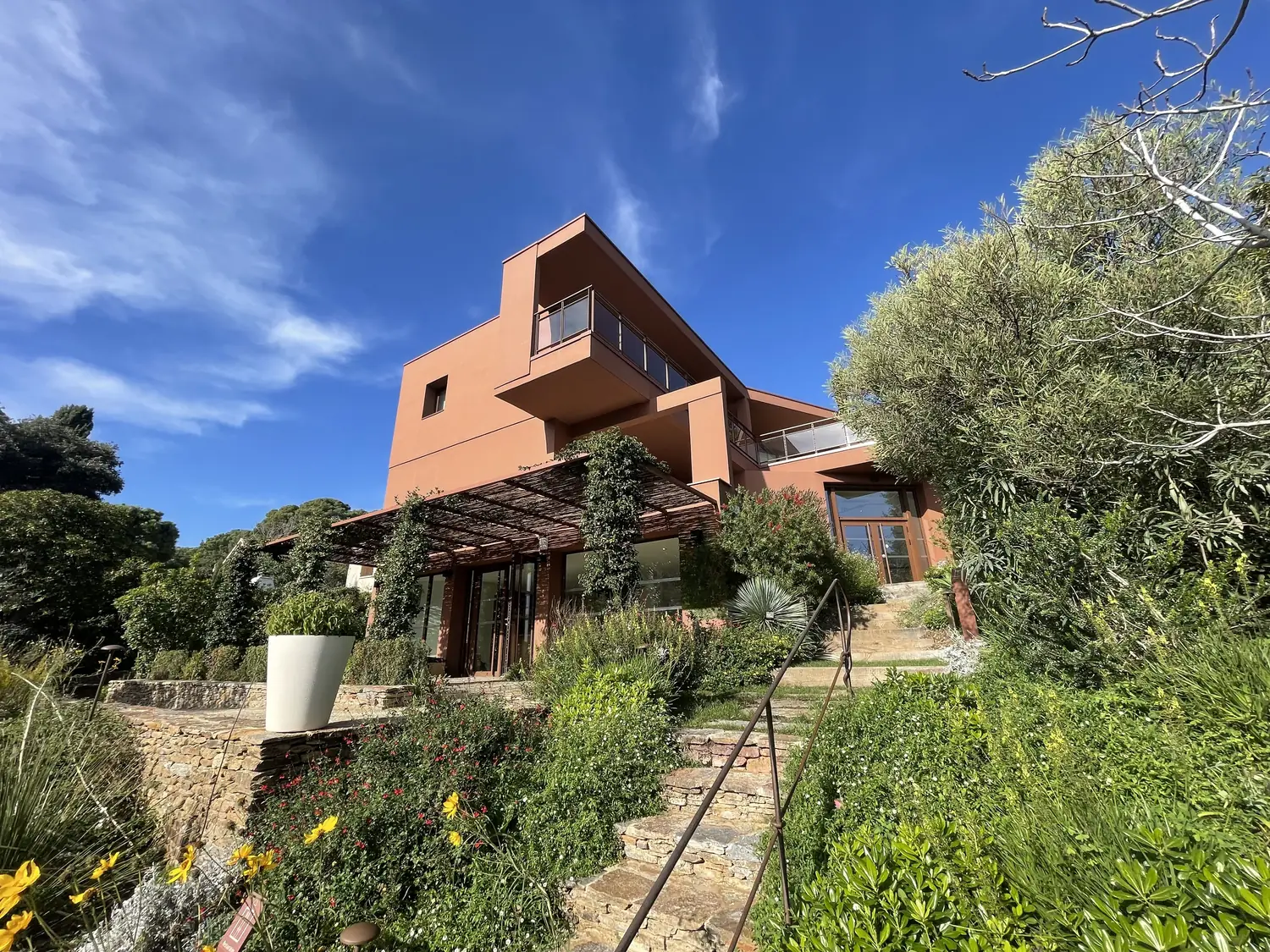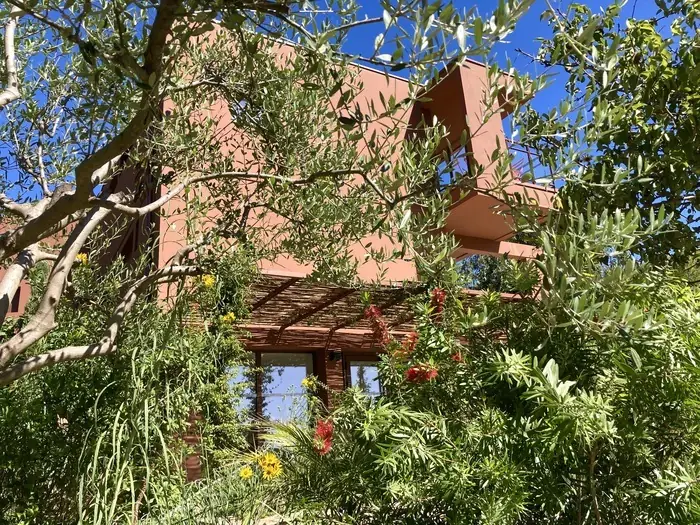
There is a particular quality to the light at Port du Niel on a Sunday afternoon in early June — low and gold, filtering through Mediterranean pines, landing on water that barely moves. The Musée du Niel sits at the edge of this calm: a villa from the 1960s, its clean lines softened by a landscaped garden that spills toward the shore. It is the kind of place that makes you slow down before you have decided to.
On Sunday, 7 June 2026, beginning at 16:01, the museum's garden becomes the setting for a guided botanical visit — intimate by design, limited to twenty people. The session runs for one hour and is led by Emmanuelle Chevalier, a nature educator and partner of Esprit Parc national de Port-Cros, the land-and-sea protected area that encompasses the islands just offshore from Hyères.
What Plants Perceive
The premise is quietly arresting: not what we see in plants, but what plants themselves perceive. Chevalier's approach invites visitors to consider the sensory life of the botanical world — how plants detect light, gravity, touch, chemical signals from neighbours. This is not metaphor. Plant neurobiology, as a field, has spent the past two decades documenting the sophisticated ways in which vegetation processes and responds to its environment. In the garden of a museum dedicated to twentieth-century painting, where artists spent generations trying to render the visible world, the question of non-human perception carries an unexpected resonance.
'Éveillez vos sens et découvrez les plantes sous un nouveau jour' — the event's own invitation, which translates, with some precision, as: wake your senses and see plants differently.
The Var département, of which Hyères is a part, holds one of the most botanically diverse coastlines in France. The Presqu'île de Giens — the double-tombolo peninsula on which Port du Niel sits — supports flora shaped by salt wind, limestone and the particular dryness of a Provençal summer. Walking through the museum's garden with someone who knows its plant life is a different exercise from simply looking at it.
The Museum, the Garden, the Islands
The Musée du Niel is not a grand institutional space. It is a villa — mid-century in spirit, unpretentious in scale — that houses a collection of twentieth-century paintings alongside a bookshop, a restaurant, and a garden described as accessible to all. Its position at the water's edge gives it the feeling of a private discovery, the kind of place that rewards those who look for it rather than those who follow signs.
The connection to the Parc national de Port-Cros is worth noting. Founded in 1963, Port-Cros is one of France's oldest national parks and one of the few in Europe to protect both terrestrial and marine environments. Its Esprit Parc national partnership programme brings the park's expertise — ecological, educational, scientific — into cultural and public spaces along the coast. Chevalier's presence at the Musée du Niel is part of that broader effort to make the region's natural heritage legible to visitors who might otherwise see only its beauty.
For those who visit the museum before or after the garden session, a practical note: presenting proof of your museum visit entitles you to a preferential rate at the Jardin de Château Noir in Giens — a separate garden worth seeking out in its own right.
The session on 7 June is capped at twenty participants. Hyères in early June is still a step ahead of high-season crowds — the autoroute not yet choked, the cafés not yet overwhelmed. The Giens peninsula at that hour, with the Îles d'Hyères visible on the horizon and the garden alive with early summer growth, offers something that the coast does not always make easy: a moment of genuine attention. This is what the afternoon at Musée du Niel is organised around — not spectacle, but a slower, more careful way of looking.