There is a particular quality to early-summer afternoons in Antibes — the light off the Baie des Anges, the smell of warm stone in the old town's lanes. It is the kind of setting that makes history feel close, not archived. On 13 and 14 June 2026, the Musée d'Archéologie, housed at 1 Avenue Général Maizière, leans into that proximity with a new public programme: L'Actu Archéo, a recurring format dedicated to sharing fresh field research with general audiences as it emerges from the laboratory.
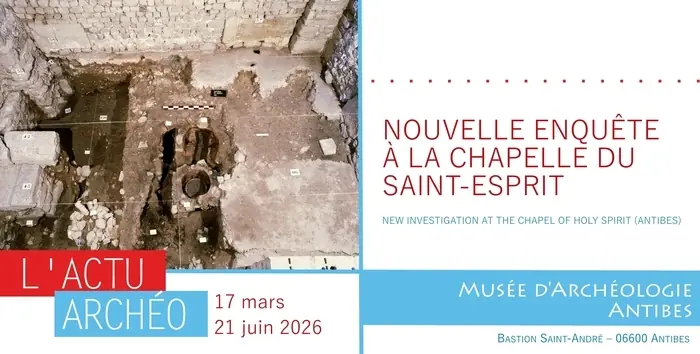
The inaugural edition takes its subject from the Chapelle du Saint-Esprit, a site in Antibes where archaeological and historical research was conducted in 2025. The event presents the first results of that investigation — not a retrospective, but a live dispatch from work still being processed and interpreted. Admission is free and open to all, subject to available capacity.
Ceramics, Charcoal, and the Science of Listening to Objects
Two specialist disciplines anchor the programme. The first is céramologie — the study of ceramic assemblages — represented here by medieval and modern pottery recovered from the chapel site, including pieces recently returned from conservation. Sherds of this kind are among the most democratic of archaeological finds: they record not great events but the texture of daily life, the rhythms of a kitchen, the trade routes that supplied a town.
The second discipline is anthracologie, the analysis of charred wood fragments. Charcoal survives where organic material rarely does, and the samples uncovered at the Chapelle du Saint-Esprit in 2025 offer a form of environmental testimony — evidence of the species that grew here, the fires that were lit, the moments when the building's life intersected with heat. Together, the two disciplines draw a portrait of a site across its medieval and early modern phases, material by material.
'Une occasion rare de plonger dans le passé médiéval et moderne d'Antibes' — the museum's own framing, and an honest one.
The Museum and Its City
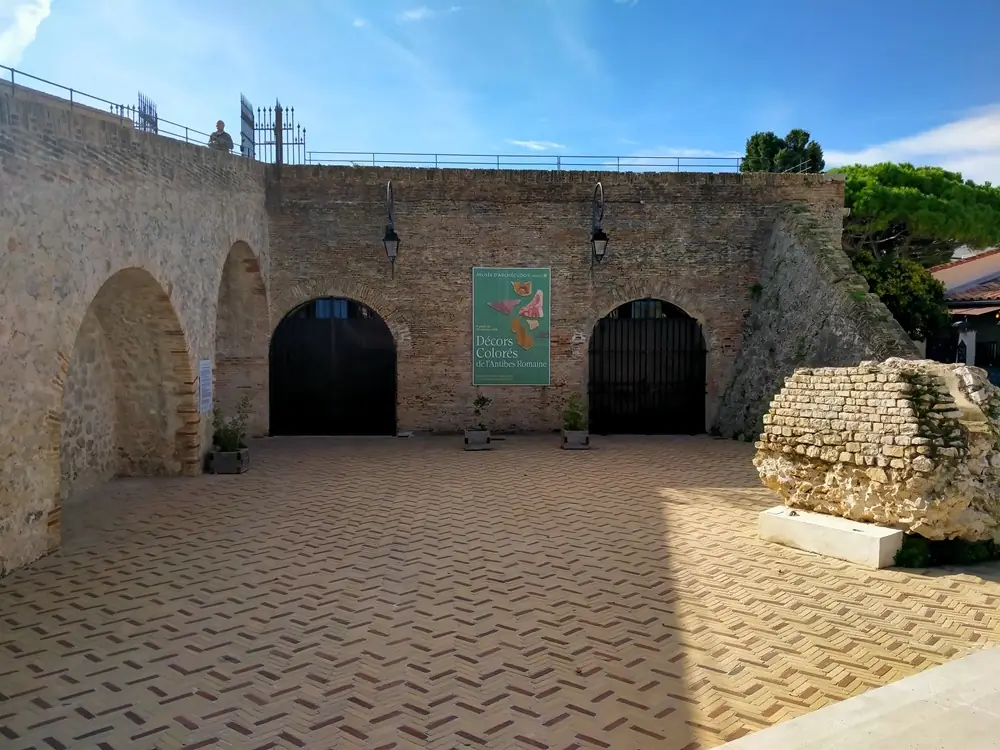
The Musée d'Archéologie has occupied its current premises since 1963, gathering objects from both terrestrial and underwater excavations. Its permanent collection traces the history of Antipolis — the Greek colony that preceded modern Antibes — from the seventh century BCE through to the fifth century CE. That longue durée is part of what makes the museum an appropriate host for a programme like L'Actu Archéo: the building already holds millennia of accumulated retrieval, and the new event simply extends that habit into the present tense.
Antibes itself sits on a cape between Nice and Cannes, a position that has made it a point of transit and settlement since antiquity. The medieval and modern layers that the Chapelle du Saint-Esprit research addresses belong to a later chapter of that long story — one that the town's old streets, its market, its fortifications still partly narrate above ground. The event offers a chance to hear the underground version.
For visitors attending on either day, the format is oriented toward accessibility rather than academic density. The first results of the 2025 research will be presented alongside excavation archives and the restored pottery itself — objects that have moved from the ground to the conservation table and are now, briefly, available for public consideration. It is the kind of encounter that reminds you how much patience archaeology requires: years between the discovery of a sherd and the moment someone can say, with confidence, what it means.
The programme runs in the margin of the European Archaeology Days, a continent-wide initiative that each June opens excavation sites, laboratories, and collections to public audiences. L'Actu Archéo fits that spirit — not a polished exhibition but a working conversation between researchers and the curious. Antibes, with its layers of Greek, Roman, medieval, and modern occupation, is well suited to that kind of conversation. Come with questions; the answers, as archaeology tends to demonstrate, are still being formed.