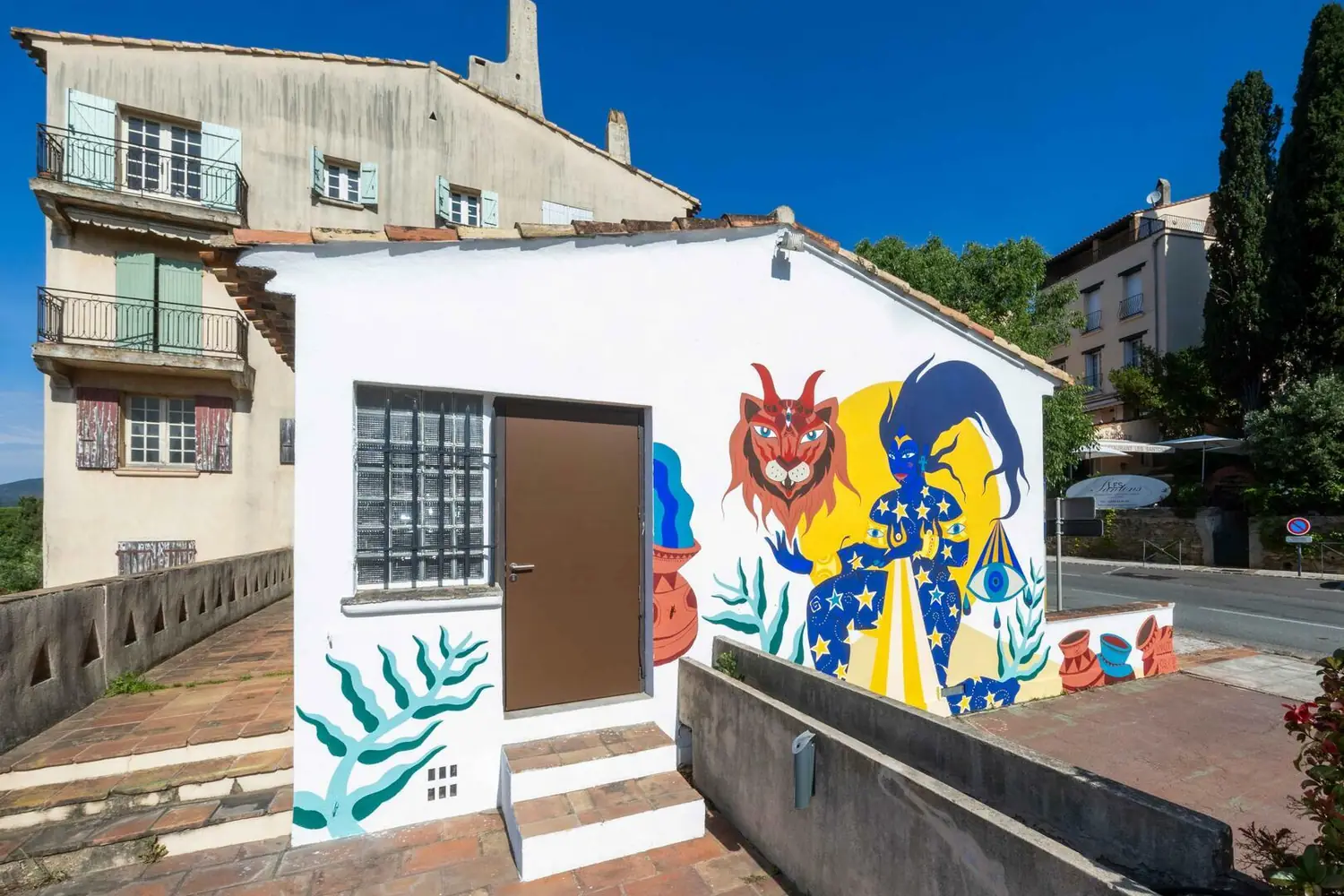
There is a particular quality of light on the Var coast in September — softer than August, still warm, with a clarity that makes whitewashed walls and terracotta rooftops look almost theatrical. It is the kind of light that suits abandoned buildings especially well, and Le Kilal, standing on the Route Nationale at the edge of Grimaud's village periphery, has been catching it for decades.
The building began life as a maison de maître — one of those solid, self-assured Provençal manor houses that suggest old money and long lunches in the shade. In the 1970s it was converted into an art deco hotel, and for a brief period it functioned as one, before falling silent. For years it sat, neither demolished nor repurposed, accumulating the particular atmosphere of places that have been waited in and then forgotten. Then the commune of Grimaud stepped in.
Three Floors, No Admission
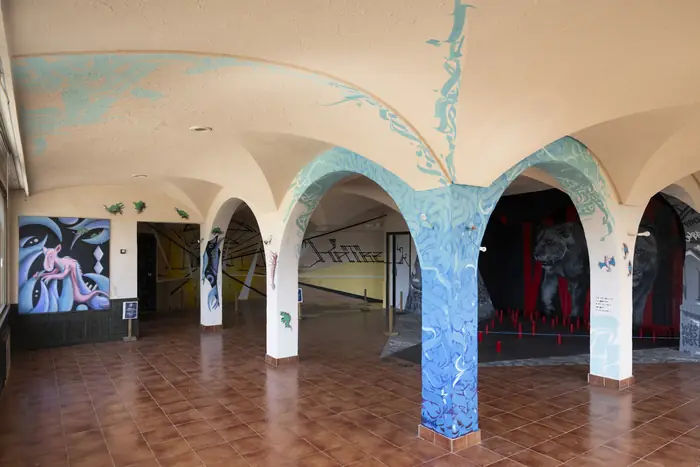
Since 2020, Le Kilal has served as the central venue of the Grimaud Art Urbain festival, and what the municipality has permitted inside its walls is quietly remarkable. Artists arrive each year and work across all three floors, covering surfaces with murals, installations and painted interventions that accumulate and evolve season by season. The result is what the organisers describe as an urbex — an urban exploration — though the building is entirely accessible, entirely legal, and entirely free to enter.
From 18 to 20 September 2026, Le Kilal opens its doors for a self-guided visit as part of the festival programme. Entry is free, the hours are open, and the experience is unhurried: you move through the floors at your own pace, tracing the logic — or deliberate illogic — of works laid over one another across multiple years of residency. Street art in this context is not decoration applied to a neutral surface; it is a conversation between artists who have never met, conducted across time, on walls that already carry their own history.
Art Deco Beneath the Spray
What sets Le Kilal apart from the conventional white-cube gallery experience — or even from the outdoor murals that characterise most street art festivals — is the persistence of the building's original character beneath and alongside the art. A garden and a mosaic-tiled basin, both in the art deco idiom of the hotel's 1970s incarnation, remain visible and intact. The juxtaposition is not incidental: the geometry of the mosaics and the geometry of the spray-painted works speak to each other across a half-century of aesthetic history.
Grimaud itself provides a useful counterpoint to the building's recent life. The medieval village perched above the plain — its castle ruins, its Romanesque church, its streets narrow enough to require negotiation — has long attracted visitors who come for exactly the kind of settled, traditional Provence that Le Kilal now quietly subverts. The two coexist without friction, which says something about the village's confidence in its own identity.
'Plusieurs artistes investissent les lieux chaque année et laissent parler leurs imaginations sur 3 étages.' — Grimaud Art Urbain
For visitors arriving from Saint-Tropez or Sainte-Maxime — both within easy reach along the coast — Le Kilal offers something the peninsula's more celebrated addresses rarely do: an encounter with contemporary art that is genuinely contingent on its setting. The works here could not exist anywhere else, because they are made of this place: its proportions, its surfaces, its particular mixture of grandeur and neglect.
The practical details are straightforward. The address is 744, Route Nationale, 83310 Grimaud. There is no ticket to purchase, no reservation to make. You arrive, you walk in, and you take the stairs.