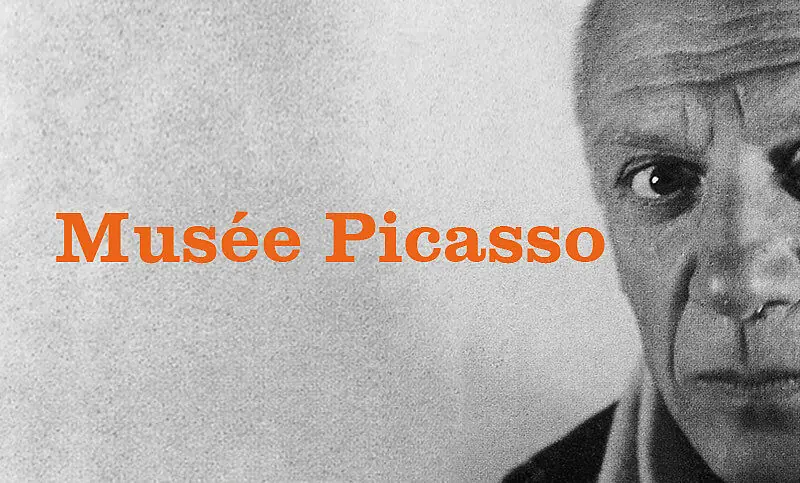
There is a particular quality of light in Antibes in October — softer than the white blaze of August, angled lower, catching the limestone of the old ramparts in a way that turns the whole town the colour of warm bread. The Musée Picasso sits on the Grimaldi promontory above the sea, and on a clear afternoon you can stand at its edge and watch the water shift between jade and ink. It is a place that has always understood the relationship between a famous name and a serious work of art. From 11 October 2026, it asks visitors to consider that relationship afresh.
The exhibition is titled Claude Picasso — Une vie en marges, and it arrives with a companion book of the same name. Together, they constitute the first public presentation of photographs made by Claude Picasso — son of Pablo, and a figure who has spent much of his adult life as the careful steward of his father's legacy. What the show proposes is something more personal: Claude as a photographer of genuine ambition, working across portraiture, surrealist-inflected compositions, and commissioned work for fashion magazines.
A Life in the Margins
The French title carries a deliberate double meaning. Marges suggests both the literal margins of a page — the white space around the main text — and a life lived at the edge of an enormous shadow. To grow up as the child of one of the twentieth century's most scrutinised artists is to exist in a peculiar kind of visibility: seen everywhere in relation to someone else, rarely seen for oneself. Photography, a medium Pablo Picasso engaged with throughout his career but never claimed as primary, offered Claude a territory that was genuinely his own.
The works on show span portraiture, surrealist compositions, and assignments for fashion titles — a range that suggests a photographer comfortable moving between the intimate and the commercial, the experimental and the editorial. Surrealist influence in photography has a long history on the French Riviera; the coast drew Man Ray, Dora Maar, and others who understood that the light here could be made to do strange things if you asked it correctly. Whether Claude Picasso's images engage that lineage directly is a question the exhibition itself will answer.
'Cette exposition montre pour la première fois les clichés de Claude Picasso, photographe talentueux de son temps.'
The Grimaldi Setting
The Musée Picasso occupies the Château Grimaldi, a fourteenth-century fortress that Pablo Picasso used as a studio in 1946. The works he made there — paintings, drawings, ceramics — were donated to the city of Antibes and became the foundation of the permanent collection. The building has been a museum since 1966, and it remains one of the more thoughtful small institutions on the Côte d'Azur: not overwhelming in scale, precise in focus, and positioned in a part of the old town that rewards an unhurried morning.
The address is Place Mariéjol, tucked within the medieval core of Antibes, a short walk from the covered market on Cours Masséna and the sea walls that face the Baie des Anges. In October the town moves at a different pace than in high summer — the terraces are quieter, the streets navigable, and the quality of attention that a serious exhibition deserves is easier to find.
For visitors planning the trip, a few practical points worth noting:
- The exhibition opens 11 October 2026; closing date and admission details are available at the museum's official site.
- A companion book accompanies the show and is expected to be available through the museum.
- Antibes is forty minutes by train from Nice Ville and twenty from Cannes — manageable as a day from either city, though the old town merits a night of its own.
There is something quietly corrective about an exhibition like this — not revisionist, not sensational, simply attentive. It does not ask you to forget the father. It asks you to look at the son. In a building where one Picasso's hand is everywhere on the walls, that is a considered request, and the October light through the Grimaldi's windows seems exactly the right condition in which to consider it.